Gaza Herald- A week after the ceasefire agreement, Palestinians in Gaza are still facing immense hardship as Israel continues to severely limit the entry of humanitarian aid into the devastated enclave. Despite the truce, families across Gaza struggle daily to access food, clean water, and medical care, leaving millions at risk of starvation and disease.
Aid Workers Describe a Landscape of Desperation
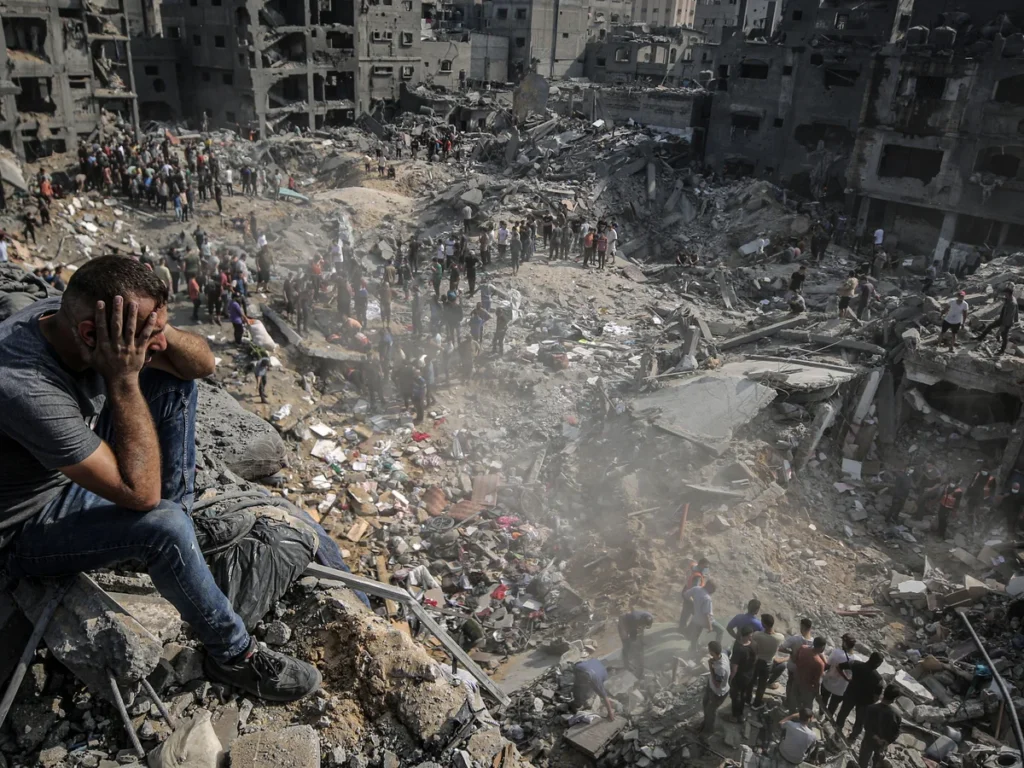
Humanitarian workers on the ground report that residents returning to northern Gaza have found nothing but ruins. Entire neighborhoods have been flattened, and essential infrastructure ,from bakeries to hospitals , remains destroyed. Aid agencies emphasize that to effectively deliver assistance, multiple border crossings must be reopened immediately to allow supplies in at scale.
Thousands of Malnourished Children
UN data indicates an alarming rise in child malnutrition. Over 28,000 children were diagnosed with severe undernourishment during July and August alone, with thousands more at risk. Humanitarian groups stress that the aid entering Gaza must include not only food but also therapeutic nutrition to save lives. “This is not just about bringing in food; it’s about keeping children alive,” one relief official said.
Humanitarian Aid Held Hostage
For over two years, international aid to Gaza has been politically constrained. Even under the ceasefire, restrictions persist as Israel continues to block most shipments. Aid organizations insist this is the moment to correct course , to open all crossings, permit commercial goods, and restore basic human dignity to Gaza’s 2.2 million residents.
Rafah Crossing Remains Closed to Aid
Israel’s Coordination of Government Activities in the Territories (COGAT) announced it will work with Egypt to reopen the Rafah crossing , but only for civilian movement, not for humanitarian deliveries. Instead, all aid convoys are being funneled through Karem Abu Salem (Kerem Shalom), where prolonged Israeli inspections delay life-saving supplies. These bottlenecks have left Gaza’s population struggling for survival amid ongoing famine conditions.
‘A Drop in the Ocean’
Local authorities in Gaza describe the limited aid that has entered as “a drop in the ocean.” With most hospitals destroyed, food reserves depleted, and shelters overcrowded, the majority of Gaza’s residents are now homeless and exposed to extreme conditions. Gaza’s health officials report that nearly 68,000 Palestinians have been killed since the war began, with countless others missing beneath the rubble.
Relief Agencies Working Against Time
The World Food Programme says it is using “every minute” of the ceasefire to expand operations. Its teams are working to reopen bakeries and food distribution centers across the Strip, aiming to serve more than 1.6 million people. “This is the moment to keep access open and ensure the aid doesn’t stop,” said WFP’s regional director. “People in Gaza cannot survive another day of delay.”
Ceasefire Without Relief
Despite the truce, the siege on Gaza continues in all but name. The ongoing restrictions have turned the ceasefire into a hollow promise, with humanitarian aid trickling in at a pace far too slow to meet the desperate needs of millions.
The bombings may have paused, but the suffering has not. Every hour that passes without unrestricted aid deepens the humanitarian catastrophe in Gaza.
Palestinians line up to receive meals distributed by a charity kitchen in the Nuseirat refugee camp in central Gaza.
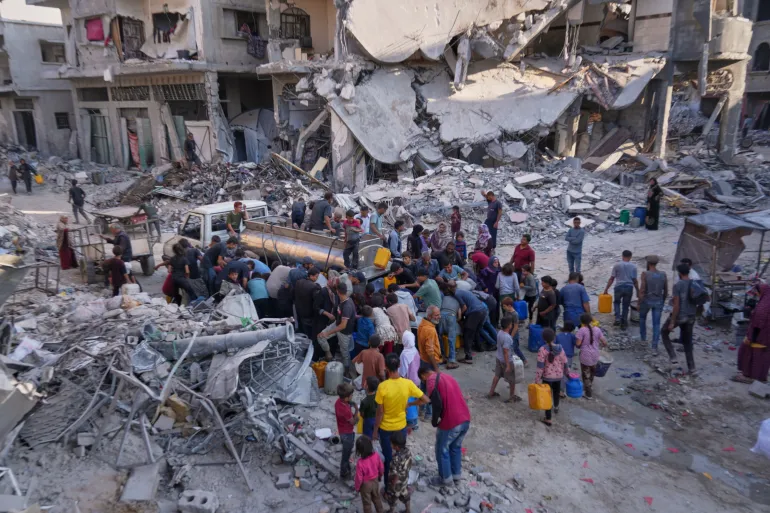
In Gaza City, a young boy carries a jerrycan filled with water he managed to collect from a supply truck, a rare resource amid the ongoing shortages.
After last week’s ceasefire agreement, the United Nations reported minimal improvement in the delivery of humanitarian aid into Gaza, emphasizing that assistance must enter on a far larger scale to address urgent needs.
As famine conditions spread across parts of the enclave, UN Under-Secretary-General for Humanitarian Affairs Tom Fletcher stated that thousands of aid trucks must now enter Gaza every week to help ease the crisis, noting that medical services remain scarce and most of the 2.2 million residents are displaced.
Gaza’s Government Media Office described the aid that has entered since Israel partially scaled down its assault as merely “a drop in the ocean.”
“The region desperately needs a steady, organized flow of food, fuel, cooking gas, and medical and relief supplies,” the office said in a statement.
In another statement, the office noted that around 70 million tons of rubble and debris now cover the territory following nearly two years of relentless Israeli bombardment.
An Israeli government body announced that the reopening of the Rafah crossing between Gaza and Egypt for civilian movement would continue to face delays.
Since Israel’s war on Gaza began in October 2023, at least 67,967 Palestinians have been killed and 170,179 injured, according to Gaza’s health authorities.