Gaza Herald- Every day that goes by in Gaza strips away another layer of pretense. What remains isn’t a war to “defend” Israel or a campaign against armed groups. It’s a meticulously orchestrated initiative, harsh and unapologetic, with a clear goal: to erase the Palestinian presence.
This becomes painfully evident with Israel’s recent plan to build a so-called “humanitarian city” in the southern Gaza Strip, close to the ruins of Rafah. At first glance, it might seem like a gesture of relief, something organized and even compassionate.
But anyone who’s been paying attention knows the truth: it’s really just a controlled holding area for a population that has already faced starvation, bombing, and displacement time and again. It’s a gentle form of exile. Israeli media reports that this “city” will be situated between the Philadelphia Corridor and the Morag axis, two heavily fortified lines that Israel has been bolstering for months.
Allegedly, it’s intended to separate civilians from fighters. But that’s never been Israel’s true aim in Gaza. The destruction is random. The airstrikes don’t discriminate. The policies aren’t precise; they’re systemic.
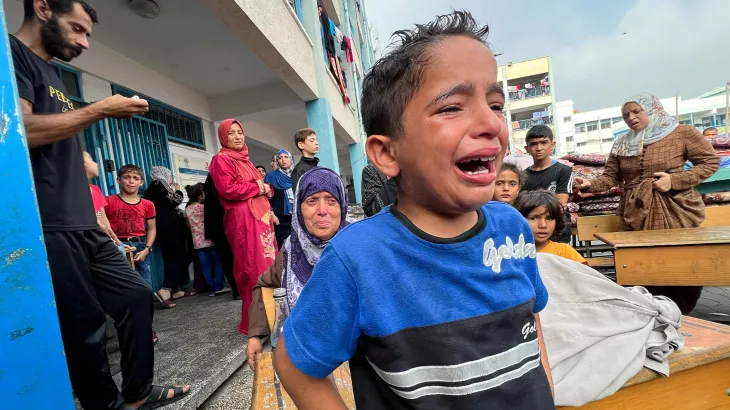
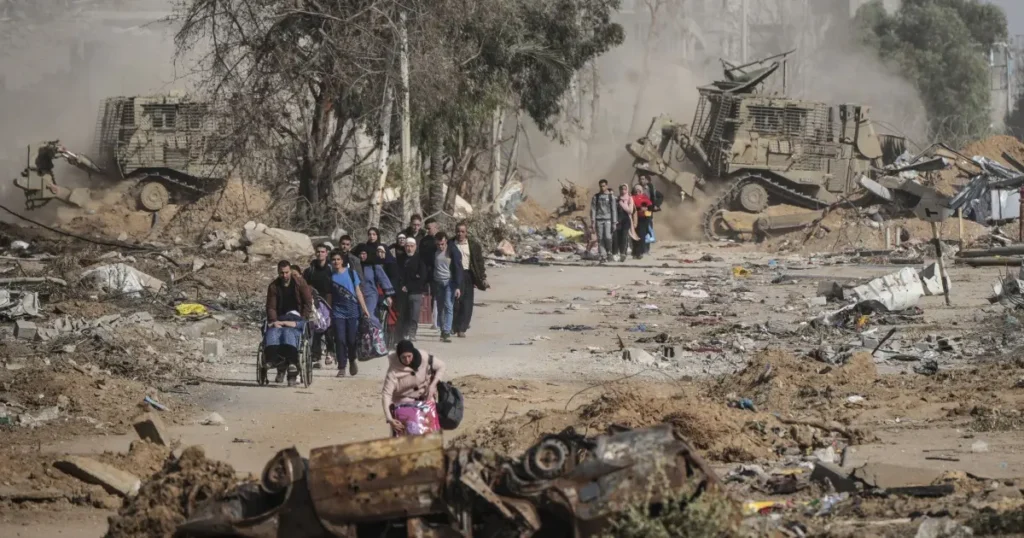
What’s happening right now isn’t just destruction; it’s a complete overhaul. Since October 7, 2023, over 57,000 Palestinians have lost their lives, and nearly the entire population has been forced to flee. Gaza’s infrastructure has been shattered—water, electricity, hospitals, schools, all in ruins. And now, with Rafah left desolate from constant bombardment, we hear that Israel is thinking about creating an “organized” space for Palestinians to go. As if the issue is merely about logistics, rather than the fundamental violation of a people’s right to live freely on their own land.
There’s no need to guess what Israel’s intentions are; its strategy has been laid bare through both its actions and its words. From the systematic uprooting of civilians toward Rafah to the establishment of so-called “humanitarian centers,” and the sealing off of the Morag corridor, a clear pattern is emerging.
This isn’t just a temporary security measure; it’s a blueprint for removal.
Dr. Adnan Hayajneh, a professor of international relations, states, “The whole objective of Israel is to move the Palestinians, to push them away from Gaza.” While it may sound harsh, this statement captures the stark reality on the ground. Every aspect of this conflict—from the bombing of homes to the obstruction of aid—is driving toward one grim conclusion: a Gaza devoid of its people.
Hayajneh sheds light on how the language of humanitarianism often conceals a deeply coercive agenda. Palestinians are being pushed into increasingly confined spaces under the pretense of protection, but what they’re really facing is a grim and terrifying choice: stay trapped in what he describes as a “big prison,” or leave completely. “There’s no real choice when you confine people in a prison and then ask them to go,” he states. “This is outrageous, unlawful, and goes against international law, yet sadly, no one seems willing to speak out against it.”
The Morag axis, which used to serve as a military corridor, now looks like the foundation of a long-term plan to cut Rafah off from the rest of the Strip. Its militarization hints at a more profound intention—not just to control the area, but to reshape the human landscape of Gaza. In this scenario, Rafah turns into a holding area: managed, restricted, and ultimately emptied.
Hayajneh also highlights the silence, or complicity, of the international community. “There were discussions even before the Gaza Humanitarian Foundation was established,” he notes, referring to earlier attempts to set the stage for mass removal. “There’s this vision of a Gaza without people, a vision shared by Trump, real estate adviser Witkoff, Netanyahu, and Israel’s defense minister.”
What’s being proposed under the guise of a “humanitarian city” isn’t about protection. It’s about containment. It’s not care; it’s control. A temporary fix that lays the groundwork for permanent exile.
Some have labeled it a slow-motion ethnic cleansing. But that might not even be accurate anymore, it’s neither slow nor hidden. It’s happening right before our eyes, and the silence surrounding it is part of the machinery that keeps it in motion.