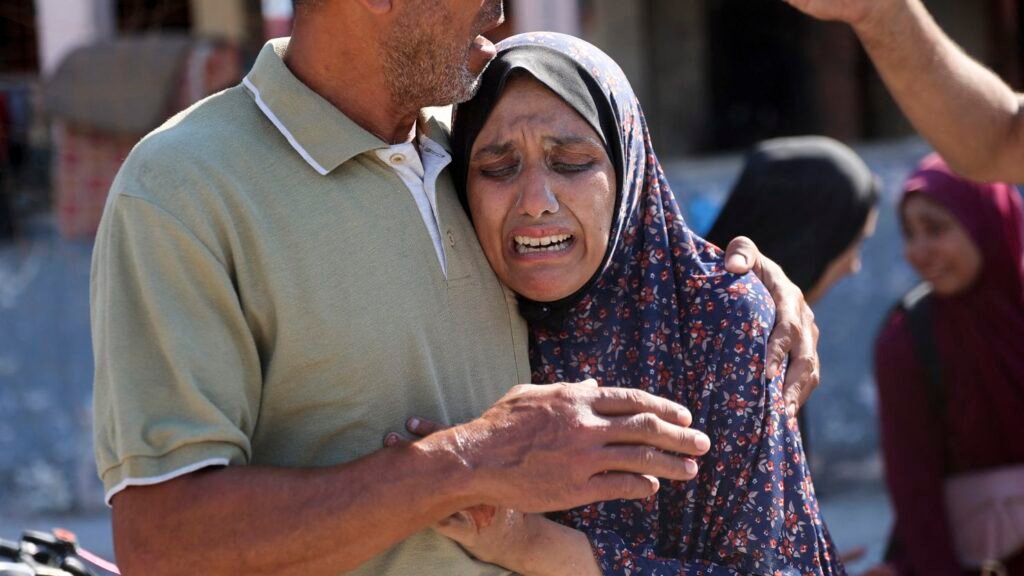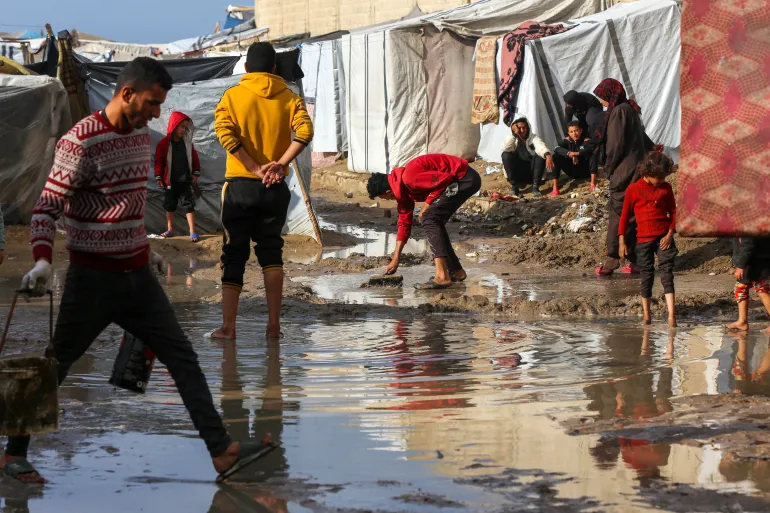
Gaza Herald – With no walls to protect them and nowhere left to flee, displaced Palestinian families in southern Gaza are building makeshift sandbag barriers around their tents in a desperate attempt to shield their children from Israeli gunfire that continues to strike displacement camps.
In Al-Mawasi, west of Khan Younis, families who have already lost their homes are now struggling to survive inside fragile tents that offer little protection from bullets, winter rain, or the dangers surrounding them.
In the Bir 19 area, sandbags have become a last line of defense for displaced Palestinians. Some families have even sacrificed their bedding, filling blankets and sleeping covers with sand to build protective barriers around their shelters.
Yet these desperate measures offer no guarantee of safety.
Israeli Bullets Tear Through Displacement Tents
Ramadan Abu Adari, 54, described to Al Jazeera how he narrowly escaped death when a bullet pierced his tent while he was in the makeshift kitchen.
The bullet struck a ladder and a tea container just inches from where he stood.
Abu Adari said Israeli gunfire repeatedly reaches the tents, penetrating the shelters despite the sand barriers families have constructed.
With the price of empty sacks rising amid Israel’s blockade and Gaza’s economic devastation, some displaced families have resorted to filling their bedding with sand, sacrificing what little protection they have against the cold.
For these families, survival has become an impossible choice: use their blankets to keep warm at night or fill them with sand in the hope of stopping a bullet.
Children Run to Their Parents as Gunfire Erupts
The danger extends far beyond the tents themselves.
Displaced families fear leaving their shelters to collect drinking water or buy food. When Israeli gunfire intensifies, they are forced to lie flat on the ground for hours, waiting for the shooting to stop.
Abdullah Abu Ayyad, who fled the Rafah crossing area to Al-Rayyan Al-Yamama displacement camp in Bir 19, described the terror gripping families.
He said children rush toward their parents whenever gunfire erupts, desperately seeking protection that their families are increasingly unable to provide.
Abu Ayyad reported that three women were wounded by explosive ammunition approximately a week earlier, while five additional people were injured during a period of gunfire between 10 p.m. and 8 a.m.
With coastal displacement areas overcrowded, families have no safer place to relocate.
They remain trapped in tents exposed to gunfire, unable to escape the danger surrounding them.
Families Haul Sand Hundreds of Meters to Build Makeshift Defenses
Rahim Salman Abu Adari, displaced from the Ariba area of Rafah, explained that constructing the barriers has become another exhausting burden for families already struggling to survive.
Because the ground surrounding the camp is muddy, residents must transport sand from distances of up to 500 meters, often using donkey-drawn carts.
He described continuing injuries from Israeli gunfire, including a woman wounded that morning, as well as the firing of smoke canisters that obscured visibility across the camp until approximately 7 a.m.
Despite these efforts, the sandbags cannot guarantee protection from bullets. Nor can they shield families when they must leave their tents to find food, water, or other necessities.
The shelters themselves remain vulnerable to heavy rain and flooding.
No Walls, No Safety, Nowhere Left to Run
The scenes in Al-Mawasi expose the desperate conditions facing displaced Palestinians who have been forced to improvise their own protection amid continuing Israeli military fire.
Under international humanitarian law, civilians must be protected from attack, including those sheltering in displacement camps.
Yet in southern Gaza, families are left carrying sand, sacrificing blankets, and building fragile barriers simply to reduce the risk of being shot inside their temporary homes.
For Gaza’s displaced children, even a tent is no longer a place of refuge. Their parents are building walls out of sand because they have no real walls left to protect them.