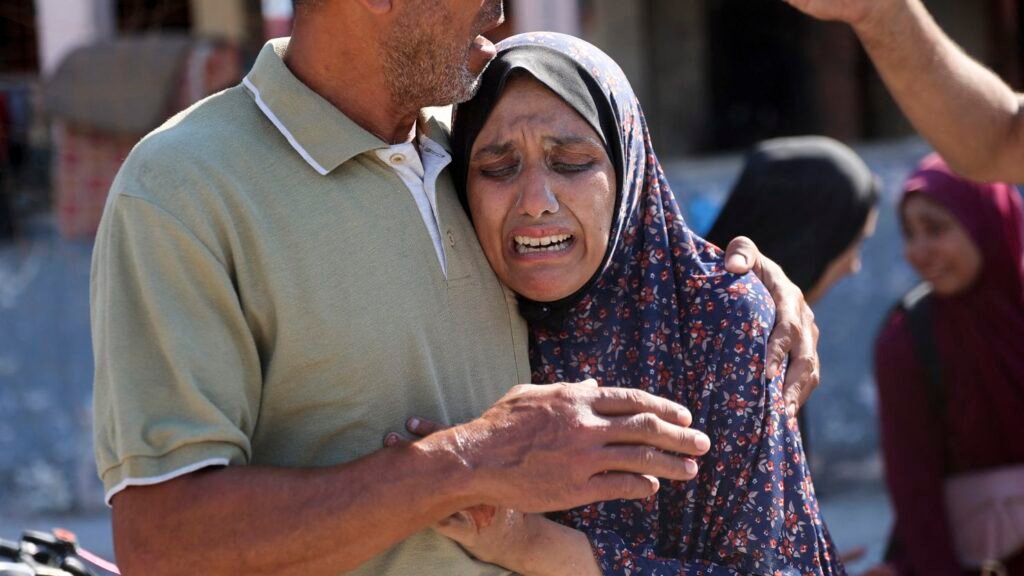
Gaza Herald — For hundreds of thousands of displaced Palestinians in Gaza, surviving Israeli bombardment has not meant finding safety. After losing their homes and enduring repeated displacement, families now face another struggle for survival as severe winter storms expose the deadly consequences of inadequate shelter, destroyed infrastructure, and restrictions on essential humanitarian supplies.
Heavy rainfall has flooded makeshift displacement camps, destabilized sandy embankments, and left families exposed to cold temperatures. In areas where tents provide little protection from the elements, an ordinary night of rain can quickly become a life-threatening emergency.
The season’s first major winter storm exposed the scale of Gaza’s shelter crisis. According to Gaza’s Government Media Office, approximately 70,000 tents were affected by flooding during the first 12 hours of rainfall.
UN humanitarian assessments separately reported that more than 26,000 households were affected by storm-related shelter damage, with more than 6,000 shelters destroyed and approximately 3,900 households left without shelter.
For families who had already lost their homes, possessions, and livelihoods during Israel’s military campaign, the flooding brought another devastating loss.
The danger extended beyond rising floodwaters. Near Deir al-Balah, a rain-soaked sand embankment collapsed onto tents sheltering displaced families, killing five Palestinians, including three children.
The tragedy highlighted a disturbing reality: Palestinians who survived years of bombardment and displacement are now dying in the temporary shelters where they sought refuge.
Displacement Camps Become Dangerous Flood Zones
Across Gaza, displaced families are living in fragile tents erected on exposed terrain, near unstable sandy slopes, and in low-lying areas vulnerable to flooding.
Many of these informal displacement sites lack drainage systems, stable foundations, and the infrastructure needed to withstand winter storms.
When heavy rain falls, water rapidly accumulates around tents, soaking mattresses, blankets, clothing, and food supplies. Families are often left without dry places to sleep or adequate protection from the cold.
Children, older people, and those with chronic illnesses face particularly serious health risks.
Exposure to cold and damp conditions can increase the risk of respiratory illness, while sewage-contaminated floodwater raises concerns about waterborne diseases and other infections.
For parents caring for infants and young children, the lack of dry bedding, warm clothing, and secure shelter makes surviving winter increasingly difficult.
The widespread destruction of residential neighborhoods during Israel’s military offensive has left many displaced Palestinians with no safe homes to return to.
As a result, temporary tents intended for short-term emergencies have become long-term living spaces, despite offering little insulation or protection from sustained rainfall.
With approximately 1.4 million Palestinians living in tents or makeshift shelters, the risks extend far beyond individual displacement camps.
Humanitarian estimates indicate that around 950,000 displaced people live in areas exposed to medium or high flood risks, including about 400,000 in particularly vulnerable locations.
The latest storm showed how quickly these risks can become disaster, overwhelming already fragile shelters and forcing families to move again.
Israeli Restrictions and Equipment Shortages Hamper Rescue Operations
The devastation caused by Gaza’s winter storms cannot be understood through weather conditions alone.
Years of military operations have severely damaged the territory’s drainage networks, roads, wastewater systems, and other essential infrastructure, while Israeli restrictions on the entry of equipment have complicated emergency repairs.
Municipal workers and Palestinian Civil Defense teams face major obstacles in draining floodwater, rescuing trapped residents, clearing debris, and securing unstable areas.
Shortages of fuel, water pumps, bulldozers, and specialized rescue equipment have weakened their ability to respond quickly when displacement camps flood or damaged structures collapse.
In some emergencies, rescue workers and residents have been forced to rely on basic tools and manual efforts to reach people trapped beneath collapsed earth or debris.
The absence of sufficient heavy machinery also prevents authorities from carrying out preventive work, including reinforcing vulnerable areas, clearing drainage channels, and removing dangerous debris.
These shortages leave entire displacement communities exposed to hazards that could be reduced through adequate preparation and functioning emergency infrastructure.
Humanitarian Restrictions Raise Serious Legal Concerns
The continuing restrictions on humanitarian supplies entering Gaza have further intensified the winter emergency.
Humanitarian organizations have repeatedly called for the delivery of weather-resistant tents, thermal insulation, blankets, fuel, drainage pumps, construction materials, and heavy machinery.
These supplies are essential not only for responding to emergencies but also for preventing further deaths and displacement.
Under international humanitarian law, parties to an armed conflict must comply with obligations concerning civilian protection and humanitarian relief. Occupying powers also have specific duties concerning the provision of essential supplies to protected populations.
Restrictions that prevent civilians from receiving materials necessary for their survival raise serious legal concerns, particularly when the resulting dangers are foreseeable.
The legal assessment of particular restrictions depends on their circumstances, justification, and humanitarian consequences.
In Gaza, aid organizations have warned that the shortage of adequate shelter and emergency equipment is leaving displaced Palestinians exposed to preventable harm.
Municipalities cannot effectively manage flooding without working pumps, machinery, and fuel. Civil Defense teams cannot respond adequately to widespread emergencies without rescue equipment. Humanitarian agencies cannot protect families from winter storms without sufficient shelter materials.
The combined impact of damaged infrastructure and restricted supplies has left Gaza’s remaining emergency services struggling to meet needs that far exceed their operational capacity.
International Warnings Have Yet to Deliver Adequate Protection
United Nations agencies and humanitarian organizations have repeatedly warned that Gaza’s displaced population faces severe risks during winter.
Yet the supplies and infrastructure needed to protect families remain insufficient.
International appeals have emphasized the urgent need to improve humanitarian access, accelerate the delivery of winter supplies, and support emergency repairs.
For displaced Palestinians, however, warnings and diplomatic statements offer little protection when their tents are flooded and their children are exposed to dangerous conditions.
Humanitarian organizations have called for the opening of crossings to facilitate the delivery of essential supplies, including winterization kits, fuel, drainage equipment, and heavy machinery.
They have also emphasized the need for coordinated assessments of displacement sites, the relocation of families from particularly dangerous areas where safe alternatives exist, and the provision of stronger temporary housing.
Restoring drainage systems and repairing damaged infrastructure are equally critical to reducing the risks of future storms.
Without these measures, further rainfall could force thousands of families to abandon their shelters once again, deepening an already devastating displacement crisis.
A Preventable Emergency Threatens Gaza’s Most Vulnerable
For Palestinians who have endured repeated displacement, winter has become another threat to their survival.
Behind every flooded tent is a family struggling to preserve the few belongings it has left. Behind every collapsed embankment are people who sought safety in places that could not protect them. And behind every preventable death is an urgent need for adequate shelter, functioning infrastructure, and unhindered humanitarian assistance.
The deaths near Deir al-Balah demonstrate that the danger is no longer hypothetical.
As winter continues, Gaza’s displaced families face the possibility of further flooding, illness, displacement, and deadly structural collapses.
Preventing additional tragedies requires more than emergency appeals. It demands immediate access to shelter supplies, functioning rescue equipment, infrastructure repairs, and safe living conditions for civilians who have already lost so much.
For hundreds of thousands of displaced Palestinians, these measures could mean the difference between surviving another storm and becoming its next victims.