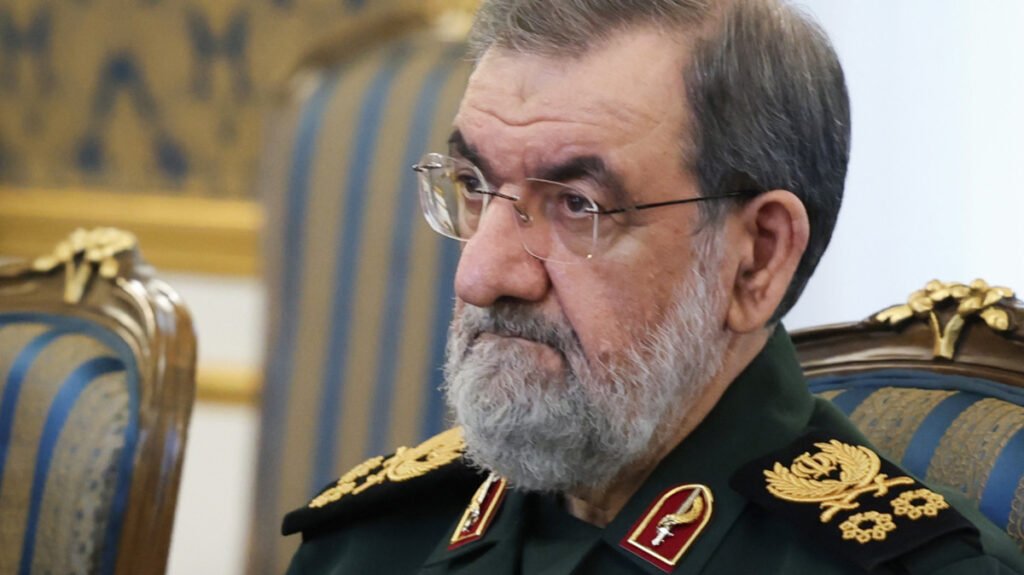
Gaza Herald – Iran’s security chief Mohsen Rezaei declared on Wednesday that the country has no intention of surrendering its enriched nuclear material. He stated that Tehran intends to utilize this material specifically for constructing nuclear-powered submarines. This position serves as a direct rejection of United States demands regarding a political settlement.
In an interview with Al Mayadeen TV network, Rezaei emphasized that not a single speck of enriched uranium would be allowed to leave Iranian territory. He explained that the material is essential for designing ships and submarines powered by nuclear energy. Rezaei added that Moscow had been informed that the enriched nuclear material would remain within Iran for domestic use.
These remarks followed statements by US Secretary of State Marco Rubio, who described Iran’s terms for a political settlement as absurd. Rubio stressed that the Trump administration believes its maritime blockade provides leverage in negotiations. Rezaei, who has recently become more prominent in media appearances, adopted a defiant tone during his interview.
Rezaei warned that if American aircraft take off from military bases, including those located in European countries or distant regions, to bomb Iran, Tehran will strike those bases as well. He indicated that any response to renewed US attacks would target America’s more distant military installations, including sites not previously attacked. He suggested that certain islands assumed to be beyond missile reach might also be targeted.
This comment likely refers to Diego Garcia, an Indian Ocean island hosting a US military base widely believed to have been used in February 2026 attacks. The Trump administration has employed deescalatory language since the Republican Party suffered significant losses in the November 3 midterm elections. President Donald Trump claimed the war was effectively over, yet both sides remain far apart on issues like nuclear enrichment and sanctions relief.
While characterizing Iran as a defeated foe, Tehran appears to be recovering from US-Israeli attacks. Bloomberg reported that Iran can now produce approximately 50 ballistic missiles monthly, half its prewar capacity. Additionally, Iran unveiled a new underground missile city housing ballistic and cruise missiles, according to Tasnim news agency.
Gulf allies bore the brunt of Iran’s retaliation, facing thousands of missile and drone strikes. While direct attacks have ceased, Iran continues striking vessels in the Strait of Hormuz. Allianz Trade reported that Gulf countries face over $200bn in damage, a figure that could quadruple by 2030.
This report was produced in the Gaza Herald newsroom.