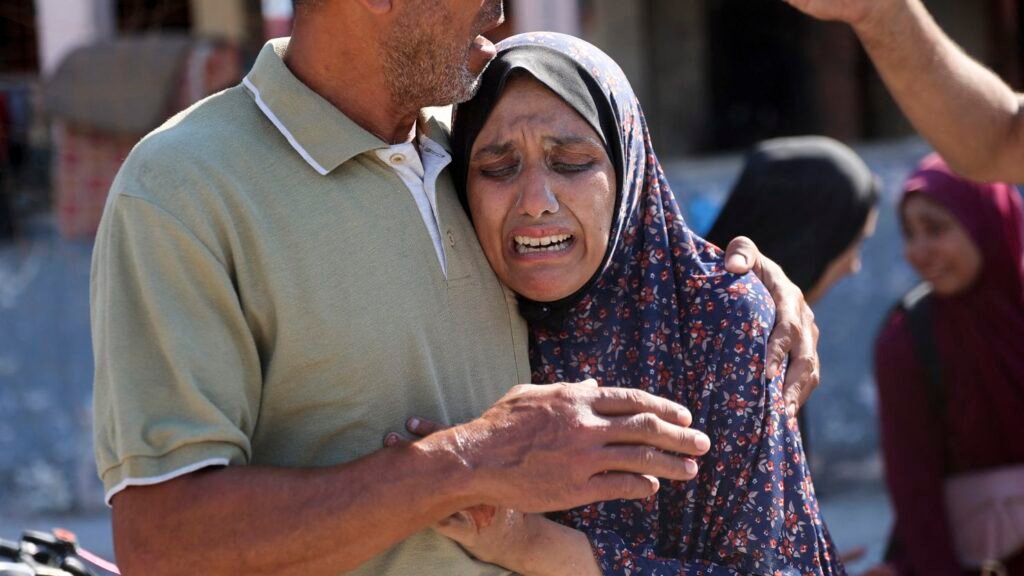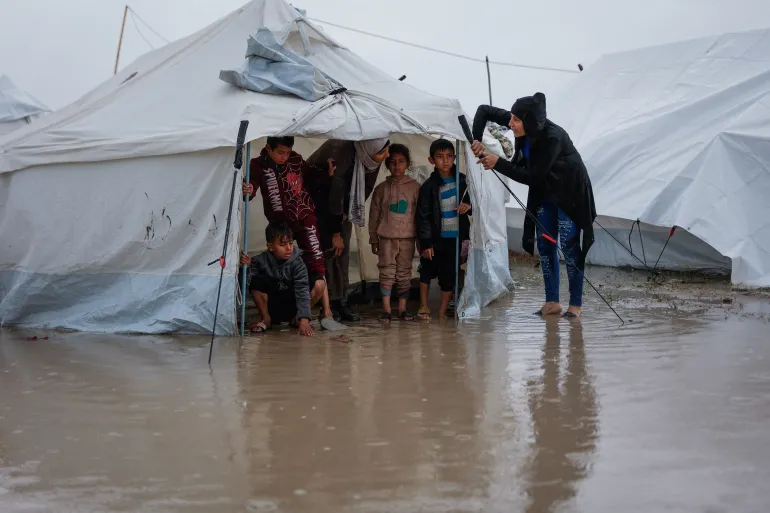
Gaza Herald – As dark storm clouds gather over the Mediterranean, Palestinian families across Gaza are once again bracing themselves for another severe winter under grueling conditions. On a wind-swept beach in western Gaza City, sixty-year-old Mohammed al-Jamal pulls desperately at the worn nylon sheets of his family’s tent, trying to fasten the fraying tarpaulin to the earth before the torrential rains and heavy coastal gales break over the shoreline.
This marks the fourth consecutive winter that displaced families across the Strip are forced to face freezing temperatures, severe flooding, and relentless winds without basic shelter, as temperatures drop near freezing and harsh weather turns informal camps into disaster zones.
False Promises Leave Displaced Families Unprotected Against the Elements
Originally from Gaza City’s Shujayea neighborhood, al-Jamal and his extended family of thirty people have been displaced multiple times since the outbreak of the genocidal war in October 2023. With replacement tarpaulins in local markets costing between 120 and 150 shekels, a price far beyond the reach of families stripped of their livelihoods, residents can do little more than patch up torn fabrics and hope their makeshift shelters survive the incoming low-pressure systems.
Displaced residents express deep frustration over long-promised humanitarian aid, caravans, and winterization supplies that have failed to materialize, describing official announcements as empty assurances while they remain directly exposed to the bitter coastal elements in what has effectively become life on the open street.
Humanitarian Agencies Warn of Catastrophic Shortages in Shelter Aid
The scale of the shelter crisis across Gaza remains overwhelmingly dire, with nearly 1.5 million people residing in fragile tents and temporary structures following the widespread destruction of residential neighborhoods. According to international relief monitors, nearly three hundred thousand families urgently require winter shelter assistance, yet current humanitarian pipelines hold enough supplies to assist only a tiny fraction of those in need.
Blockades and severe entry restrictions continue to stall hundreds of truckloads carrying essential winterization materials, including heavy-duty tents and waterproofing tools, creating an agonizing backlog that experts estimate could take over seven months to clear at present rates.
Relentless Storms and Rising Costs Strain Exhausted Households
For mothers like thirty-nine-year-old Khitam Salman from Beit Lahiya, preparing for the upcoming winter is a recurring nightmare of physical and emotional exhaustion. Living near the shore after numerous displacements, Salman describes how coastal winds repeatedly tear down their family shelter, allowing sand and sea rain to soak their meager belongings while they sleep inside. With her husband receiving sporadic income that fails to keep pace with skyrocketing market prices, purchasing additional protective sheets remains impossible, leaving mothers and fathers helpless as they attempt to safeguard their children from the coming cold.
Collapsed Infrastructure Heightens Threat of Severe Winter Flooding
Compounding the crisis inside the camps is the near-total collapse of municipal infrastructure across Gaza, where damaged drainage networks and sewage lines threaten to mix rainwater with raw wastewater.
Municipal officials report that the vast majority of local infrastructure lies in ruins, with rainwater drainage systems operating at a tiny fraction of their normal capacity due to crushed pipelines, massive debris, and severe shortages of fuel and heavy machinery. While emergency crews attempt minimal maintenance with hand tools, local authorities warn that winter low-pressure systems will inevitably swamp entire encampments in contaminated floodwaters.
A Struggle for Everyday Survival and Basic Human Dignity
For forty-five-year-old Yosra Mesleh, displaced from her home in Gaza City’s Nassr neighborhood, entering a second winter inside a tent brings overwhelming anxiety over daily survival. Without cooking gas, adequate bedding, or sealed roofing, families face the daunting prospect of huddling in damp quarters with nowhere dry to cook, sit, or seek warmth.
Reflecting on her family’s lost home and small business before the war, Mesleh stresses that displaced Palestinians are not asking for luxury, but merely for basic tarpaulins, sturdy shelters, and the fundamental right to live in safety and dignity through the freezing months ahead.