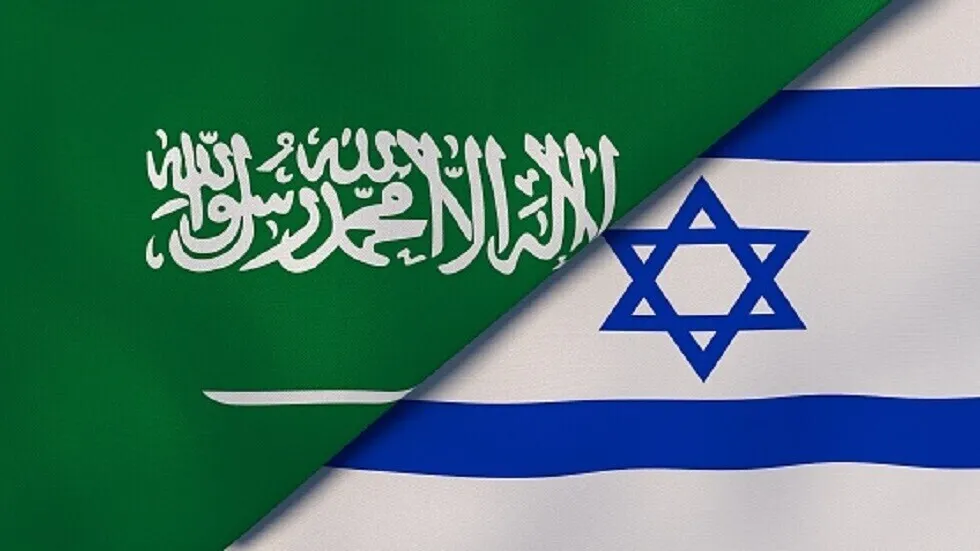
Gaza Herald – An Israeli newspaper has revealed extensive details regarding secret intelligence relations between Israel and Saudi Arabia, tracing their origins to 2006. The report indicates that these ties developed through indirect channels over two decades, anchored by shared security interests in countering Iran and regional threats.
According to the article published on Tuesday, the relationship began to take shape during Meir Dagan’s tenure as head of Mossad. It later expanded through security and intelligence contacts aimed at establishing communication lines despite the absence of formal diplomatic relations.
Eyal Tsir Cohen, who led the Middle East section of Mossad’s external relations department, inherited an existing relationship with Riyadh in 2010. A former Israeli intelligence official stated he took over a connection managed by Mossad, noting that communication occurred via intermediaries and indirect channels described as special links.
The report cited instances where officials met away from public view, including a conversation held in a side room at the White House. Israel sought to transform these informal contacts into regular professional cooperation involving political leaders, while attempting to reach higher levels within the Saudi royal family.
Riyadh expressed interest in acquiring Israeli intelligence capabilities and technology amid fears of exposure. Concerns regarding Iran served as a primary driver for this convergence, reflecting overlapping interests in countering Tehran’s influence and allied armed groups like the Houthis in Yemen.
In September, the newspaper reported that Saudi Arabia contacted Israel indirectly through US Central Command to obtain information on Houthi threats, particularly concerning maritime routes. Diplomatic sources indicated these communications aimed at addressing threats without signaling official cooperation or diplomatic normalization.
Houthi leader Abdul-Malik al-Houthi claimed Saudi airports were used for Israeli intelligence flights toward Yemen in exchange for information. The report did not independently verify these claims, emphasizing that neither party officially discloses the nature of their security collaboration.
The file highlights the importance of undeclared intelligence channels in managing regional risks without incurring domestic or regional costs associated with direct political relations. Reports also mentioned Saudi interest in Israeli cyber and surveillance technologies, including NSO Group’s Pegasus software.
International investigations have linked Pegasus to targeting journalists and activists, including coverage related to the killing of Jamal Khashoggi in Istanbul in 2018. However, such references do not prove specific deals or the full extent of intelligence cooperation between the two sides.
An analysis by The Monitor suggested Prime Minister Benjamin Netanyahu might leverage Saudi Arabia’s need for Houthi intelligence to advance normalization. Political sources indicated potential use of shared security interests to push political dialogue, though no agreement was finalized.
Normalization efforts have stalled, with Riyadh maintaining previous conditions linking relations to progress toward a Palestinian state. The existence of security contacts does not necessarily imply imminent official normalization, as political considerations remain influential.
The report concludes that while intelligence exchanges began nearly twenty years ago and evolved through mutual security needs, they have not transitioned into declared diplomatic partnerships. Wide details of these attributed communications remain officially undisclosed.
This report was produced in the Gaza Herald newsroom.