
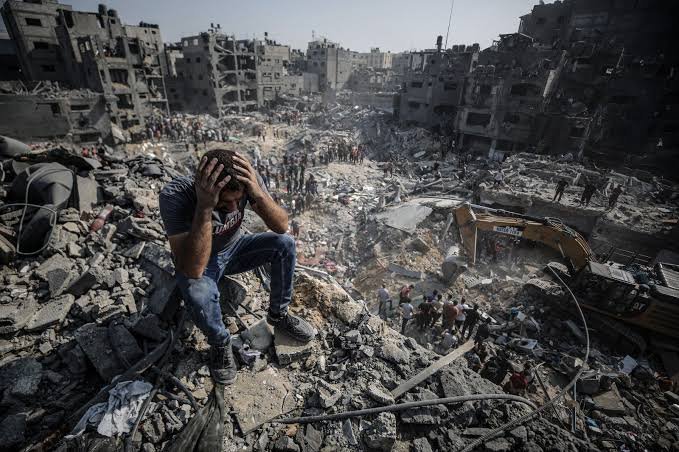
Gaza Herald- Israeli attacks directly killed at least 17,286 Palestinians in the Gaza Strip during 2025, accounting for more than 70% of all officially registered deaths that year, according to a new analysis of Gaza’s annual death registry.
The Palestinian Health Ministry recorded 24,650 deaths across the Gaza Strip in 2025, nearly four times the number recorded during a typical year before Israel’s genocidal war. Of those deaths, 17,286, or 70.1%, were attributed to direct Israeli attacks.
The figures come from the Health Ministry’s first annual mortality report since 2022. Gaza’s electronic death-registration systems were severely disrupted during the first years of the war, meaning the available figures represent documented deaths rather than necessarily capturing the full human toll.
The Shireen Observatory, which analyzed the ministry’s figures alongside its own database of Palestinians killed in Gaza, said the statistics reveal a dramatic transformation in mortality across the besieged territory.
Between 2015 and 2022, Gaza generally recorded between 4,800 and 7,100 deaths annually. In 2025, that number surged to 24,650. Gaza’s crude death rate consequently rose from 2.8 deaths per 1,000 people in 2022 to 11.59 per 1,000 in 2025.
The mortality rate associated with war operations and injuries reached 887.2 deaths per 100,000 people, compared with only 8.9 per 100,000 in 2022, an increase of nearly 100 times.
Gaza’s Children Bear a Devastating Toll
The registry reveals how heavily the killing fell on Gaza’s children and younger generations. According to the Shireen Observatory’s analysis, war-related causes accounted for 95.8% of deaths among Palestinians aged five to 19 during 2025. Among children aged one to four, the proportion was 84.5%.
The Observatory separately documented 19,436 Palestinians killed in Gaza during 2025, including 5,266 children. Children, women and older Palestinians together accounted for 44% of the Palestinians it documented as killed during the year.
The age profile of death in Gaza was also radically transformed. Before the war, more than half of recorded deaths occurred among Palestinians aged 65 and above. In 2025, Palestinians between the ages of 20 and 34 accounted for 28.8% of all registered deaths, compared with just 4.3% in 2022.
Children under five also experienced a severe rise in mortality. The Health Ministry reported an under-five mortality rate of 33.4 deaths per 1,000 live births in 2025, compared with 13.6 in 2022.
The increase cannot be understood solely through deaths caused directly by Israeli attacks. Even after direct war deaths are excluded, the Observatory found that Gaza’s overall mortality remained above its prewar level, as Palestinians struggled to survive amid the destruction of hospitals, shortages of medicines, malnutrition and the collapse of essential services.
Death Beyond the Bombs
The registry documents another dimension of Gaza’s human catastrophe: Palestinians dying amid the destruction of the systems necessary to sustain life.
After excluding Palestinians killed directly in attacks, Gaza still recorded approximately 7,364 deaths in 2025, producing a mortality rate of 3.46 per 1,000 people, compared with 2.8 per 1,000 before the war.
Heart disease became the second-largest recorded cause of death, accounting for 7.7% of deaths, as Gaza’s devastated healthcare system struggled with shortages of medicines, diagnostic equipment, hospital capacity and specialized treatment.
Women of reproductive age experienced an especially dramatic rise in mortality. Their death rate increased from 0.7 per 1,000 women in 2022 to 5.9 per 1,000 in 2025, an increase of more than eightfold.
The figures reflect conditions in which Gaza’s hospitals and healthcare infrastructure had been devastated while Palestinians faced severe shortages of food, medicine, clean water and other essentials.
The Health Ministry also reported worsening outcomes among infants and newborns. Under-five mortality more than doubled compared with 2022, while deterioration in maternal, neonatal and pediatric healthcare placed Gaza’s youngest Palestinians at heightened risk.
A Year of Mass Killing Despite Two Ceasefires
The scale of the deaths is particularly striking because 2025 included two periods of ceasefire. According to the Shireen Observatory, the killing was heavily concentrated in the 224 days when neither ceasefire was in effect.
The Observatory documented 18,280 Palestinians killed during those periods, representing 94% of the deaths it recorded in Gaza during the year.
Its analysis also distinguishes between the broader mortality rate associated with war operations and injuries, which reached 887.2 per 100,000 people, and the rate attributed specifically to direct Israeli attacks, which stood at approximately 813 per 100,000.
The Observatory compared Gaza’s mortality with data from other recent wars and found an extraordinary concentration of violent death within a small, besieged population that had repeatedly been displaced inside the Strip.
The available numbers may still represent only part of Gaza’s actual death toll. The destruction and disruption of death-registration systems during the war left deaths unregistered, while Palestinians remain missing beneath rubble and documentation efforts continue.
What the 2025 registry establishes is stark: 24,650 Palestinians were officially recorded dead in Gaza in a single year, and more than seven in every ten of those deaths were attributed to direct Israeli attacks.
But direct attacks tell only part of Gaza’s story. Even after those deaths are removed from the figures, mortality remained above prewar levels as Palestinians struggled to survive amid a devastated healthcare system and the destruction of the basic conditions necessary for life.
Behind the percentages are 17,286 Palestinians recorded as directly killed in Israeli attacks in 2025 alone, alongside thousands more who died during a year in which Gaza’s hospitals, food systems, homes and essential infrastructure remained under catastrophic strain.
The registry therefore documents not only the extraordinary scale of direct killing in Gaza, but a society in which death spread far beyond the immediate impact of bombs and gunfire.

