Gaza Herald — The past three years were not merely a chronological sequence of military events and field clashes; they represented a systematic and continuous dismantling of every element of human survival in the Gaza Strip. From the initial explosion of events in October 2023 to the fading of hope three years into the bombardment, displacement, starvation, and international legal proceedings, Gaza was transformed from a blockaded coastal enclave into the largest theater of war crimes and international humanitarian law violations in the twenty-first century.
This comprehensive narrative traces the full timeline of the war from a humanitarian and international perspective, following the expanding cycle of mass killing, pivotal massacres, legal proceedings, prisoner exchanges, and horrific testimonies emerging from behind bars and beneath the rubble.
The Great Explosion and the Expanding Circle of Fire
On the morning of Saturday, October 7, 2023, Palestinian resistance factions launched a swift and large-scale attack on military sites surrounding the Gaza Strip. The Israeli response was immediate, declaring an official state of war for the first time in decades. Within 48 hours, the Israeli Defense Minister announced a “complete siege” on Gaza, stating: “No electricity, no food, no water, no fuel… Everything is closed.”
During the initial days, the Israeli air force shifted to a “scorched earth” strategy, targeting densely populated neighborhoods such as Al-Rimal, Shujaiya, and the Jabalia refugee camp with thousands of tons of high-explosive munitions. At this stage, entire families began to be wiped from civil registries as their homes were completely flattened over their heads.
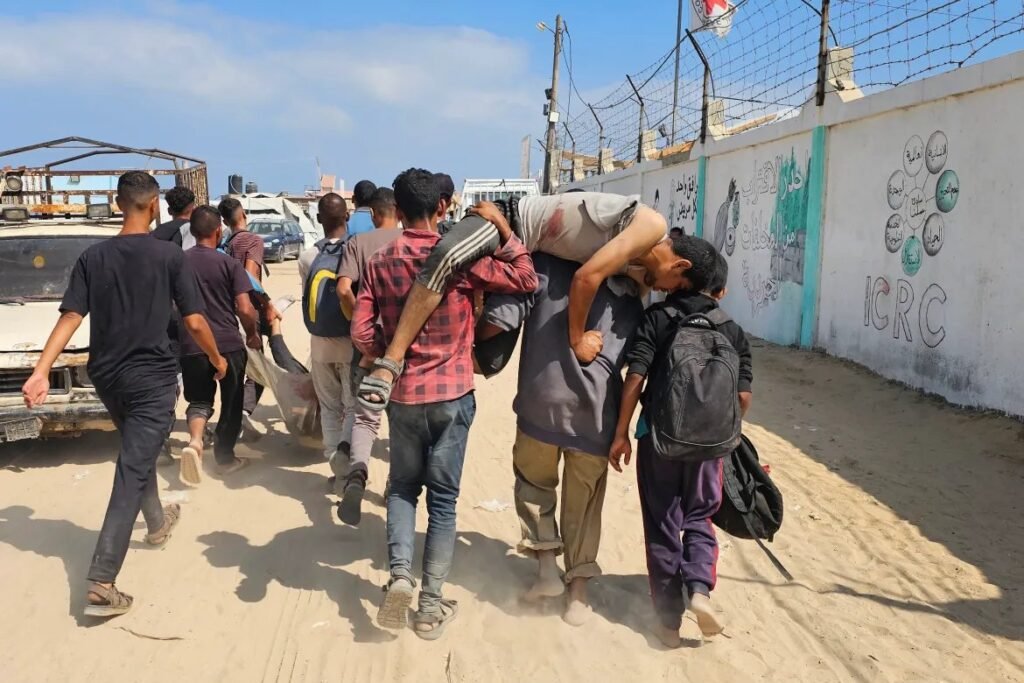
By late October 2023, Israeli forces initiated ground operations by invading northern Gaza. This was accompanied by repeated Israeli orders instructing over 1.1 million residents in the north to evacuate immediately to the south.
This move triggered the largest wave of mass displacement in modern Palestinian history since 1948. As thousands of families fled on foot carrying their children and basic belongings, the scope of bombardment expanded to hit routes previously designated as “safe,” UNRWA facilities, and temporary shelter schools.
The Record of Massacres and the Decimation of Healthcare
Over three years, daily massacres became a regular feature of news coverage. However, specific pivotal moments shocked the global conscience and claimed thousands of lives in mere moments.
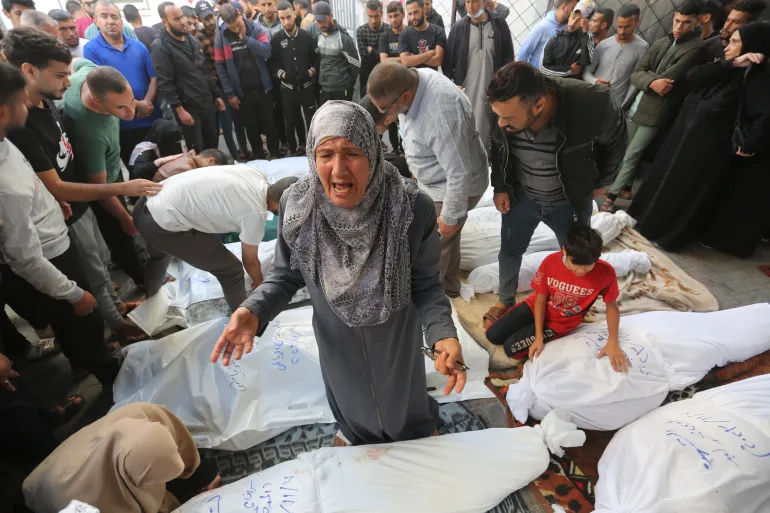
The strike targeting the courtyard of Al-Ahli Arab Hospital in Gaza City in October 2023 marked the first major turning point. The hospital was serving as a shelter for thousands of wounded patients and displaced families. The massive explosion killed around 500 Palestinians in seconds, serving as an early indicator that medical infrastructure, places of worship, and humanitarian institutions would not be spared.
As the blockade deepened in northern Gaza and famine spread in February 2024, thousands of exhausted citizens gathered at the “Nabulsi Roundabout” on coastal Al-Rashid Street awaiting a small convoy of trucks carrying flour and food aid. Israeli forces opened fire with automatic weapons and artillery into the crowds, killing over 118 civilians and injuring hundreds in what became known globally as the “Flour Massacre,” highlighting the direct weaponization of starvation.
March 2024 witnessed a military operation lasting nearly two weeks inside and around Al-Shifa Medical Complex—the largest healthcare facility in the Strip. The operation ended with the destruction, burning, and permanent decommissioning of the complex. Following the withdrawal of forces, medical teams and civil defense workers uncovered mass graves in the hospital yards containing bodies of patients, wounded individuals, and medical staff, some showing signs of execution and binding.
Despite the designation of the “Al-Mawasi” coastal strip in the south as a “humanitarian safe zone,” airstrikes repeatedly targeted tent clusters made of canvas and plastic. In May 2024, an airstrike on Rafah set displaced persons’ camps ablaze, burning dozens of women and children, provoking widespread global outrage under the banner “All Eyes on Rafah.”
As the war entered its second and third years, the humanitarian crisis shifted from direct bombardment to the systemic collapse of environmental and public health infrastructure. The destruction of water treatment plants, sewage networks, and the blockade on medical supplies caused widespread disease outbreaks, malnutrition, and preventable fatalities among chronic disease patients deprived of basic care.
The International Track and War Trials
The widespread violations of international law became the primary driver for nations and human rights organizations to turn to international courts to challenge the impunity of war leaders.
In a historic move in December 2023, South Africa filed an application before the International Court of Justice (ICJ) in The Hague accusing Israel of committing acts of genocide against Palestinians in Gaza under the 1948 Genocide Convention.
In January 2024, the Court issued a landmark order indicating a plausible risk of genocide and ordered immediate provisional measures, requiring Israel to take all measures within its power to prevent genocidal acts, ensure the immediate provision of urgently needed basic services and humanitarian assistance, and prevent and punish direct incitement to genocide. Subsequent orders from the Court demanded an immediate halt to military operations in Rafah and the unhindered opening of land crossings.
In May 2024, the Prosecutor of the International Criminal Court (ICC), Karim Khan, announced applications for arrest warrants for senior Israeli officials alongside senior Hamas leaders, charging them with war crimes and crimes against humanity, including starvation as a method of warfare, willful killing, and torture.
Humanitarian Ceasefires and Detainee Testimonies
In late November 2023, international mediation secured a one-week humanitarian pause. The agreement included a temporary ceasefire, the entry of a limited number of aid trucks, the release of approximately 105 hostages held by resistance groups, and the release of approximately 240 Palestinian women and children detained in Israeli prisons. Subsequent rounds of complex negotiations continued sporadically over three years without securing a permanent, comprehensive ceasefire.
Testimonies from released Palestinian detainees exposed severe conditions inside secret detention centers and Israeli military bases, particularly the Sde Teiman camp in the Negev desert. Detainees reported being kept handcuffed and blindfolded for weeks on end—leading to nerve damage and forced limb amputations—alongside widespread physical abuse, attack dogs, and severe medical neglect where open wounds were left untreated.
Conversely, released Israeli and foreign hostages described severe conditions experienced over months underground, including prolonged confinement in narrow tunnels without natural light, extreme fear from relentless daily airstrikes that claimed the lives of several captives, and severe shortages of food, clean water, and medicine resulting from the overall blockade imposed on the enclave.
The Ultimate Human Toll
By late 2026, official data from Palestinian health authorities confirmed that more than 74,000 Palestinians had been killed, the vast majority women and children—with over 175,000 injured and thousands more buried permanently under millions of tons of debris. United Nations satellite assessments revealed that over 82% of all structures across the Gaza Strip had been damaged or destroyed, leaving nearly 1.9 million people internally displaced in a state of perpetual flight.
Beyond the physical destruction of cities and infrastructure, the war inflicted a permanent generational wound: a shattered healthcare system, an erased educational framework, and an entire population left to endure the long-term physical and psychological scars of an unprecedented humanitarian catastrophe.