Gaza Herald — Marking three years since the outbreak of full-scale war, Israeli Defense Minister Israel Katz issued a direct threat of renewed military escalation against the Gaza Strip on Wednesday, ordering forces to maximum readiness, citing unverified intelligence regarding a potential Hamas operation on October 7.
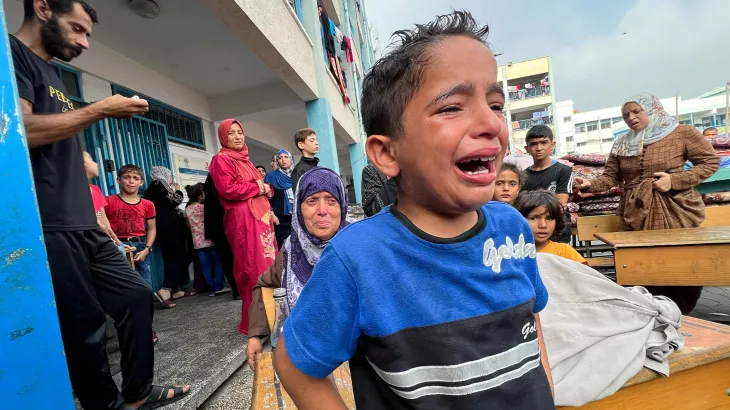
The Israeli threat comes despite a formal ceasefire declared on October 10, 2025, which was intended to transition the enclave toward international administration and civilian reconstruction. Instead, continuous Israeli strikes and rigid border controls have kept 2.4 million Palestinians suspended in a state of ongoing displacement and active military siege.
An Order of Readied Aggression Ahead of October 7
According to statements from Defense Minister Israel Katz’s office, the military command has been instructed to elevate operational readiness across all sectors surrounding and inside Gaza. Citing classified intelligence, Israeli officials claimed Hamas intended to carry out strikes against military positions within the territory to mark the third anniversary of the October 7, 2023 attacks.
Without presenting specific evidence, Katz warned that any targeted action would result in “Hamas and the Palestinians in Gaza paying a heavy price” disproportionate to any operational event. On the ground, the threat was immediately accompanied by military action: Palestinian medical sources reported one person killed and three wounded in fresh strikes on Tuesday, alongside the death of another civilian succumbing to earlier blast injuries.
A Ceasefire in Name Only: 1,460 Killed Since October 2025
For Gaza’s civilian population, the defense minister’s warnings reinforce a reality where formal truces offer no tangible protection. Official Palestinian records show that over 74,000 Palestinians have been confirmed killed and more than 175,100 injured since October 2023—with women and children comprising the vast majority of casualties.
Crucially, the formal ceasefire brokered nearly a year ago has failed to halt military operations. Since the October 10, 2025 truce took effect:
• Palestinian Fatalities: At least 1,460 civilians killed in localized air, drone, and artillery strikes.
• Palestinian Injuries: Over 5,100 people wounded in ongoing border zone skirmishes and targeted bombings.
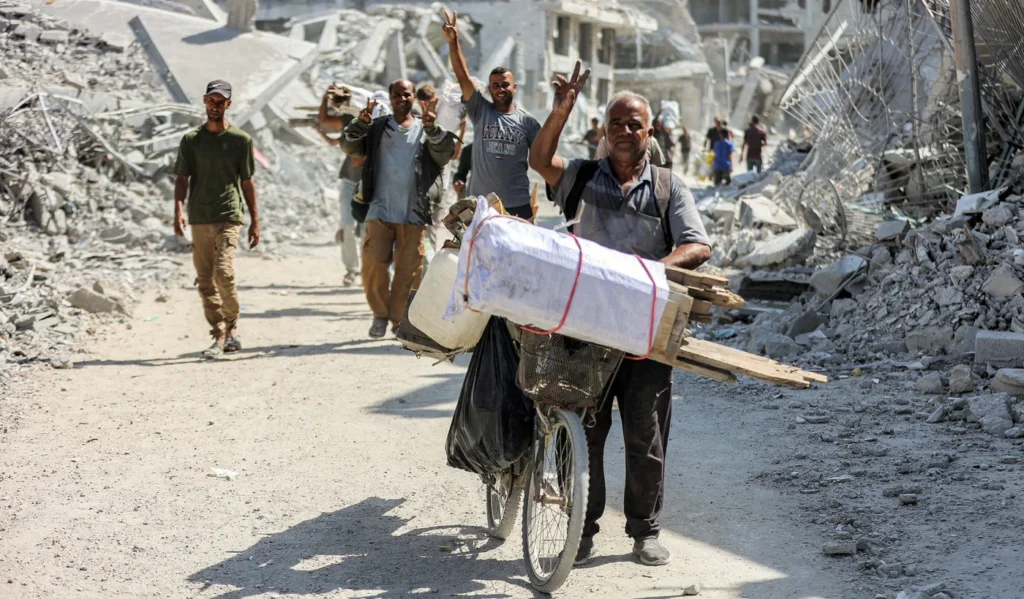
• Infrastructure Impasse: Approximately 90 percent of Gaza’s built environment remains heavily damaged or in ruins, with heavy reconstruction equipment systematically turned back at border crossings.
Trapped in Displacements and Blockaded Recovery
Gaza remains caught in an enforced humanitarian gridlock. Over 2.15 million residents, nearly 90 percent of the total population, remain displaced, living in flimsy nylon tents or ruined concrete shells across shrinking designated zones like Al-Mawasi.
The Israeli government continues to enforce severe entry limits on basic human survival goods, blocking prefabricated shelters, civil defense tools, vital medical testing consumables, and fuel needed to run municipal water pumps. For families who have survived 36 months of bombardment, the prospect of a renewed full-scale offensive is not a distant political threat, but the continuation of a war that never truly stopped.
International Legal Fallout vs. On-the-Ground Reality
The ongoing threats of collective punishment unfold against the backdrop of historic international judicial proceedings. In November 2024, the International Criminal Court (ICC) issued arrest warrants for Prime Minister Benjamin Netanyahu and former Defense Minister Yoav Gallant, alleging war crimes and crimes against humanity. Simultaneously, the International Court of Justice (ICJ) continues to examine South Africa’s genocide case against Israel.
Yet for Palestinians, legal mechanisms have provided no immediate relief from bombardment or starvation. As Gaza marks three years since the catastrophic displacement of its population began, residents face the same existential uncertainty, trapped in a devastated landscape where promises of reconstruction remain unfulfilled, while threats of a “heavy price” continue to dictate daily survival.