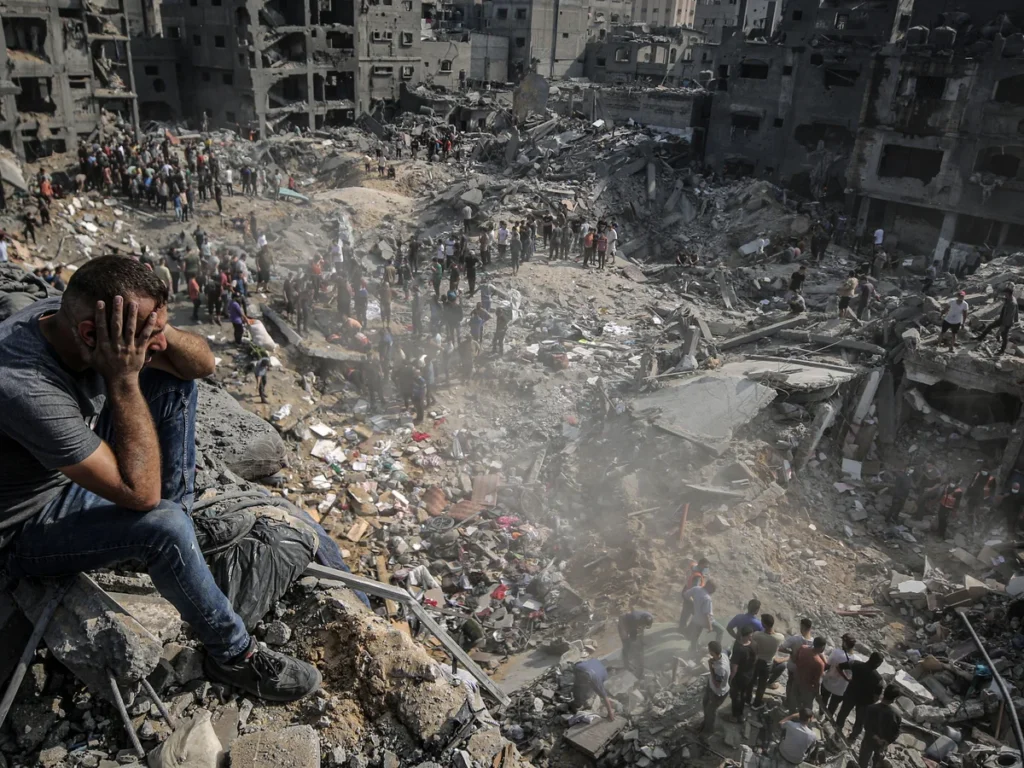
Gaza Herald — Inside the few remaining medical facilities across the Gaza Strip, keeping a hospital open has devolved into a desperate race against a ticking clock: a generator running out of fuel. Behind closed doors, medical staff are no longer just treating catastrophic trauma; they are performing a daily balancing act, rationing dwindling power supplies between neonatal units, oxygen plants, intensive care beds, and surgical suites.
According to World Health Organization reports, only 19 of Gaza’s 36 hospitals remain even partially functional, with none operating at full capacity. The crisis, however, extends beyond direct bombardments. A systematic shortage of fuel, engine oil, and replacement parts has put nearly 70 percent of hospital electricity generators out of service, leaving the surviving facilities operating on borrowed time.
Newborns and Critical Care at Immediate Risk
At facilities like Al-Rantisi Children’s Hospital, power outages directly threaten fragile lives. Hospital officials report that prolonged generator shutdowns have halted the opening of newly prepared intensive care wards and premature infant units. In a pediatric ICU, a power disruption does not merely darken a room; it stops oxygen delivery systems, halts vital sign monitors, and turns incubation into a life-threatening risk within minutes.
At larger complexes like Nasser Hospital, engineering crews are forced to continuously rotate power between different buildings while running aged equipment far beyond recommended service intervals. When spare parts and engine oil are denied entry, routine maintenance becomes impossible, turning mechanical fatigue into a fatal bottleneck.
Service Reductions as a Silent Weapon
Hospitals do not need to be hit by a missile to be knocked offline; they can be disabled just as effectively by restricting essential inputs:
Suspension of Specialized Care: Al-Wafa Hospital for Medical Rehabilitation was forced to temporarily suspend outpatient clinics, surgical procedures, and physical therapy due to power deficits, following similar measures at Kuwait Specialized Hospital.
Loss of Cold-Chain Storage: Critical pharmaceuticals, vaccines, and blood supplies risk spoilage when refrigeration systems fail due to intermittent power.
Dialysis and Oncology Disruptions: Hundreds of patients requiring regular kidney dialysis or ongoing oncology care face life-threatening delays when diagnostic labs and treatment machines lack steady voltage.
Overburdened Infrastructure Under Demographic Strain
With health-sector damage estimated at over $1.39 billion and more than 1,825 primary clinics, pharmacies, and laboratories damaged or destroyed, the remaining regional hospitals must absorb the medical needs of roughly 1.7 million displaced people. Overcrowded conditions and poor sanitation exacerbate outbreaks of infectious diseases, adding pressure to an already hollowed-out network.
Doctors, nurses, and surgeons continue to work around the clock, but medical expertise cannot replace a dry fuel tank or a burnt-out generator alternator. As the fuel blockade continues, Gaza’s remaining healthcare providers are left struggling to maintain the bare minimum conditions required to keep their patients alive through the night.