
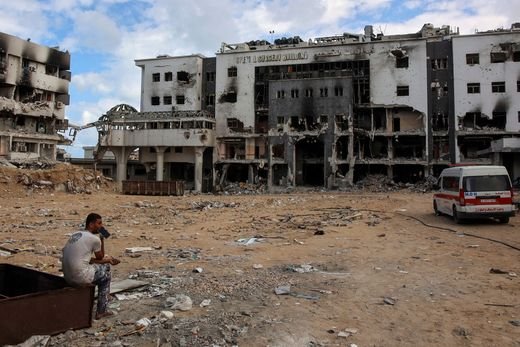
Gaza Herald — Long before military aggression reduced vast swaths of the enclave to rubble, Gaza was a vibrant epicenter of Levantine culture. It was a place where street weddings echoed with traditional music, youth played football on neighborhood pitches, fishermen navigated the Mediterranean, and historic markets thrived with centuries of trade.
Beyond the catastrophic loss of human life, the systematic destruction of Gaza’s physical and intellectual infrastructure exposes a deliberate campaign of scholasticide and cultural erasure designed to sever Palestinians from their history, identity, and collective future.
The Target Beyond Concrete: Intellectual and Artistic Erasure
The targeting of civic spaces reaches far beyond brick and mortar; it strikes directly at the custodians of Palestinian memory. The Palestinian Olympic Committee reports that over 1,000 athletes have been killed and hundreds of sports facilities leveled, stripping communities of crucial spaces for recreation and solidarity.
Simultaneously, the targeting of Gaza’s cultural elite reveals an institutional effort to quiet the voices documenting its reality:
• Literary & Visual Figures: Prominent writers, poets, and visual artists—including Refaat Alareer, Hiba Abu Nada, Heba Zagout, and Mohammed Sami Qariqa—have been targeted in their homes and shelters.
• Musicians & Performing Artists: Promising young talent, such as guitarist Sha’ban al-Dalu, violinist Lubna Alyan, and percussionist Akram al-Ajl, have been silenced alongside their institutions.
• Academic Leadership: Higher education has faced total devastation, with over 97 percent of schools damaged or destroyed, and top scholars, including Islamic University President Sufyan Tayeh, killed in direct strikes.
The Systematic Destruction of Heritage Sites
The assault on Gaza’s history extends to its ancient architectural, religious, and commercial landmarks. Historic places of worship, centuries-old libraries, archival centers, and archaeological museums holding Roman and Byzantine artifacts have been turned to dust.
Centuries-old commercial hubs like the Grain Market in Khan Younis and Al-Qaisariyya Market in Gaza City, which served as central spaces for community life, heritage, and economic continuity, no longer exist. Erasing these landmarks aims to eliminate the physical evidence of Palestinian deep-rootedness in the land.
Everyday Resistance: Refusing to Be Erased
Despite the unprecedented scale of destruction, the cultural fabric of Gaza remains unbroken. Palestinians continue to transform survival into an active assertion of identity.
In displacement camps from Khan Younis to Deir al-Balah, communities organize collective weddings, children transform dusty patches of rubble into football pitches, and teachers conduct lessons under canvas tents. Artists paint on salvaged canvas, poets recite new verses from temporary shelters, and musicians keep traditional dabke rhythms alive.
These acts of cultural preservation are not mere coping mechanisms, they are a form of steadfastness (sumud). By preserving their songs, stories, education, and social bonds amid ongoing military siege, the people of Gaza demonstrate that while buildings and institutions can be rebuilt, an indigenous culture rooted in centuries of history cannot be erased.

