Gaza Herald — The announcement of a $2.45 billion initial recovery plan for Gaza presents the territory with a stark paradox: billions are being discussed in international conference rooms while Israeli attacks, political conditions and restrictions continue to stand between Palestinians and meaningful reconstruction.
On Wednesday, the US-backed Board of Peace unveiled a six-month blueprint containing 66 projects aimed at restoring basic services, clearing rubble and unexploded ordnance, providing temporary shelter, rehabilitating hospitals and roads, restoring water and electricity infrastructure and supporting economic recovery.
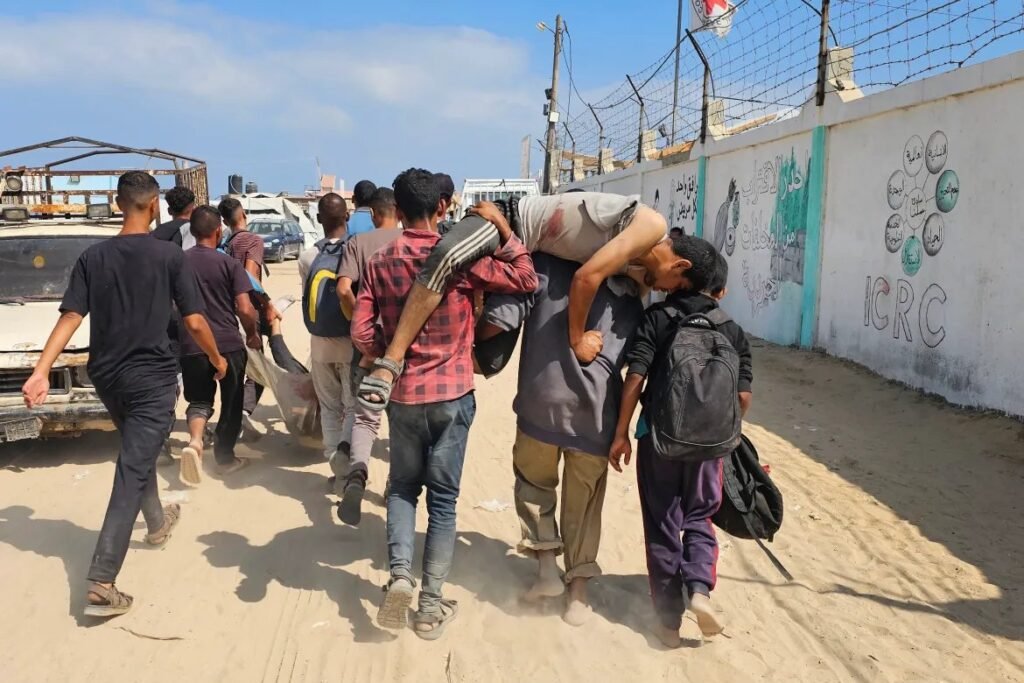
Yet as the plan was being presented in New York, Israeli attacks killed Palestinians across Gaza. The contradiction was difficult to ignore: international officials were discussing how to rebuild Gaza while Palestinians continued to be killed under a ceasefire that has failed to provide complete security.
Reconstruction With Political Conditions
The $2.45 billion package represents only an initial recovery programme. A joint assessment by the United Nations, European Union and World Bank estimates that Gaza will require approximately $71.4 billion over the next decade for recovery and reconstruction, including $26.3 billion during the first 18 months. Direct physical damage alone is estimated at $35.2 billion.
The Board’s 66 projects cover six sectors, including infrastructure, human development, economic recovery, digital transformation, legal affairs, and peace and security. Roughly $1 billion is allocated to infrastructure projects, including temporary shelters, rubble and unexploded ordnance clearance, hospital rehabilitation, road repairs and the restoration of water and electricity systems.
But reconstruction is intertwined with a broader political and security framework. Board officials envisage work progressing geographically, beginning in Rafah and moving northward as Hamas relinquishes governance, weapons are decommissioned and Israeli forces withdraw.
That sequencing raises an unavoidable question: should Palestinians’ ability to rebuild homes, hospitals and basic infrastructure depend on political and military negotiations over which civilians themselves have little control?
Billions on Paper, Destruction on the Ground
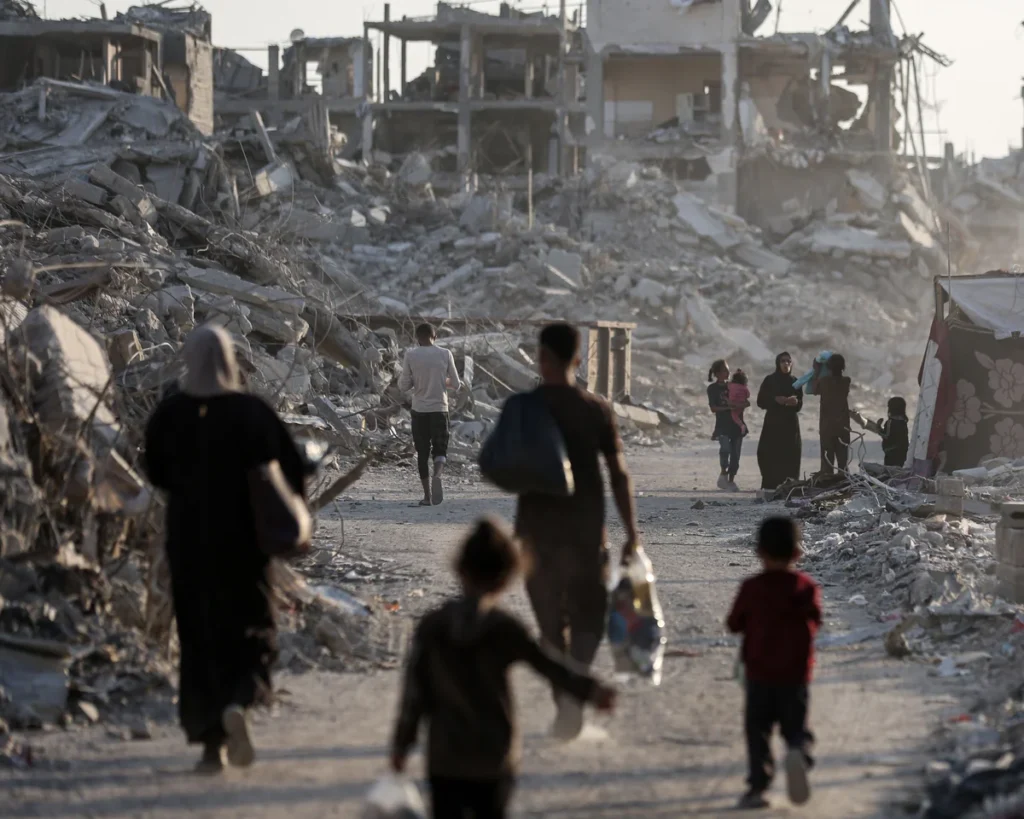
The distance between reconstruction plans and daily reality remains enormous. Gaza’s housing, healthcare, education, transport, water and commercial sectors have suffered catastrophic damage, while hundreds of thousands of homes have been damaged or destroyed.
For displaced Palestinian families, reconstruction remains largely an international promise rather than a physical reality. Many continue to live in tents or damaged buildings while access, security, funding and political disputes obstruct large-scale rebuilding.
The Board itself acknowledges these difficulties. Its officials have described negotiations with Israel as complicated, while funding and access remain unresolved. The $2.45 billion plan therefore represents a proposed roadmap rather than $2.45 billion already available and being spent inside Gaza.
Who Controls Gaza’s Recovery?
The political structure accompanying reconstruction raises an even deeper question about Palestinian sovereignty.
Under the proposed arrangement, the Palestinian National Committee for the Administration of Gaza would manage day-to-day civilian affairs, but it would operate under the oversight of the internationally backed Board of Peace, alongside a planned international stabilisation force.
Supporters present this framework as a transitional mechanism intended to restore services and eventually return civilian governance to Palestinians. Yet it also creates legitimate questions about how much authority Palestinians themselves will exercise over decisions fundamental to Gaza’s future.
Who decides which neighbourhoods are rebuilt first? Who controls Gaza’s borders and the entry of concrete, steel, machinery and medical equipment? Who determines when Israeli forces withdraw? And how much authority will Palestinian institutions have over the reconstruction of their own communities?
These are not secondary political questions. They will determine whether reconstruction restores Palestinian life or becomes another mechanism through which Gaza’s future is decided externally.
The Palestinian technocratic administration has publicly rejected the displacement of Gazans and said reconstruction should eventually extend across the entire Strip. That principle matters: rebuilding Gaza must mean enabling Palestinians to remain on their land and determine their own future.
Gaza Needs More Than Money
The $2.45 billion announcement is significant, but money alone cannot reconstruct Gaza. The much larger $71.4 billion estimate demonstrates the extraordinary scale of the devastation, while continuing insecurity illustrates the fragility of plans developed far from the people expected to live under them.
Reconstruction cannot simply mean replacing destroyed roads, hospitals and buildings. It must also address whether Palestinians have meaningful control over their territory, whether materials can enter freely, whether families can safely return to their communities and whether rebuilt infrastructure can survive another cycle of destruction.
The central question, therefore, is not simply who will pay to rebuild Gaza, but who will control the rebuilding and the future that emerges from it.
Without Palestinian agency, unrestricted access to reconstruction materials and lasting protection from further destruction, billions of dollars can remain little more than figures on paper.
Gaza does not only need to be rebuilt. Palestinians must have the right to rebuild it themselves and determine what comes next.