Gaza Herald — Gaza’s olive sector has suffered catastrophic losses during Israel’s genocidal war, with the area under olive cultivation shrinking by around 90% as widespread destruction devastates farmland, trees, processing facilities and thousands of agricultural livelihoods.
Luay Rajab, Director of Public Relations and Media at Gaza’s Ministry of Agriculture, said the area planted with olive trees has fallen from approximately 50,000 dunams to just 5,000 dunams in 2026.
Rajab said olives previously accounted for around 55% of Gaza’s fruit-tree cultivation and 27% of plant production. The number of olive trees has fallen from approximately two million to just 150,000.
Olive production has consequently collapsed from around 40,000 tons annually before the war to approximately 5,000 tons, a decline of 87.5%. Olive oil production has fallen from roughly 5,000 tons to just 700 tons, leaving an estimated self-sufficiency gap of 85%.
The destruction has extended across the entire olive production chain. The number of operating olive presses has fallen from 40 to seven, while pressing lines have declined from 68 to 15. Processing capacity has dropped from approximately 150 tons per hour to just 25 tons.
Pickling factories have fallen from 14 to three, with their capacity declining from approximately 1,500 tons to 200 tons. Manufacturing units have also dropped from ten to just one.
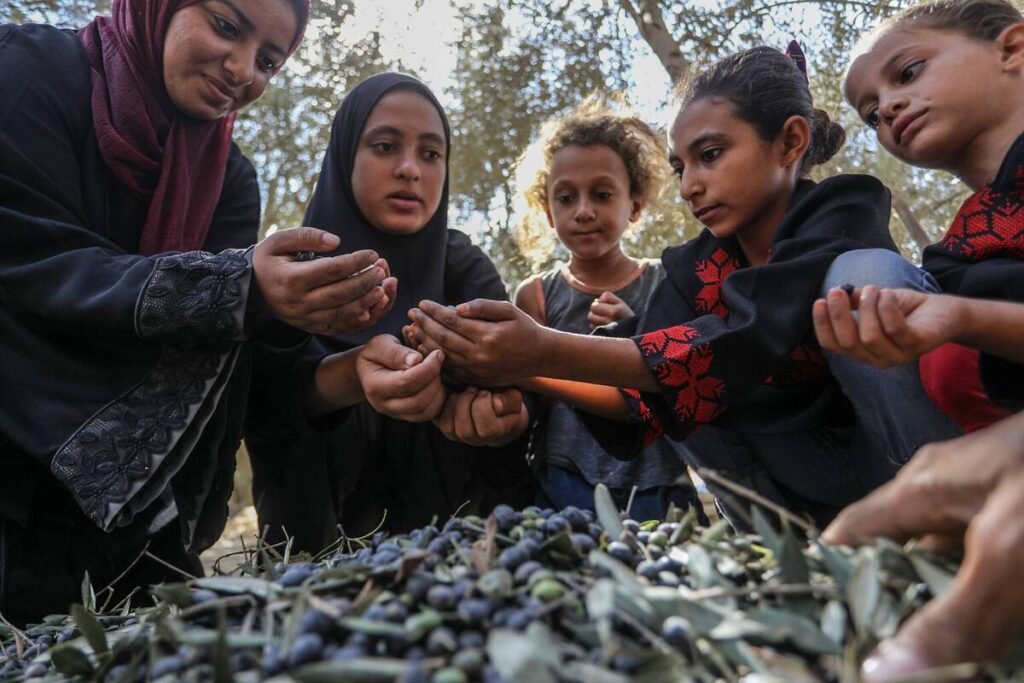
The collapse has devastated agricultural livelihoods. The number of farmers associated with the olive sector has fallen from around 20,000 to 1,000, while the number of workers has dropped from approximately 3,000 to just 200. Women who traditionally participate in harvesting, sorting, processing and marketing have also lost vital sources of income.
Scarcity has driven prices sharply higher. Olive prices have risen from around five shekels to 20 shekels per kilogram, while the price of a tin of olive oil has increased from approximately 500 to 1,500 shekels.
The devastation of the olive sector reflects the broader destruction of agriculture across Gaza. A joint assessment by the UN Food and Agriculture Organization (FAO) and the UN Satellite Centre (UNOSAT) found that, as of June 24, 2026, only 3% of Gaza’s cropland remained both accessible and undamaged.
While 27% of Gaza’s cropland remained accessible, most of it was damaged and required rehabilitation before cultivation could resume. FAO also warned that farmers face severe shortages of seeds, fertilizers, irrigation equipment, fuel and other essential production materials.
The destruction of Gaza’s olive sector has therefore extended far beyond the loss of a single harvest, threatening food security, agricultural livelihoods and a crop deeply rooted in Palestinian economic, social and cultural life.