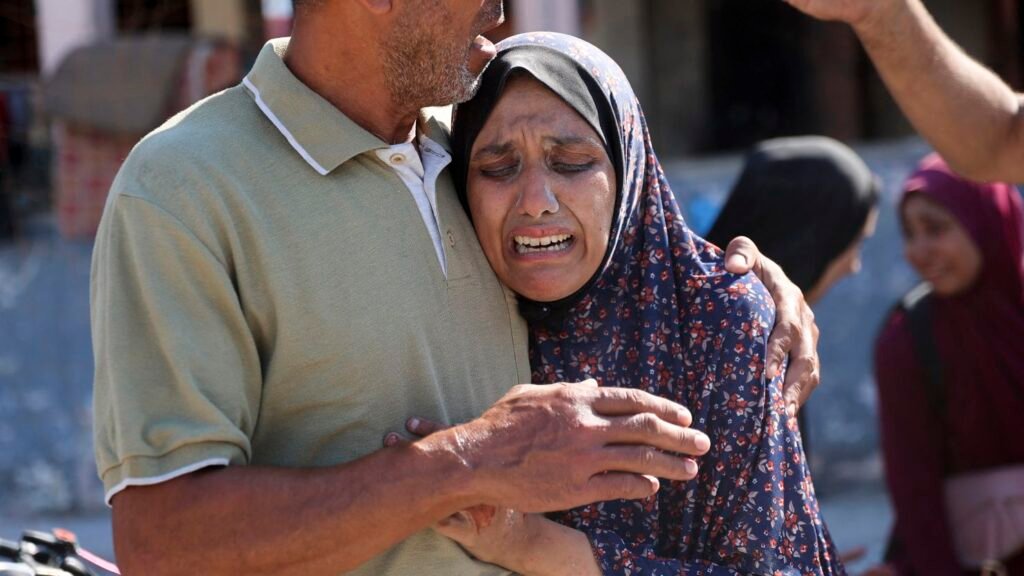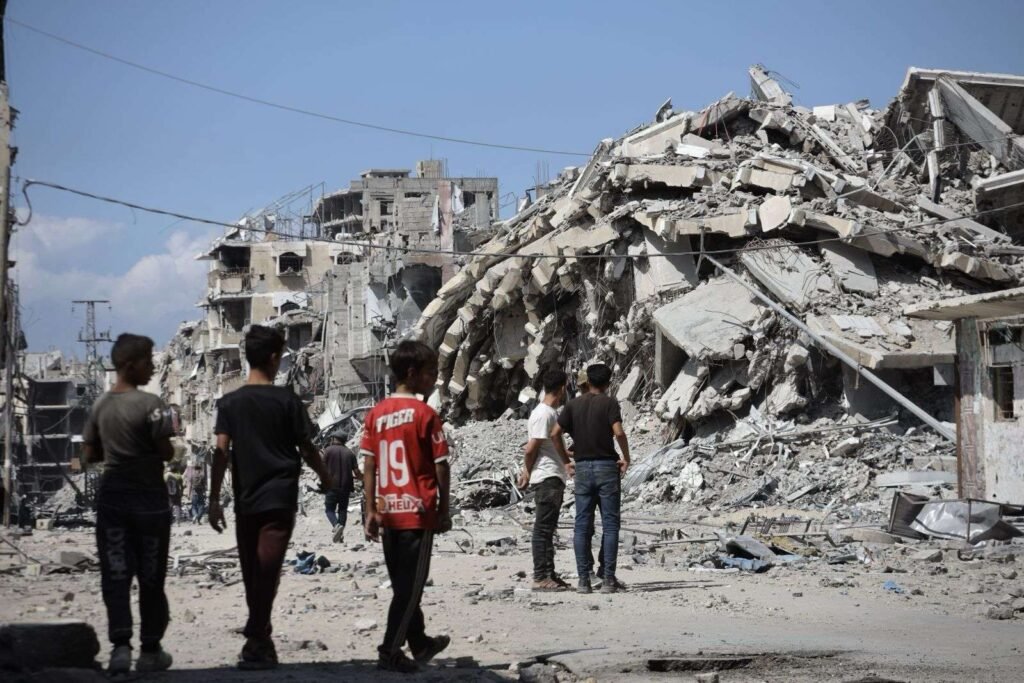
Gaza Herald — As reconstruction in Gaza remains tied to unresolved political and security conditions, hundreds of thousands of Palestinians face an urgent shelter crisis with little protection from the elements and deteriorating living conditions.
Around 1.98 million people, 94 percent of Gaza’s population, urgently need adequate shelter, according to a recent assessment led by the Norwegian Refugee Council through the Palestine Shelter Cluster.
The findings come as Israel and the so-called Board of Peace have agreed to establish two working groups for Gaza, one focused on disarmament and demilitarisation and another on sanitation, clean water and other public health needs.
At the same time, Israel has maintained that the disarmament of Palestinian armed groups must precede reconstruction, which is estimated to require around $71 billion.
For Palestinians living through the aftermath of widespread destruction, however, shelter cannot wait for political agreements.
Families are living amid flooding, insects, rodents and unsafe structures, while restrictions on construction materials continue to make even basic repairs difficult.
A day spent searching for the basics
For 42-year-old Akram Abu Humeideh, each day begins before sunrise.
The displaced former teacher lives in a tent in Al-Mawasi, Khan Younis, with his wife and four children. The intense heat inside the tent forces him to start his day early.
His routine revolves around survival: first waiting in line for water, then queuing for food at a community kitchen, followed by searching for a place where he can charge phones and batteries.
Only after securing these essentials can he return to clean around the tent and attempt to sleep.
But insects and rodents make even rest difficult.
Life in a tent has stripped away privacy, comfort and security, turning each day into a struggle for necessities that were once taken for granted.
His experience reflects the reality of hundreds of thousands of Palestinians who remain displaced nearly three years into the war.
A shelter crisis beyond destroyed homes
The shelter emergency extends far beyond the loss of houses.
The assessment found that approximately 84 percent of households were living in conditions classified as either “critical” or “catastrophic” when assessed on their ability to perform basic activities such as sleeping, cooking, washing, storing water, accessing lighting and coping with extreme temperatures.
The four governorates included in the assessment—North Gaza, Gaza, Deir al-Balah and Khan Younis—were all classified at Phase 4, or Critical, under the Shelter Severity Classification system.
Rafah and areas considered inaccessible or unsafe were not included in the assessment, meaning the findings do not capture the full scale of Gaza’s shelter crisis.
Around 65 percent of assessed households were living in tents or makeshift shelters. Tents alone housed 54 percent of families, while another 11 percent were living in makeshift structures.
For Abu Humeideh, the consequences are especially painful when he watches his six-year-old daughter, Leen, carry water containers or take a cooking pot to the community kitchen to collect food.
She has spent much of her childhood knowing little beyond war and displacement.
Returning home does not always mean returning to safety
For Palestinians who manage to return to their neighborhoods, destroyed or severely damaged homes often provide little protection.
Basel Abu Madi, 50, has experienced both displacement in a tent and life inside a damaged home.
His family initially lived in a tent before returning to northern Gaza in January 2025. Their three-story house on Al-Jalaa Street was still standing, although its windows, doors and some walls had been damaged.
Returning home brought immense relief.
For several months, the family experienced what felt like a return to normality compared with life in a tent.
That period ended when Israel launched its Gaza City offensive in August 2025, forcing the family south once again.
Two months later, following the October ceasefire, they returned to their neighborhood—only to find that their home had been almost completely destroyed.
Only the first floor and part of the second floor remained of the three-story building.
The family gradually repaired what they could and moved back into the ruins.
Today, Abu Madi lives there with his family of eight, alongside his married son and his son’s family of three.
Living among the remnants of what was once a home carries a psychological burden alongside the physical dangers.
Every damaged wall is a reminder of the life the family once had, while every attempt to rebuild takes place amid uncertainty over whether reconstruction will be allowed to move forward.
Gaza cannot wait for shelter
For Gaza’s displaced population, the shelter crisis is unfolding in real time.
Families need roofs that can withstand extreme weather, clean water, sanitation, electricity and safe spaces where children can sleep. Yet tents and makeshift structures remain the reality for hundreds of thousands.
The longer reconstruction is delayed, the deeper the humanitarian consequences become.
For families like Abu Humeideh’s and Abu Madi’s, rebuilding is not an abstract economic project. It means having a safe place to sleep, protecting children from heat and disease, and restoring the basic dignity of having a home.
In Gaza, time is not simply measured by reconstruction plans and political negotiations. For families living under torn canvas and among the ruins of their homes, every passing day is another day without shelter.