
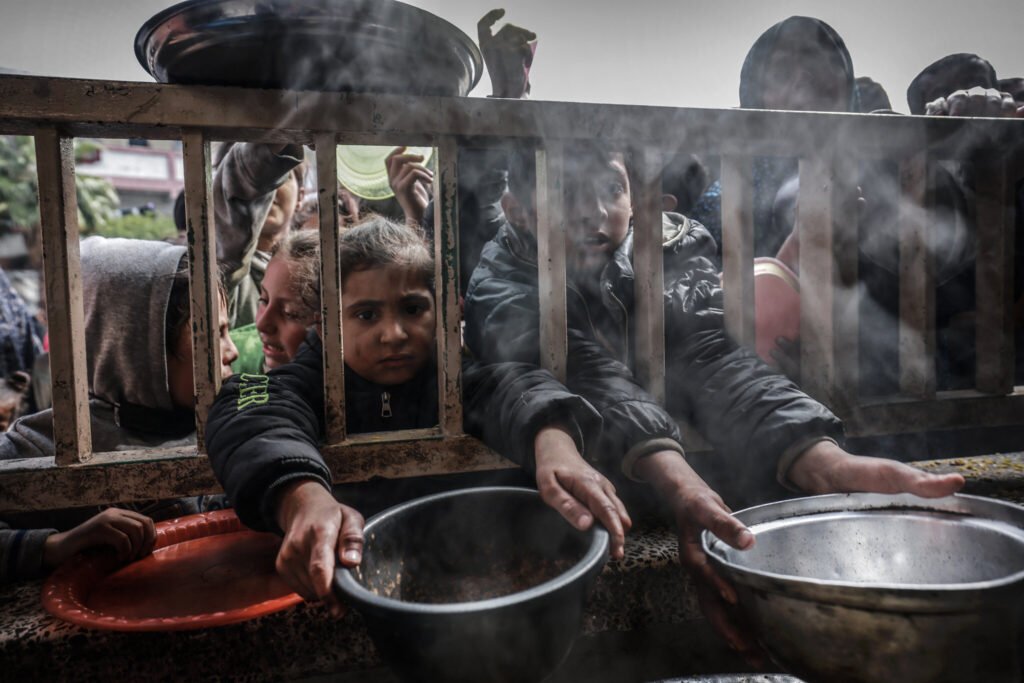
Gaza Herald_ United Nations experts have issued an urgent call for the Food and Agriculture Organization (FAO) to firmly uphold human rights, shield its staff from potential reprisals, and ensure that reporting on artificial starvation is never wrongly treated as a violation of agency neutrality.
This intervention comes in the wake of deep institutional concern over the treatment of FAO officials who documented acute food insecurity in the besieged Gaza Strip during Israel’s ongoing genocidal war. Independent experts expressed grave concern regarding remarks made by FAO Director-General Qu Dongyu, who appeared to link the departure of senior officials directly to their engagement with human rights advocacy.
They stressed that human rights principles are foundational to the FAO’s core mandate rather than peripheral to it, warning that punishing staff for documenting the man-made famine fosters an atmosphere of fear and severely damages the credibility of the entire UN system. Consequently, experts have urged member states to hold agency leadership accountable and demanded that explicit human rights commitments be placed at the center of the selection process for the next FAO director-general in 2027.
Former FAO Director Exposes Retaliation Over Gaza Reporting
Benjamin Davis, who dedicated 26 years of service to the FAO, most recently as the Director of Rural Transformation and Gender Equality, revealed that his contract was deliberately not renewed following his technical work on Gaza’s food crisis and his participation in peaceful solidarity vigils with Palestinians.
Although his contract expired on September 30, effectively forcing him into early retirement, Davis faced accusations regarding professional conduct and institutional neutrality after his team published a comprehensive assessment in May 2025 examining food availability, caloric intake per person, and the humanitarian crisis through the lens of international humanitarian and human rights law.
Rejection of Mandate Boundaries: Agency officials claimed the FAO lacked authority to examine international humanitarian law in specific countries, subsequently citing alleged breaches of civil service neutrality rules to justify non-renewal.
Defiance Against Censorship: Davis firmly rejected these pretexts, maintaining that evaluating hunger and food insecurity is central to the agency’s mission and stating he was unjustly punished simply for speaking out about famine in Gaza.
Intimidation and Complaints: While Davis noted he lacked direct evidence linking the termination to external pressure, he confirmed that Israel submitted two formal complaints regarding his team’s work and that an Israeli diplomat even photographed him during a silent vigil in October 2025.
Leadership Under Fire: Dismissing Human Rights as “Political Games”
The controversy intensified following troubling remarks by FAO Director-General Qu Dongyu, who dismissed human rights advocacy within the organization as political maneuvering. According to Davis, Qu declared that the agency would not tolerate “human rights games,” redirecting such matters to separate Geneva-based institutions and threatening the dismissal of senior officials who pursue them. This stance reflects a fundamental failure to recognize the inseparable link between food security, the universal right to food, and binding international human rights obligations. UN experts have warned that penalizing staff for documenting humanitarian catastrophes in conflict zones actively discourages workers from reporting crises, undermining the agency’s ability to fulfill its core duties.
A Crisis of Legitimacy and the Fight for the Right to Food
Beyond his personal dismissal, which was met with a reassuring applause from colleagues as he left headquarters, Davis highlighted a broader “crisis of legitimacy” facing the international community over its inadequate response to the genocide in Gaza. Despite these systemic failures and heavy institutional interference from powerful states, Davis emphasized that the United Nations remains vital for delivering humanitarian aid and demanding that warring parties comply with international law, particularly the strict prohibition against using the starvation of civilians as a method of warfare. As the FAO looks toward new leadership in 2027, the central question remains whether the organization will protect its staff’s duty to report the truth or sacrifice human rights to appease political sensitivities.

