
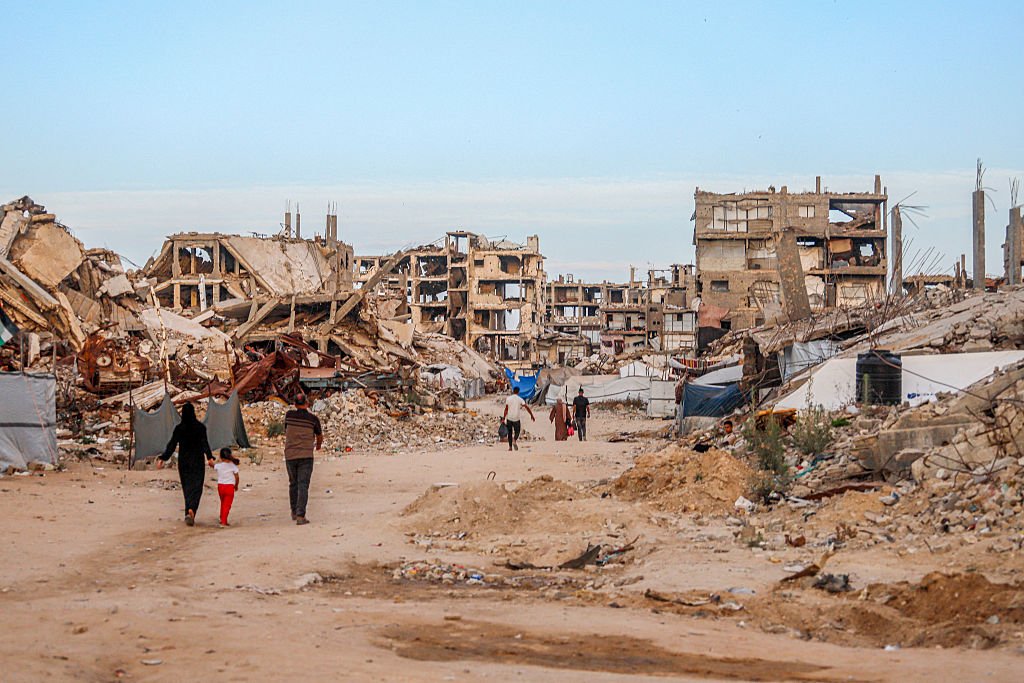
Gaza Herald_ Displaced families living in camps south of Gaza City’s Zeitoun neighborhood are facing increasingly difficult humanitarian conditions near what is known as the “Yellow Line,” with camp managers calling for urgent assistance to provide water, food, healthcare, shelter materials, sanitation supplies, and educational support.
During a discussion organized by Palestine newspaper, camp managers described severe shortages of clean water, deteriorating tents, inadequate sanitation and healthcare services, and the constant threat posed by Israeli gunfire and shelling near the camps.
Sami Al-Dash, who oversees displacement camps in southern Zeitoun, said residents are living in fragile tents in a highly dangerous border area. He said Israeli forces recently moved the concrete markers associated with the “Yellow Line” westward while continuing to fire toward surrounding areas.
According to Al-Dash, the danger becomes particularly acute at night, when military vehicles approach the line and gunfire and artillery shelling intensify. Residents often remain trapped inside their tents during these periods, while those forced to move do so with extreme caution. He said civilians have been injured and others killed by what he described as indiscriminate fire.
Severe water shortages and lack of basic services
Water remains one of the most pressing problems. Al-Dash said a family of six or seven people receives only around 20 litres of drinking water, leaving many residents struggling to meet their most basic needs.
Around 200 widows are reportedly living in the camps south of Zeitoun, alongside large numbers of children and families with limited access to essential supplies.
Education is another major concern. Camp organizers have begun preparing tents to serve as classrooms ahead of the new school year, but attendance remains low because of the ongoing security threats and nearby Israeli gunfire.
Al-Dash called for educational initiatives specifically targeting children in displacement camps. Residents have also staged protests over the deteriorating conditions, including setting fire to several tents as an expression of their frustration.
Many displaced residents from Zeitoun have been unable to return home after being forced southward, either because their former neighborhoods remain unsafe or because they cannot find suitable places to establish tents. Some aid organizations have also declined to operate in the area, citing the risks faced by their field teams because of its proximity to the “Yellow Line.”
Healthcare and sanitation crisis
The lack of medical services and proper sanitation has further worsened conditions. Families are forced to share toilets because the camps lack adequate infrastructure and sewage networks. Some residents have resorted to digging soakaway pits, which can eventually become serious health and environmental hazards.
Al-Dash said the camps urgently need a medical point because they are far from hospitals and ambulances struggle to reach them, particularly because of extensive destruction and changes to the landscape in Zeitoun.
Reem Arheim, manager of the Farah Camp in Zeitoun, said residents face severe water shortages and a lack of transportation. Children are often forced to walk long distances to collect water, while some families go for days without access to safe drinking water.
She said widows, particularly those caring for children, face enormous difficulties providing for their families. Transporting sick people to hospitals is also extremely challenging.
Arheim appealed to international organizations to assist the camps, saying women’s organizations have also refused to work with women living in tents near the “Yellow Line” despite repeated requests for support.
Residents have launched their own small initiatives to help children cope with deteriorating psychological conditions, but the camps lack even basic necessities such as lighting at night.
Widows and children face mounting pressure
Suzan Samama, a member of the women’s committee at Dar Al-Salam Camp, said residents have lost access to many basic necessities, including food and water.
Children are often required to walk long distances to meet their families’ needs, while patients need medication and families with newborns struggle to obtain infant formula and diapers.
She said insecurity and the loss of livelihoods are among the biggest challenges facing residents. Widows have been left responsible for supporting their children under extremely difficult circumstances, while many children are experiencing severe psychological distress.
Camps struggling without support
Mohammad Shaldan, manager of Dar Al-Salam Camp in Zeitoun, said the prolonged war has exhausted Gaza’s population despite their continued resilience, warning that there are limits to how much people can endure.
The camp administration has established a team to communicate with international organizations and aid agencies, but Shaldan said they repeatedly receive the same response: field teams cannot safely reach areas close to the “Yellow Line.”
Despite the danger, residents remain determined to stay. Shaldan said Israeli forces frequently push the line westward, leaving families living under constant fear.
Local initiatives and community kitchens continue to provide food to displaced families, but the location of the camps makes it difficult for some organizations to reach them. Residents also urgently need replacement tents and hygiene supplies, while children sometimes walk at least a kilometer to reach educational facilities.
Taysir Malaka, public relations official for the displacement camps in southern Zeitoun, said the camps are being neglected, particularly in efforts to control the growing rodent problem.
He said rats have been attacking displaced residents, especially people with disabilities, forcing some to leave their tents. He called for immediate humanitarian assistance and urgent measures to improve health and environmental conditions in the camps.
“Yellow Line” Deepens Suffering for Displaced Palestinians in Southern Gaza
Gaza Herald_ Displaced families living in camps south of Gaza City’s Zeitoun neighborhood are facing increasingly difficult humanitarian conditions near what is known as the “Yellow Line,” with camp managers calling for urgent assistance to provide water, food, healthcare, shelter materials, sanitation supplies, and educational support.
During a discussion organized by Palestine newspaper, camp managers described severe shortages of clean water, deteriorating tents, inadequate sanitation and healthcare services, and the constant threat posed by Israeli gunfire and shelling near the camps.
Sami Al-Dash, who oversees displacement camps in southern Zeitoun, said residents are living in fragile tents in a highly dangerous border area. He said Israeli forces recently moved the concrete markers associated with the “Yellow Line” westward while continuing to fire toward surrounding areas.
According to Al-Dash, the danger becomes particularly acute at night, when military vehicles approach the line and gunfire and artillery shelling intensify. Residents often remain trapped inside their tents during these periods, while those forced to move do so with extreme caution. He said civilians have been injured and others killed by what he described as indiscriminate fire.
Severe water shortages and lack of basic services
Water remains one of the most pressing problems. Al-Dash said a family of six or seven people receives only around 20 litres of drinking water, leaving many residents struggling to meet their most basic needs.
Around 200 widows are reportedly living in the camps south of Zeitoun, alongside large numbers of children and families with limited access to essential supplies.
Education is another major concern. Camp organizers have begun preparing tents to serve as classrooms ahead of the new school year, but attendance remains low because of the ongoing security threats and nearby Israeli gunfire.
Al-Dash called for educational initiatives specifically targeting children in displacement camps. Residents have also staged protests over the deteriorating conditions, including setting fire to several tents as an expression of their frustration.
Many displaced residents from Zeitoun have been unable to return home after being forced southward, either because their former neighborhoods remain unsafe or because they cannot find suitable places to establish tents. Some aid organizations have also declined to operate in the area, citing the risks faced by their field teams because of its proximity to the “Yellow Line.”
Healthcare and sanitation crisis
The lack of medical services and proper sanitation has further worsened conditions. Families are forced to share toilets because the camps lack adequate infrastructure and sewage networks. Some residents have resorted to digging soakaway pits, which can eventually become serious health and environmental hazards.
Al-Dash said the camps urgently need a medical point because they are far from hospitals and ambulances struggle to reach them, particularly because of extensive destruction and changes to the landscape in Zeitoun.
Reem Arheim, manager of the Farah Camp in Zeitoun, said residents face severe water shortages and a lack of transportation. Children are often forced to walk long distances to collect water, while some families go for days without access to safe drinking water.
She said widows, particularly those caring for children, face enormous difficulties providing for their families. Transporting sick people to hospitals is also extremely challenging.
Arheim appealed to international organizations to assist the camps, saying women’s organizations have also refused to work with women living in tents near the “Yellow Line” despite repeated requests for support.
Residents have launched their own small initiatives to help children cope with deteriorating psychological conditions, but the camps lack even basic necessities such as lighting at night.
Widows and children face mounting pressure
Suzan Samama, a member of the women’s committee at Dar Al-Salam Camp, said residents have lost access to many basic necessities, including food and water.
Children are often required to walk long distances to meet their families’ needs, while patients need medication and families with newborns struggle to obtain infant formula and diapers.
She said insecurity and the loss of livelihoods are among the biggest challenges facing residents. Widows have been left responsible for supporting their children under extremely difficult circumstances, while many children are experiencing severe psychological distress.
Camps struggling without support
Mohammad Shaldan, manager of Dar Al-Salam Camp in Zeitoun, said the prolonged war has exhausted Gaza’s population despite their continued resilience, warning that there are limits to how much people can endure.
The camp administration has established a team to communicate with international organizations and aid agencies, but Shaldan said they repeatedly receive the same response: field teams cannot safely reach areas close to the “Yellow Line.”
Despite the danger, residents remain determined to stay. Shaldan said Israeli forces frequently push the line westward, leaving families living under constant fear.
Local initiatives and community kitchens continue to provide food to displaced families, but the location of the camps makes it difficult for some organizations to reach them. Residents also urgently need replacement tents and hygiene supplies, while children sometimes walk at least a kilometer to reach educational facilities.
Taysir Malaka, public relations official for the displacement camps in southern Zeitoun, said the camps are being neglected, particularly in efforts to control the growing rodent problem.
He said rats have been attacking displaced residents, especially people with disabilities, forcing some to leave their tents. He called for immediate humanitarian assistance and urgent measures to improve health and environmental conditions in the camps.

