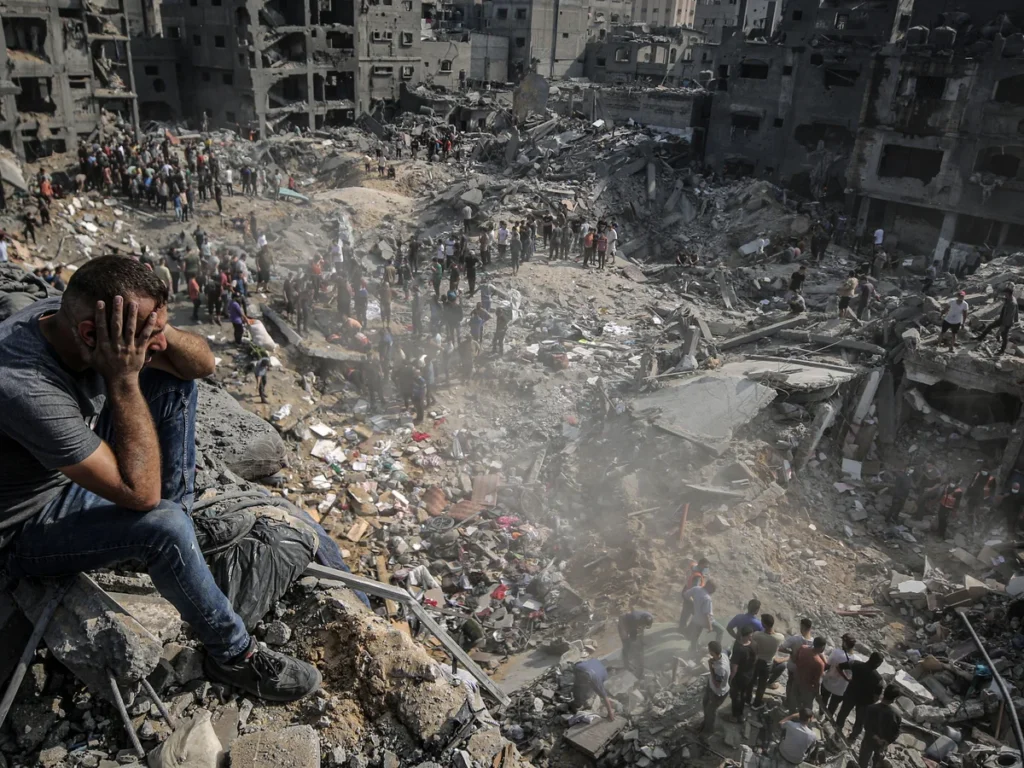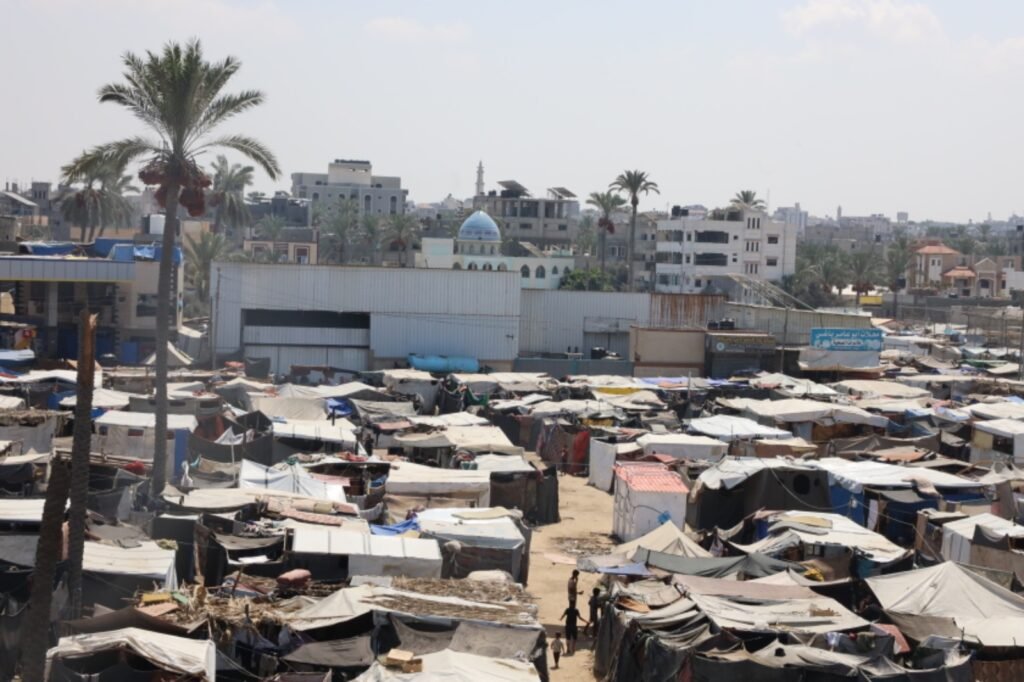
Gaza Herald _Months of war and forced displacement have left families across Gaza facing a new struggle: surviving in tents with no clear path back to permanent homes.
Despite the ceasefire, residents say continued Israeli attacks and restrictions have left them living under conditions far removed from stability. They are calling for an end to Israeli military operations, the rebuilding of homes and infrastructure destroyed during the war, and the restoration of basic living conditions.
For families who have lost everything, the immediate demand is not necessarily for a permanent home. Many are asking for temporary prefabricated homes—caravans—for shelter, privacy, and basic services until large-scale reconstruction begins.
Others are calling for Gaza’s crossings to be reopened, allowing food, medicine, construction materials and other essential supplies to enter without restrictions.
But those hopes remain clouded by fears that the war could resume. Threats from Israeli Prime Minister Benjamin Netanyahu and military leaders, along with disputes over the next phase of US President Donald Trump’s Gaza plan, have left displaced Palestinians uncertain about whether the ceasefire will hold.
For families living in displacement camps, the truce represents a chance to survive — but not yet a guarantee of a stable future.
A roof instead of a tent
At a shelter in Gaza City, the dreams of displaced families have been reduced to the most basic necessities: a roof strong enough to withstand the wind, walls that can protect children and a door that can be closed at night to keep rats and other pests out.
Families whose homes were destroyed during the war say temporary housing would provide a desperately needed bridge until reconstruction becomes possible.
They are asking for more than a roof. They need clean drinking water, electricity, sanitation facilities and a safe place to sleep.
Mariam Deeb, 50, lost her home in Jabalia refugee camp in northern Gaza. She now lives with seven family members in a tent near the fishermen’s port west of Gaza City after being repeatedly displaced across the Strip since the war began in October 2023.
“We want a real ceasefire that becomes the beginning of a return to normal life, not simply a brief period of calm,” she said.
For Mariam’s family, life in the tent has become an unbearable daily burden. She says displaced families need an end to their prolonged suffering and a genuine start to reconstruction.
Life beside a garbage dump
Rana Saber, 24, is facing a similar reality.
Her family home in Beit Lahia, northern Gaza, was destroyed during the war, leaving her, her husband and their children without a place to return to.
The family eventually found shelter in a tent beside the Yarmouk garbage dump in Gaza City, an environment offering few conditions suitable for human habitation.
For families like hers, temporary caravans have become an urgent necessity, particularly for those whose homes no longer exist and who cannot wait indefinitely for reconstruction.
They are also calling for construction materials and heavy machinery to enter Gaza so that destroyed neighborhoods can be cleared of rubble.
Food, medicine, hygiene supplies and clean water remain equally urgent.
A home means more than four walls
Alaa Al-Sharbasi also lost his home during the war. After his house in Gaza City’s eastern Shuja’iyya neighborhood was destroyed, he and his family spent a prolonged period moving between places of displacement.
For him, reconstruction is no longer simply a future development project. It is a prerequisite for his family to regain anything resembling a normal life.
“My children need to feel safe before anything else,” he said, stressing the importance of returning to school, accessing healthcare and having a home where the family can rebuild its life.
But those hopes remain tied to the future of the ceasefire.
Fears of another war
Displaced families say they remain deeply concerned by Netanyahu’s rejection of the 15-point proposal that emerged from talks in Cairo.
Hamas has meanwhile shown flexibility during negotiations with mediators and the Peace Council, including accepting an arrangement under which heavy weapons would be stored inside Gaza under Palestinian control.
Large areas of Gaza remain under Israeli military control behind what is known as the “Yellow Line,” with estimates putting the territory under Israeli control at around 70 percent of the Strip.
Israeli forces continue to open fire on Palestinians who approach those areas and have also continued demolishing homes and structures that remain standing there.
For displaced families, the ceasefire will mean little without guarantees that prevent a return to full-scale war.
They want Israeli forces to withdraw, crossings to reopen, humanitarian and essential supplies to enter freely, and construction equipment to reach Gaza so that rubble can finally be cleared and homes and infrastructure rebuilt.
For thousands living in tents, a temporary home is not a luxury. It is the minimum step toward reclaiming a life that war has taken from them.