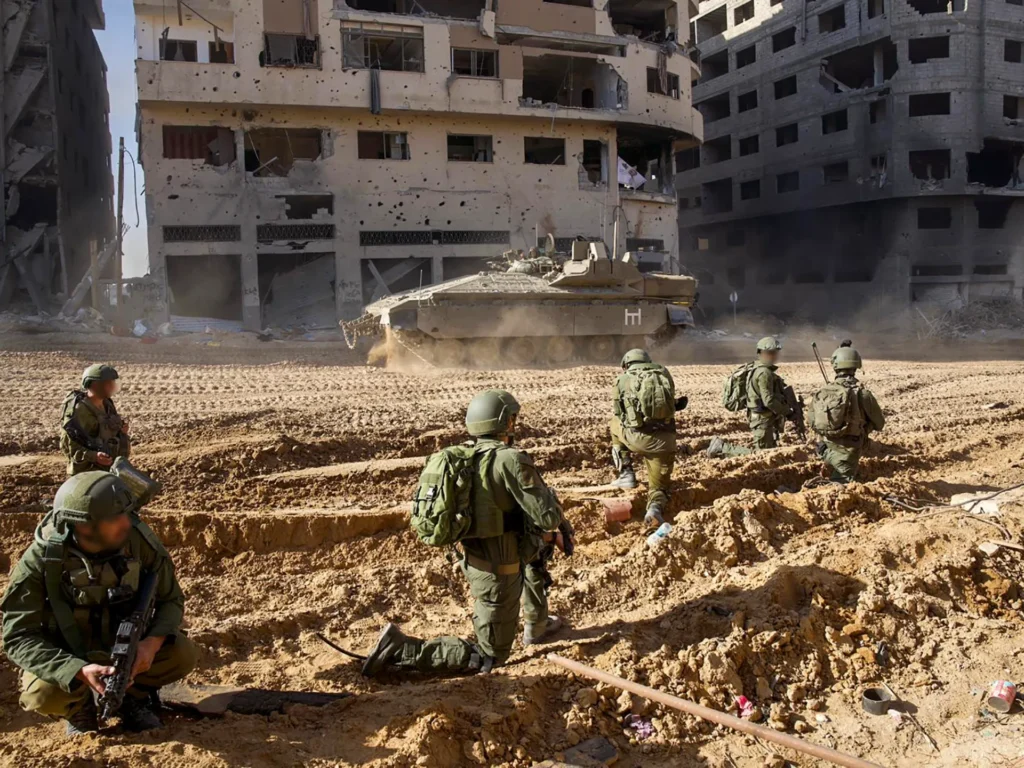
Gaza Herald – The Israeli military has established dozens of military sites inside the Gaza Strip since the beginning of the Israeli genocide in October 2023, with many positioned on elevated terrain to provide strategic advantages for monitoring residential areas, roads, and displacement camps.
According to an analysis published by Al Jazeera on Sunday, based on satellite imagery captured in May and topographic elevation data, 40 Israeli military sites have been documented across Gaza. The analysis noted that these locations are not isolated outposts, but rather form an interconnected network of surveillance and control.
The study compared the locations of these military sites with Digital Elevation Model (DEM) maps and used Geographic Information System (GIS) technology to examine their fields of view and determine the areas visible from Israeli observation towers.
The findings showed that the military sites are located at elevations ranging from 10 to 100 metres above sea level. Ten sites are positioned at heights exceeding 80 metres, 14 sites between 70 and 80 metres, and eight sites at around 60 metres, indicating a systematic effort to control high ground across the Gaza Strip.
The analysis concluded that these elevated positions give Israeli forces broad surveillance capabilities, allowing them to monitor large areas of Gaza, including locations where ground troops are not permanently deployed.
Satellite and field imagery showed Israeli military positions established on high ground east of Gaza City, including areas such as Jabal al-Rais and Tal al-Muntar, where the sites stand dozens of metres above surrounding residential areas. These positions are reinforced with earth barriers and observation towers designed to expand their surveillance range.
The analysis found that these sites serve not only surveillance purposes but also function as operational points from which fire can be directed toward areas where displaced Palestinians are sheltering.
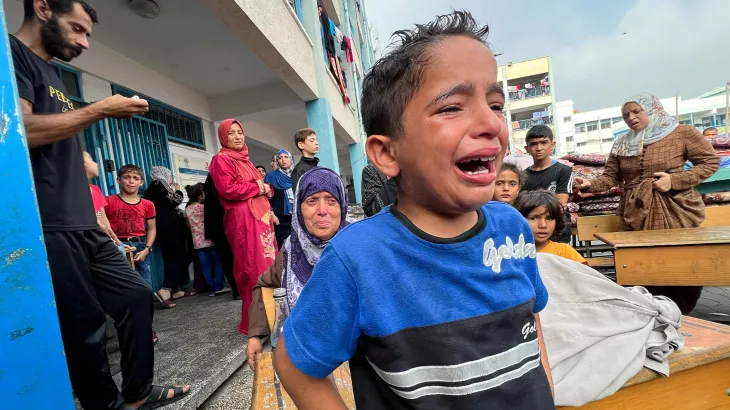
Palestinian displaced residents told Al Jazeera that their tents had repeatedly come under fire from Israeli military positions and from quadcopter drones. The analysis also examined the location of an Israeli military site near Al-Nasrawi displacement camp west of Khan Younis, highlighting its proximity to civilian shelter areas.
The findings suggest that the network of military sites has become a key component of Israel’s battlefield strategy in Gaza, combining surveillance, territorial control, and the ability to project force across wide areas of the Strip.