Gaza Herald – Gaza’s Eye Hospital is facing a severe decline in its ability to provide specialized medical care as critical shortages of supplies and extensive damage caused during Israel’s military offensive continue to disrupt operations, hospital officials said on Sunday.
Hospital Director Dr. Hossam Dawood said the surgical department has resumed work at only a limited capacity, with just one and a half operating rooms functioning compared with three fully operational theaters before the genocide. He attributed the reduced capacity to acute shortages of surgical instruments, medical consumables and essential equipment.
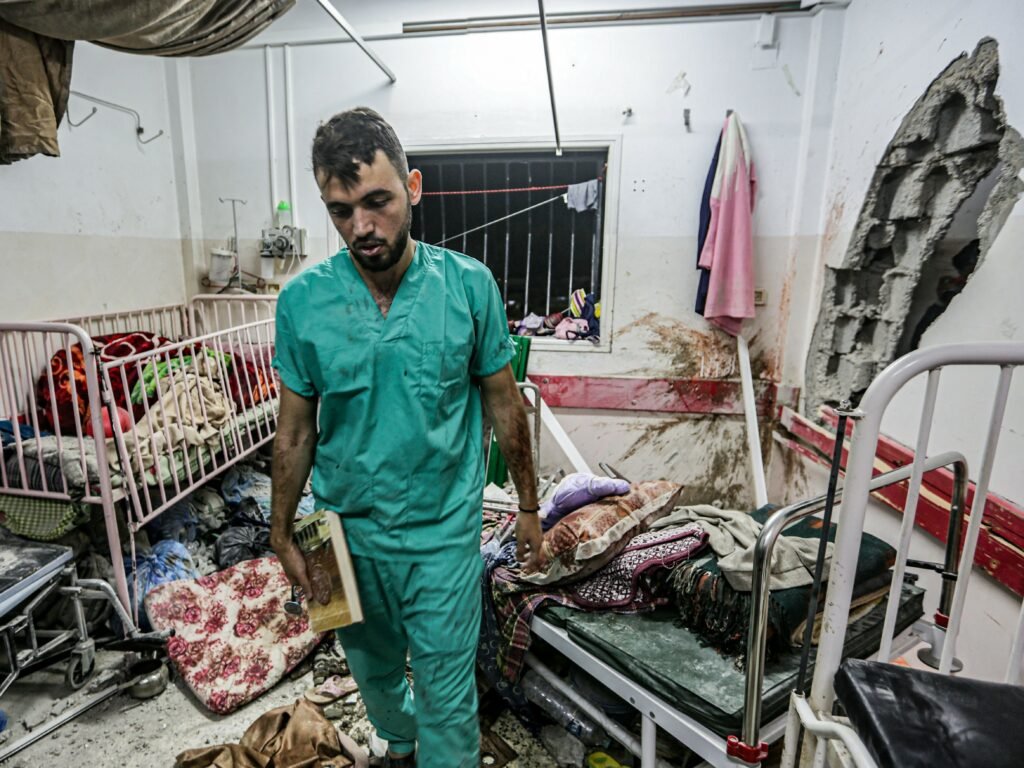
According to Dawood, the hospital’s eastern building sustained approximately 70% damage during the offensive, significantly affecting its ability to deliver specialized ophthalmic services.
Medical teams have partially restored surgical services, but the absence of highly specialized surgical instruments, which are unavailable inside Gaza, continues to prevent the hospital from returning to full operation. Staff have attempted to repair damaged equipment locally, though these efforts remain insufficient to meet growing medical needs.
The hospital is currently operating at around 70 percent of its pre-war capacity, Dawood said, adding that access to medical supplies and surgical equipment could substantially increase its ability to treat patients.
Several specialized services remain completely suspended, including corneal transplant surgeries, due to the lack of donor corneas and the necessary medical materials, forcing many patients to seek treatment outside the Gaza Strip.
Dawood also warned that continuing shortages of fuel, lubricants and spare parts threaten the hospital’s operations. The facility’s main generator is out of service, leaving it dependent on a backup generator amid the ongoing absence of grid electricity. Any failure of the backup system, he said, could bring healthcare services to a standstill.
To compensate for the destruction of its outpatient clinic building, the hospital has reorganized general and specialist clinics into morning and evening shifts, with support from international partners, including the Canadian organization AWSM.
Dawood called on the international community and humanitarian organizations to facilitate the entry of fuel, spare parts, medical supplies and modern surgical equipment into Gaza, stressing that access to essential healthcare resources is a fundamental humanitarian necessity and that medical staff are prepared to treat patients if the minimum operational requirements are met.