Gaza Herald – In the family home that was partially spared from the destruction in Hamad City, north of Khan Younis, Jibril Al-Safadi does not need many words to explain what happened.
A wheelchair beside him bears witness to the leg he lost while in detention, while photographs of his only son hanging on the wall tell the story of another devastating loss that awaited him after his release.
When the 48-year-old returned home after 20 months in Israeli detention, he found that the war had reached his family before he could. His only son, 22 years old, was not there to welcome him. He had been killed in an Israeli airstrike while his father was still imprisoned, turning what should have been a joyful reunion into another moment of profound grief.
“The hardest thing I faced was not inside prison,” Al-Safadi says quietly. “Everything I endured in detention was easier than hearing that my son had been killed.”
He looks toward the corner of the room where his wife and five daughters sit in silence.
Al-Safadi says he was arrested on 4 March 2024 at the exit checkpoint in Hamad City and remained in detention for one year, eight months, and nine days before being released.
He recalls entering prison in good health but developing severe pain in his leg shortly after his arrest.
“For eight days, I kept screaming and calling the guards for help,” he says. “There was no response, only insults and humiliation.”
According to his account, he was transferred for medical treatment only after his condition had become critical. Doctors reportedly told him that the choice was between amputating his leg or risking death because of the severity of the infection.
“I signed papers in a language I did not understand,” he says. “When I woke up, my right leg had been amputated.”
Al-Safadi says he was moved between interrogation centers and detention facilities, including Sde Teiman and later Ofer Prison, where he spent most of his imprisonment.
He describes conditions in detention as marked by beatings, humiliation, hunger, and medical neglect, adding that, according to what he witnessed, some detainees did not survive.
Today, Al-Safadi is trying to adapt to a life that has changed completely.
He has lost his leg, lost his ability to earn a living, and lost his only son, who had supported the family during his father’s imprisonment.
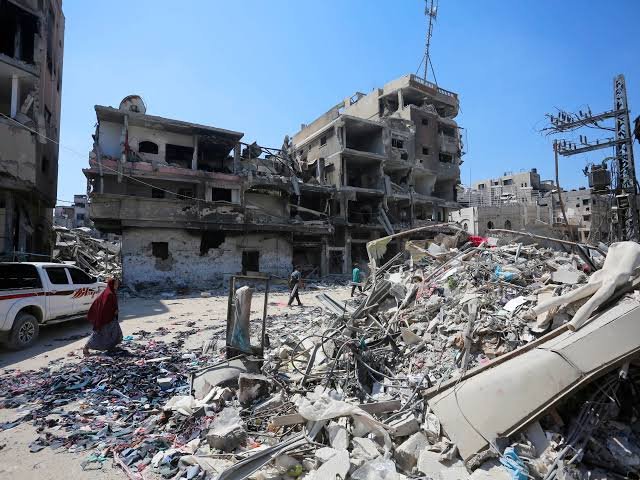
Inside the damaged home, the impact of the genocide is visible in cracked walls and sparse furniture. The family now depends largely on humanitarian assistance amid the widespread destruction across Gaza.
Accounts from released detainees describing detention conditions, including allegations of torture and medical neglect, have prompted continued calls from human rights organizations for independent investigations and for the protection of detainees in accordance with international humanitarian law.
For Al-Safadi, life has been divided into two chapters: before detention and after it.
Between them lies a missing leg, a son who will never return, and a home where the family continues trying to build a life despite everything they have lost.