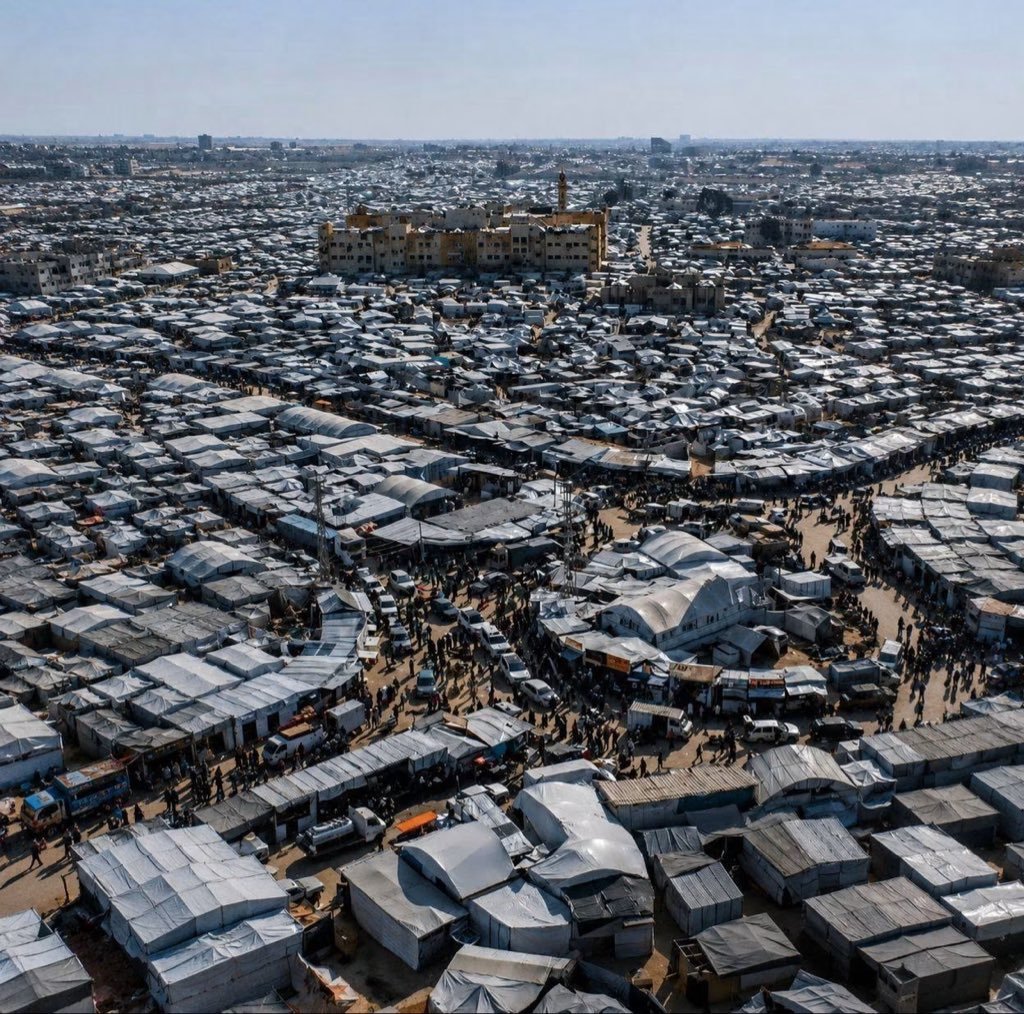
Gaza Herald – As temperatures rise across Gaza, hundreds of thousands of displaced Palestinians are facing a new battle for survival inside overcrowded tents and makeshift shelters that offer little protection from the summer heat. With limited access to water, electricity and shade, families said that their daily reality as unbearable, with rising health risks caused by extreme temperatures and deteriorating living conditions.
For Rajaa Jendiya, a displaced mother of three who lost her husband during the genocide, the same tent that failed to protect her from Gaza’s winter cold has now become a place of suffocating heat. She said that the shelter as “a greenhouse” where sunlight becomes trapped, turning the inside into an unbearable environment where breathing and sleeping become difficult.
The heat crisis is worsened by the spread of insects, sewage and poor sanitation in displacement areas. Many families report nights without sleep due to mosquitoes and days surrounded by flies, while children increasingly suffer from skin diseases, including rashes, scabies and fungal infections linked to overcrowding and unsafe conditions.
Health workers warn that the humanitarian situation is creating a growing public health emergency. With much of Gaza’s water and sanitation infrastructure damaged, many displaced families struggle to access enough water even for basic needs, while drinking water often requires long waits at distribution points and relief stations.
Mona al-Mallahi, a displaced mother living in a tent in Gaza City, says there is no escape from the heat. During the day, she cannot remain inside her tent because it becomes unbearably hot, yet outside there is little shade to protect her from the sun. “We spend every day searching for a way to breathe,” she says, describing the exhaustion caused by constant heat and lack of basic services.
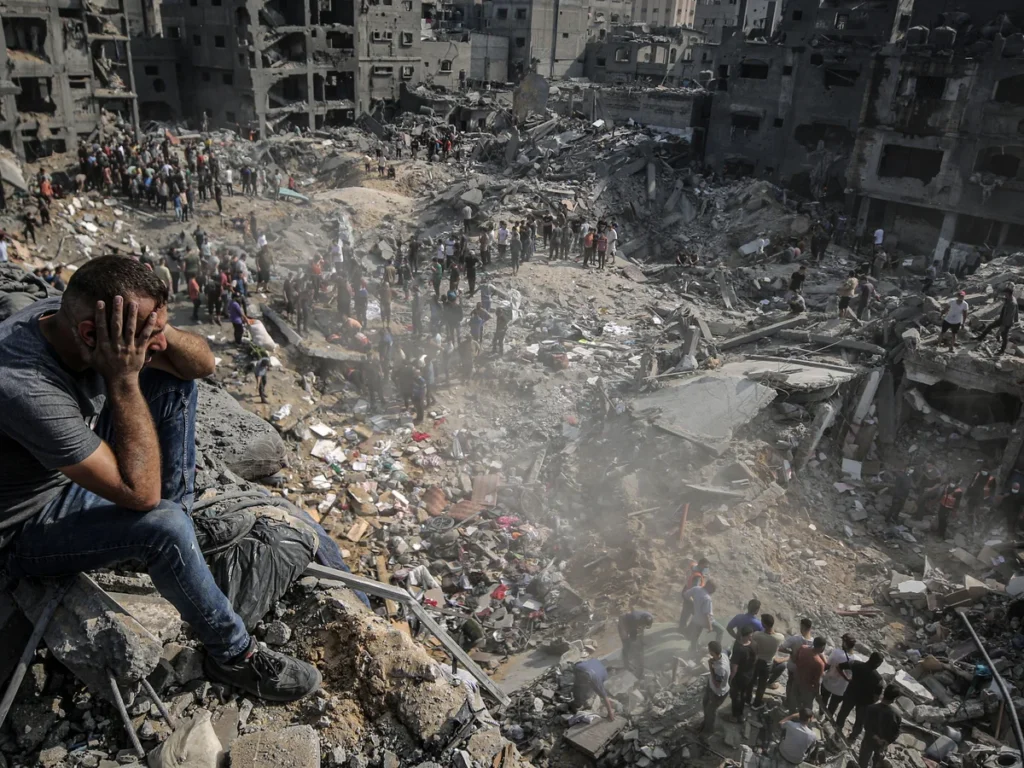
The destruction of Gaza’s buildings, trees and public spaces has made the summer conditions even harsher. With large areas of the Strip’s urban landscape devastated and shelter materials remaining limited, many displaced families are left exposed to direct sunlight with few options for protection.
Even families who remain in damaged homes continue to suffer. Without reliable electricity, air conditioning and fans are impossible to operate, while the high cost of privately generated electricity places cooling and refrigeration beyond the reach of many households. Food spoils quickly, forcing families to cook daily despite shortages of cooking gas and the dangers of relying on firewood during extreme heat.
For Gaza’s residents, the summer is another chapter in a prolonged humanitarian crisis. After enduring bombardment, displacement and shortages, families now face a battle against heat, thirst and disease, as basic comforts such as cold water, electricity and safe shelter have become distant dreams.