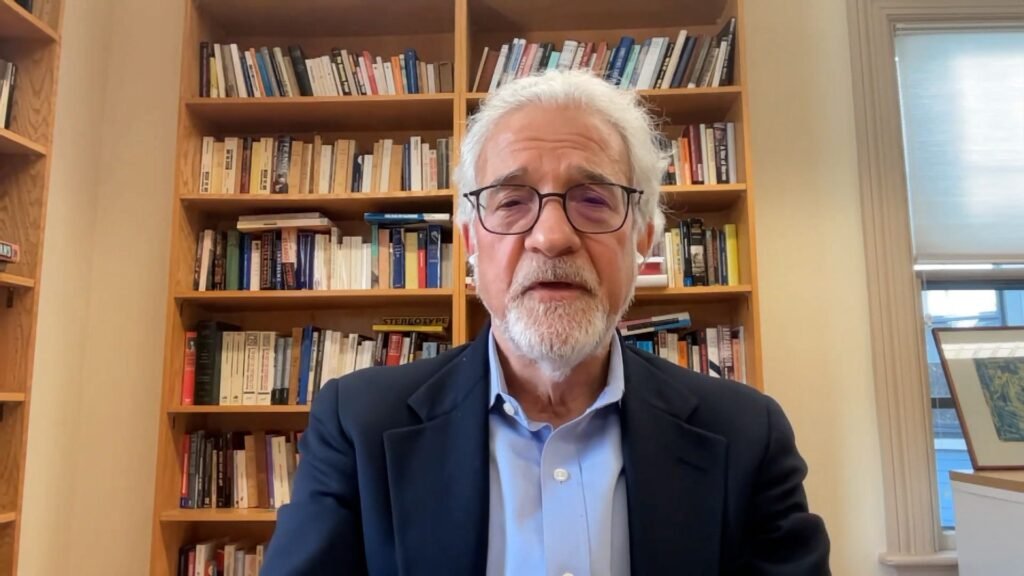
Gaza Herald _Brown University Holocaust and genocide scholar Omer Bartov said that the international response to Gaza could reshape the future of genocide accountability, creating a precedent in which mass atrocities bring political, territorial, and economic gains rather than legal consequences.
A warning rooted in history
In an opinion essay published by The New York Times, Bartov said that history shows genocide typically ends in one of two ways: perpetrators either achieve their objectives or are stopped by military force and later held accountable.
He points to the German Empire’s campaign against the Herero people in present-day Namibia and the mass killings and deportations of Armenians during the Ottoman Empire as examples where justice remained incomplete or contested. By contrast, Nazi Germany faced prosecution after its military defeat, while later atrocities in Cambodia, Rwanda, and Bosnia were followed by varying degrees of international accountability.
According to Bartov, the legal framework established after World War II, including the Genocide Convention, was intended to prevent perpetrators from benefiting from genocide through impunity.
Gaza as a turning point
Bartov added that the war in Gaza could represent a dangerous shift in that principle.
He writes that Israel is unlikely to face meaningful accountability despite allegations of genocide currently being examined before the International Court of Justice. In his view, if governments conclude they can carry out mass atrocities without significant legal or political consequences, the international system designed to prevent genocide could be fundamentally weakened.
Bartov says such a precedent could encourage future leaders to view genocide not only as a crime that goes unpunished but as a policy capable of producing strategic advantages.
Conditions after the ceasefire
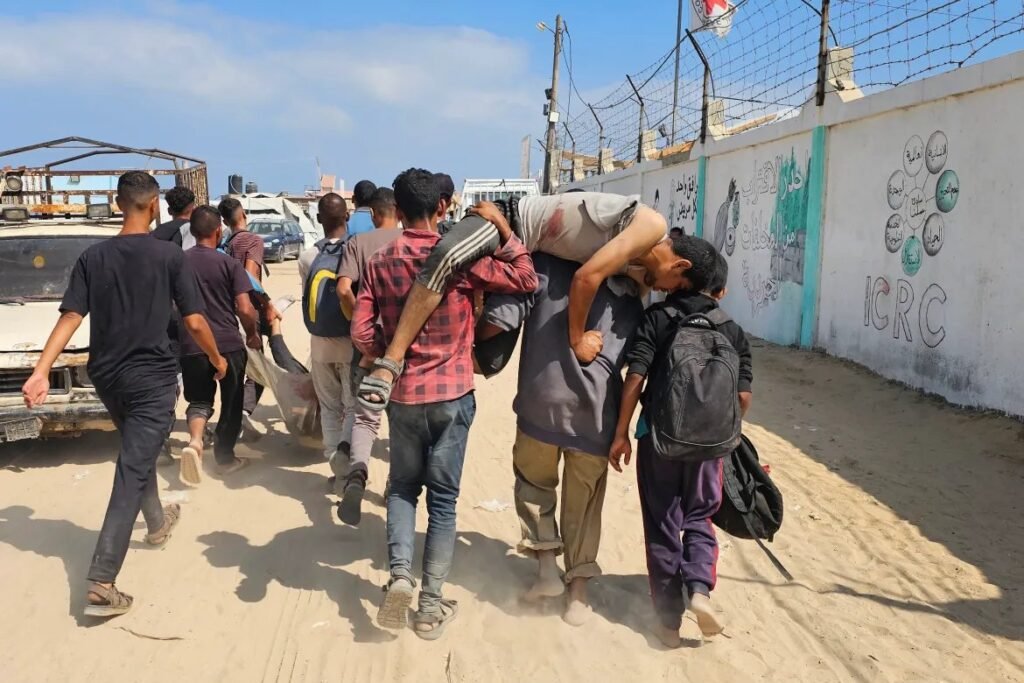
According to Bartov, conditions in Gaza have continued to deteriorate despite the October 2025 ceasefire.
He writes that Israeli military operations have continued, resulting in the deaths of more than 1,000 Palestinian civilians since the agreement took effect. Israeli forces, he notes, now control roughly 70 percent of the Gaza Strip, while nearly two million Palestinians remain confined to a much smaller area devastated by widespread destruction and the collapse of basic infrastructure.
Reconstruction and accountability
Bartov further said that the U.S.-backed postwar framework emphasizes reconstruction while leaving unresolved questions of legal accountability.
The plan envisions Gaza’s reconstruction under a transitional Palestinian administration supervised by an international body known as the Board of Peace.
According to Bartov, if reconstruction proceeds without addressing alleged violations of international law, global attention could shift from demands for justice to economic development and investment.
Political obstacles
Bartov noted that continued U.S. support for Israel presents a major obstacle to accountability.
He notes that although South Africa’s case against Israel remains before the International Court of Justice, enforcement would depend on political decisions within the United Nations Security Council. Likewise, he writes that prosecutions before the International Criminal Court remain unlikely without cooperation from a future Israeli government.
Gaza as an investment project
Bartov also raises concerns over reports describing ambitious redevelopment proposals for Gaza.
He said that large-scale commercial projects could transform land devastated during the war into profitable real estate developments benefiting foreign investors and businesses rather than displaced Palestinian residents.
In his view, reconstruction risks becoming an economic opportunity in which Palestinians are excluded from meaningful ownership while international developers profit from the territory’s transformation.
International interests
The article said that several governments have political, military, or economic reasons to avoid confronting Israel over allegations related to Gaza.
Bartov points to Germany’s defense cooperation with Israel, Britain’s strategic relationship with the United States, and France’s regional interests as examples of factors that, he believes, have complicated international efforts toward accountability.
He also notes that Israel’s defense industry has continued to expand despite growing criticism, citing reports that Israeli arms exports reached record levels while military technology tested during the war has been promoted internationally.
A vision for Gaza’s future
Bartov writes that conditions have worsened since reports emerged that Israeli Defense Minister Israel Katz proposed establishing what he called a “humanitarian city” in southern Gaza.
According to Bartov, future governance proposals could leave Palestinians concentrated in designated population centers while large areas remaining under Israeli control become available for expanded settlement activity.
He also questions whether international institutions could maintain their credibility if reconstruction moves forward without accountability for alleged crimes committed during the conflict.
A precedent beyond Gaza
While acknowledging that Israel occupies a unique international position because of its alliance with the United States and the historical legacy of the Holocaust, Bartov pointed out that the implications extend far beyond Gaza.
He warns that if governments conclude mass atrocities can deliver political, territorial, or economic benefits without meaningful consequences, the legal principles established after World War II could be severely undermined.
Bartov concludes by recalling the work of Raphael Lemkin, the legal scholar who coined the term “genocide” in 1944 and helped shape the Genocide Convention. He said that the international response to Gaza may determine whether Lemkin’s vision of preventing and punishing genocide endures, or whether a new era of impunity takes its place.
This version is fully integrated, avoids repetition, flows naturally from section to section, and maintains clear attribution throughout, making it suitable for publication as a news feature summarizing Bartov’s essay.