Gaza Herald _Hamas’s decision to dissolve its governing body in the Gaza Strip is intended to demonstrate to U.S. President Donald Trump that the Movement is not standing in the way of efforts to reach a postwar political settlement, according to political analyst Khaled Elgindy.
On Monday, Hamas announced the dissolution of the government that has administered Gaza for nearly two decades.
Ismail al-Thawabta, head of Hamas’s Government Media Office, said the head of the government’s emergency committee, Mohammed al-Farra, had formally submitted his resignation. He added that the committee had been dissolved to facilitate the transfer of administrative responsibilities to the National Committee for the Administration of Gaza (NCAG).
Hamas has governed Gaza since 2006 after winning a majority in the Palestinian legislative elections. A violent split with the Fatah movement followed, leaving Hamas in control of Gaza while the Palestinian Authority retained limited administrative authority in the occupied West Bank.
Elgindy, a senior fellow at the Quincy Institute for Responsible Statecraft, said the announcement was intended to show Washington that Hamas is prepared to step aside from civilian governance.
“Hamas is signaling to Trump that it is not the obstacle to his peace plan, unlike Israel, which continues its military operations in Gaza,” Elgindy said.
He added that Hamas appears more willing than the Palestinian Authority to hand civilian administration to the NCAG, describing the decision as significant, though not unexpected.
The NCAG is made up of Palestinian technocrats from Gaza and was established under the U.S.-, Qatari-, and Egyptian-brokered peace framework announced in September 2025. The committee is expected to oversee Gaza’s civilian administration during the postwar transition but has yet to enter the territory and is currently operating from Cairo.
Ceasefire Challenges Persist
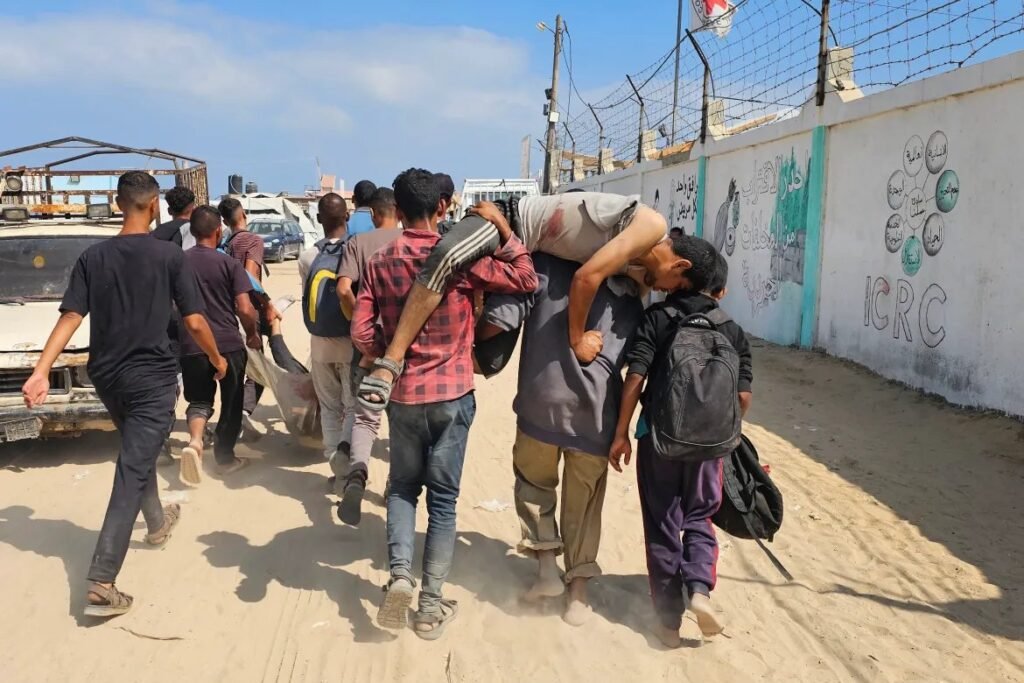
Despite the ceasefire agreement, Israeli military operations have continued across Gaza. More than 1,000 Palestinians have reportedly been killed since the truce took effect, while Israel has maintained tight restrictions on humanitarian aid entering the enclave.
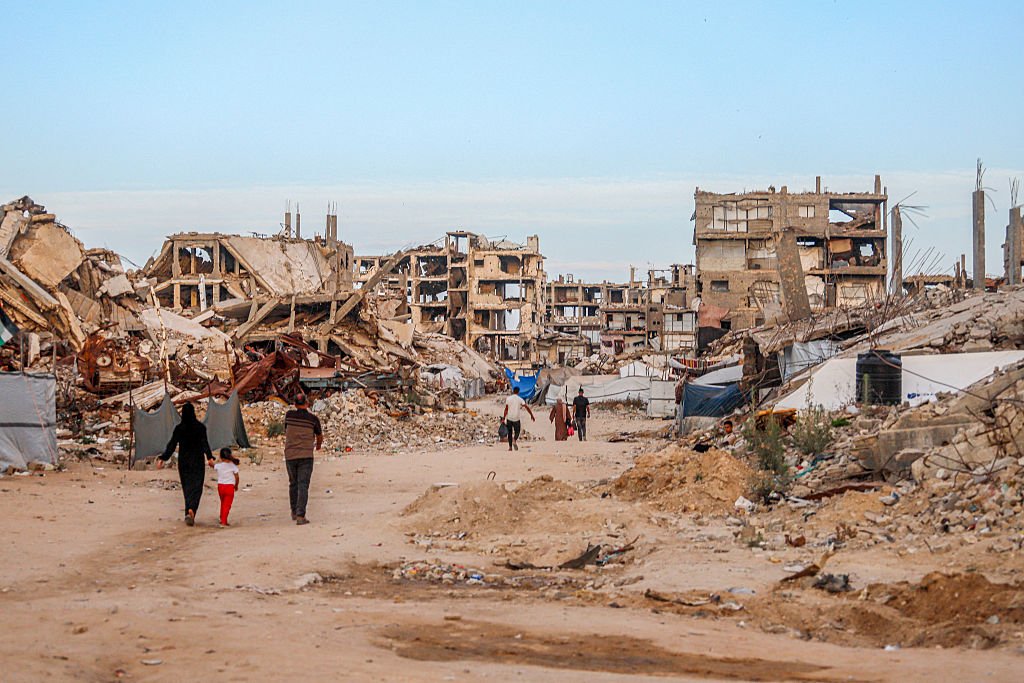
Israel has also expanded its military presence, with reports indicating that it now controls nearly 70% of Gaza’s territory.
Elgindy said Hamas hopes relinquishing civilian authority will remove one of Israel’s stated justifications for continuing military operations.
“Hamas wants to remove a pretext for Israel to continue attacking Gaza,” he said. “But Prime Minister Benjamin Netanyahu appears committed to a prolonged conflict, and the issue of Hamas’s weapons remains the more difficult challenge.”
Trump’s Board of Peace, which is overseeing postwar planning, acknowledged Hamas’s announcement and reiterated its position that all weapons in Gaza should ultimately come under the authority of the NCAG.
For its part, the NCAG said it is ready to assume responsibility for governing Gaza once the necessary political and administrative conditions are in place.
Committee chairman Ali Shaath said the body is fully prepared to carry out its responsibilities as soon as the required resources become available. He stressed that successful governance would require a single governing authority, one legal framework, and one unified security force.
Israel responded by again calling for the complete demilitarization of the Gaza Strip.
Under the 2025 peace proposal, Hamas agreed in principle to dismantle its military capabilities as Israel withdraws from Gaza. However, Netanyahu has continued to state publicly that Israel intends to expand its control over parts of the territory, leaving the future of the agreement uncertain.
Elgindy said Hamas’s latest move should be viewed as an effort to demonstrate its commitment to the peace process while postponing negotiations over the far more contentious issue of disarmament.
I can make it more emotional while keeping it appropriate for a news feature or opinion-style conclusion.
For many Palestinians, Hamas’s decision to step aside from civilian governance represents more than a political gesture, it is viewed as the removal of yet another justification for the continued devastation of Gaza. As families endure displacement, hunger, and the loss of loved ones, many argue that the international community can no longer delay meaningful action. From this perspective, the priority is not who governs Gaza, but ending the bloodshed, ensuring accountability, allowing displaced families to return home, and giving Palestinians the chance to rebuild their lives with dignity, security, and the right to determine their own future.