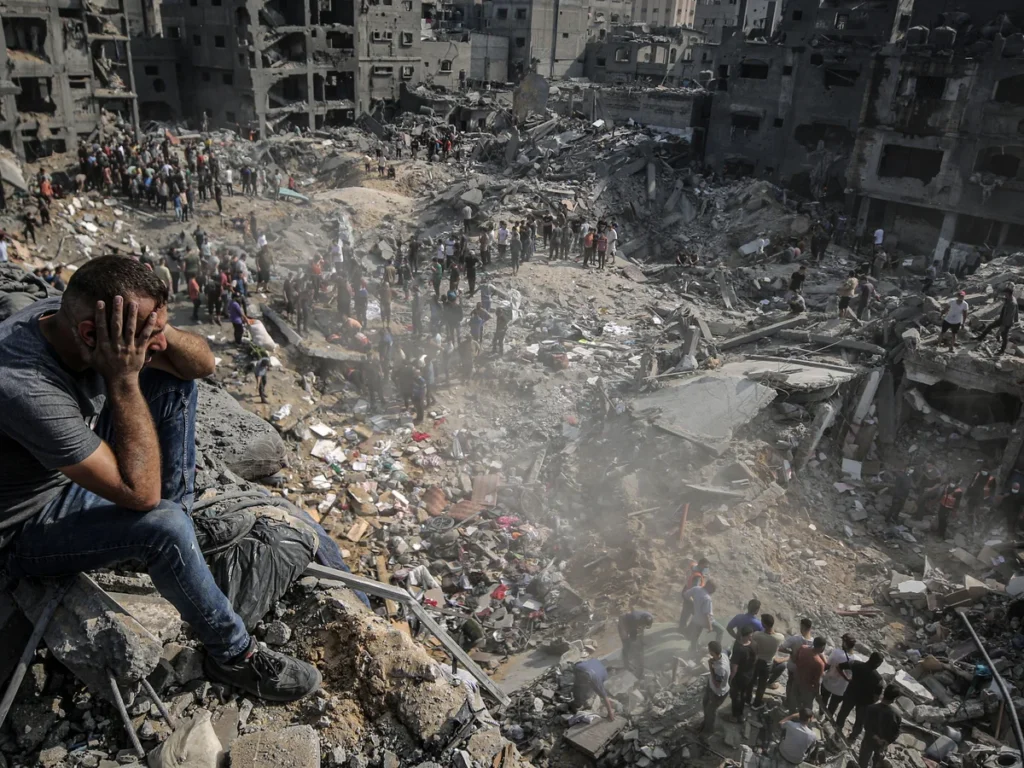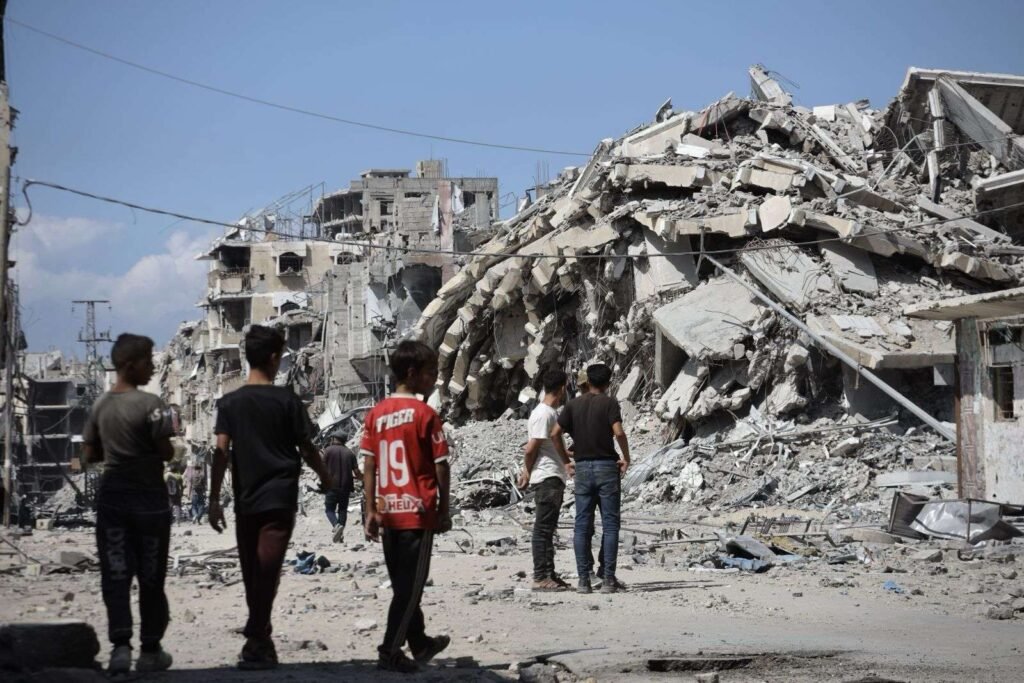
Gaza Herald _This week marked 1,000 days since Israel’s military campaign in Gaza began, as the humanitarian crisis across the Strip continued to deepen. Gaza’s Government Media Office said more than 90% of the territory has been destroyed, while the Ministry of Health reported that 1,072 Palestinians have been killed since the October ceasefire, bringing the overall death toll since October 2023 to 73,098 as of July 6.
The fighting showed no signs of slowing. On July 1, an Israeli drone strike near al-Hilu Station killed at least three Palestinians. Over the next two days, local reports said at least seven more people were killed, including a child struck by a bomb dropped from a quadcopter at the Shujayea Junction and 10-year-old Tareq Sabah, who was killed near Khan Younis. Israeli attacks also repeatedly targeted tents sheltering displaced families in the designated humanitarian zone of al-Mawasi throughout the week.
As casualties mounted, critically ill and wounded Palestinians gathered outside al-Shifa Hospital in Gaza City to demand that Israel ease restrictions on medical evacuations. Gaza health officials said more than 20,000 patients remain on waiting lists to leave the Strip for treatment through the heavily restricted Rafah crossing, where access continues to be severely limited.
Meanwhile, concerns grew over the health of Dr. Hussam Abu Safiya, director of Kamal Adwan Hospital, who has spent more than 555 days in Israeli detention. His son, Elyas Abu Safiya, said his father’s condition has deteriorated significantly.
Speaking after the doctor’s lawyer visited him, Elyas said his father is struggling to breathe and speak.
“His face was disfigured from the marks of torture and pain, and the blood he endured inside the prison, especially after the last court session held in Jerusalem,” he said.
The UN Working Group on Arbitrary Detention has called for Dr. Abu Safiya’s immediate release, stating that his continued detention violates both the Universal Declaration of Human Rights and the International Covenant on Civil and Political Rights.
The Next Phase for Gaza
Political developments surrounding Gaza also accelerated this week, with new proposals emerging over who could govern the territory after the war.
In the Cypriot resort town of Ayia Napa, representatives of the U.S.-led Board of Peace, including former British Prime Minister Tony Blair, met to discuss plans for the temporary reconstruction of areas designated as being free of Hamas control.
On Monday, Gaza’s Hamas-run administration announced its resignation and said it would transfer its authority to a technocratic committee appointed by the Board of Peace under U.S. President Donald Trump’s post-war reconstruction proposal. However, the transfer of power has not yet taken effect.
Ali Shath, head of the National Committee for the Administration of Gaza, said the committee is prepared to assume its responsibilities once the necessary political and administrative conditions are in place. He said those conditions include the establishment of a single governing authority operating under one legal framework and one security force—an apparent reference to the unresolved issue of Hamas’ disarmament.
Meanwhile, the Board of Peace said earlier this week that the UN Relief and Works Agency for Palestine Refugees (UNRWA) “has no place in the new Gaza.”
Palestinian leaders rejected the statement, arguing that excluding UNRWA would effectively erase the Palestinian refugee issue and undermine the rights of millions of registered refugees.