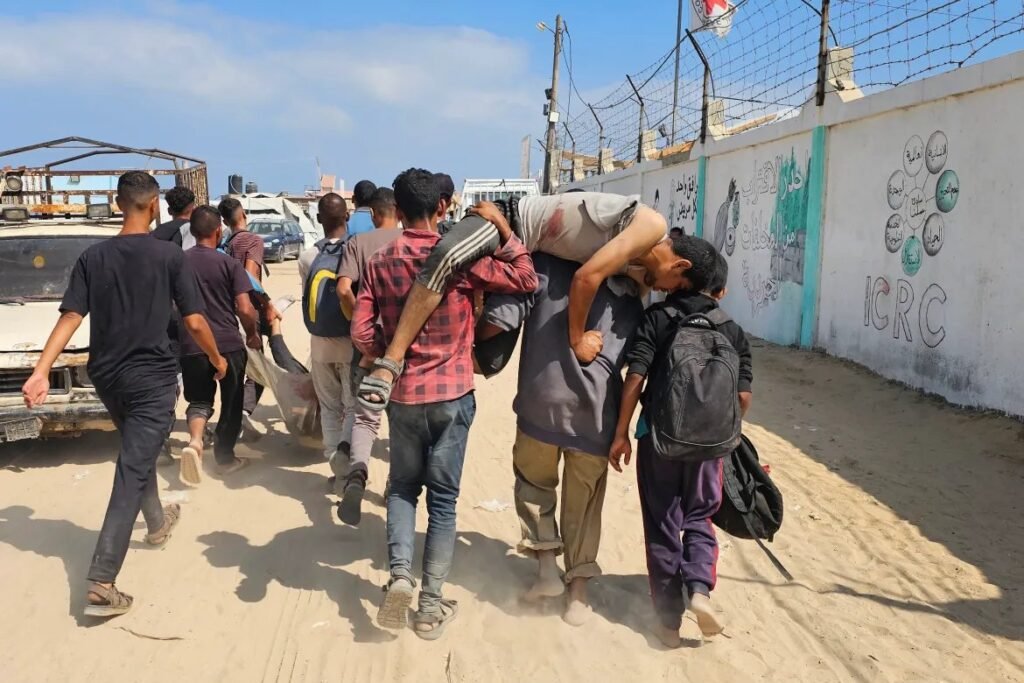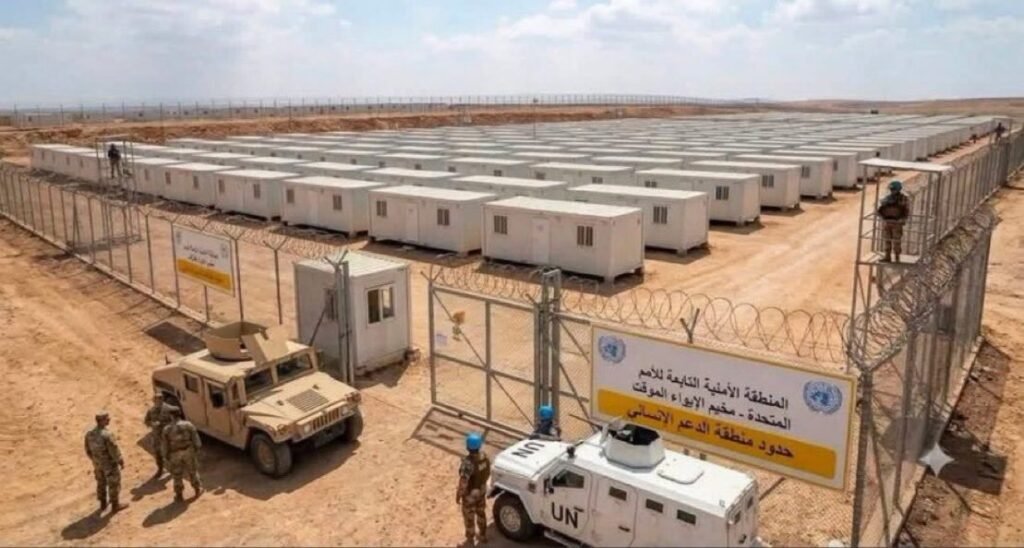
Gaza Herald — The Board of Peace’s declaration that it intends to eliminate the role of the United Nations Relief and Works Agency for Palestine Refugees (UNRWA) in Gaza marks far more than a policy proposal. It represents a direct challenge to the United Nations mandate that established the Agency in 1949 and to the international responsibility toward millions of Palestinian refugees whose rights remain unresolved.
By declaring on its official X account that “UNRWA has no place in the new Gaza” and pledging to “turn the page on perpetual aid dependency and conflict,” the Board presents its initiative as part of a reconstruction agenda. Yet this narrative ignores the reality that Gaza’s dependence on humanitarian assistance is the result of prolonged occupation, blockade, widespread destruction, and repeated military assaults, not a culture of dependency.
The Board’s adoption of long-disputed Israeli allegations against UNRWA further raises questions about its neutrality and whether it can credibly present itself as an independent body dedicated to civilian protection and post-war recovery.
Replacing Justice with Political Narratives
Calls to “turn the page” by excluding UNRWA overlook the issues that continue to define the Palestinian refugee question: forced displacement, military occupation, and the unresolved rights to self-determination and return.
Removing UNRWA does not resolve these underlying realities. Instead, it risks eliminating one of the few international institutions that has maintained legal and humanitarian recognition of the refugee issue for more than seven decades.
The Board reinforced this position by amplifying remarks from U.S. official Jeff Bartos, who portrayed support for UNRWA as incompatible with peace while presenting the Board of Peace as the alternative path toward stability and prosperity.
Such framing creates a false choice between humanitarian assistance and political reconstruction. Rather than strengthening peace efforts, it transforms humanitarian relief into a political instrument designed to weaken UNRWA’s mandate and redefine the Palestinian refugee issue outside the framework established by international law.
A sustainable peace cannot be achieved by dismantling internationally recognized institutions. It requires addressing the conditions that produced the humanitarian crisis, including occupation, displacement, restrictions on Palestinian rights, and ensuring accountability under international law.
A Challenge to the UN System
Beyond its criticism of UNRWA, the Board’s position raises broader concerns about its interpretation of international law.
UNRWA’s mandate was created by the UN General Assembly and has been repeatedly renewed by member states. Treating that mandate as an obstacle to be removed rather than an international obligation to be upheld represents a significant departure from the principles governing the UN system.
By embracing narratives that seek to delegitimize the Agency instead of relying on established UN resolutions, the Board appears less as a neutral reconstruction mechanism and more as a political body advancing a specific vision for Gaza’s future.
Critics argue that this approach aligns closely with longstanding Israeli efforts to weaken UNRWA’s legal standing and diminish its connection to the Palestinian refugees’ right of return, a right recognized under international law and repeatedly reaffirmed through UN resolutions.
UNRWA’s Mandate Cannot Be Replaced Unilaterally
Led by U.S. President Donald Trump, the proposed Board of Peace does not possess the authority to alter internationally recognized protections afforded to Palestinian refugees or terminate the mandate of a UN agency established by the General Assembly.
UNRWA’s mandate was recently renewed through June 30, 2029, reflecting continued international support for its mission.
The concept of creating a “new Gaza without UNRWA” cannot be separated from broader efforts to reshape the Palestinian refugee issue. Ending the Agency’s work without resolving the refugee question would not eliminate Palestinian rights. Instead, it would attempt to remove the primary international institution responsible for addressing them.
The right of return remains rooted in international law and cannot be extinguished through administrative or political restructuring.
Why UNRWA Remains Central
Established under UN General Assembly Resolution 302 in 1949, UNRWA provides education, healthcare, emergency relief, and essential public services to nearly 5.9 million registered Palestinian refugees across the occupied Palestinian territory, including East Jerusalem, as well as Jordan, Lebanon, and Syria.
Its mandate links humanitarian protection with the international community’s continuing responsibility to pursue a just and durable solution based on relevant UN resolutions, particularly Resolution 194.
Attempts to replace or dismantle this mandate outside the authority of the General Assembly risk undermining the broader international legal framework governing Palestinian refugees.
Attacks on the Agency
The campaign against UNRWA extends beyond political rhetoric.
Hundreds of the Agency’s personnel have been killed during Israel’s military operations, while hundreds of UNRWA facilities have been damaged or destroyed, including schools and shelters housing displaced civilians.
Israel has also imposed restrictions that have disrupted the Agency’s operations, including limiting access for international staff and taking actions affecting UNRWA facilities in occupied East Jerusalem.
These developments have significantly weakened the Agency’s ability to provide life-saving assistance to Palestinians during one of the most devastating humanitarian crises in Gaza’s history.
Humanitarian Aid Must Remain Independent
Humanitarian relief should not become a bargaining tool in political negotiations.
Replacing an established UN institution with a political body lacking comparable international oversight risks weakening legal protections for civilians while undermining confidence in future reconstruction efforts.
Any international initiative in Gaza should operate within the framework of the UN Charter, international law, and the internationally recognized rights of the Palestinian people, including the rights to self-determination and return.
Following the International Court of Justice’s 2025 advisory opinion, states also carry obligations not to recognize or support arrangements that undermine internationally protected rights or weaken UN institutions tasked with protecting Palestinian refugees.
The International Community’s Responsibility
The international community faces a choice between reinforcing the existing international legal framework or allowing political arrangements to replace institutions created through the United Nations.
Protecting UNRWA’s mandate requires sustained financial support, safeguarding its personnel and facilities, ensuring unrestricted humanitarian access, and resisting efforts to redefine the Agency’s role outside established legal procedures.
Ultimately, the future of Palestinian refugees cannot be determined by political declarations alone. Until a just and lasting solution is achieved under international law, UNRWA remains an essential pillar of international responsibility toward millions of Palestinians whose rights have yet to be fulfilled.