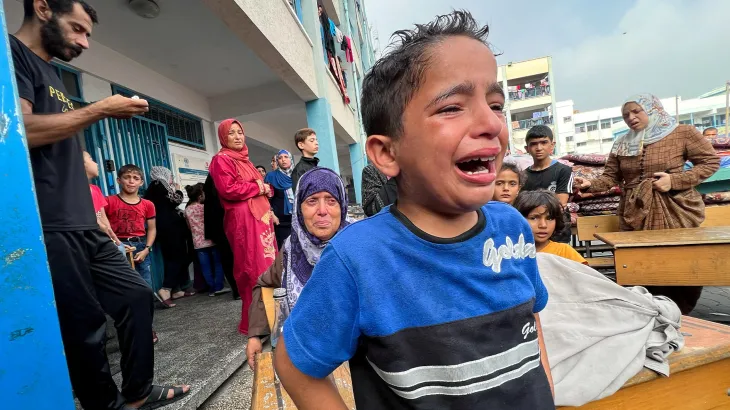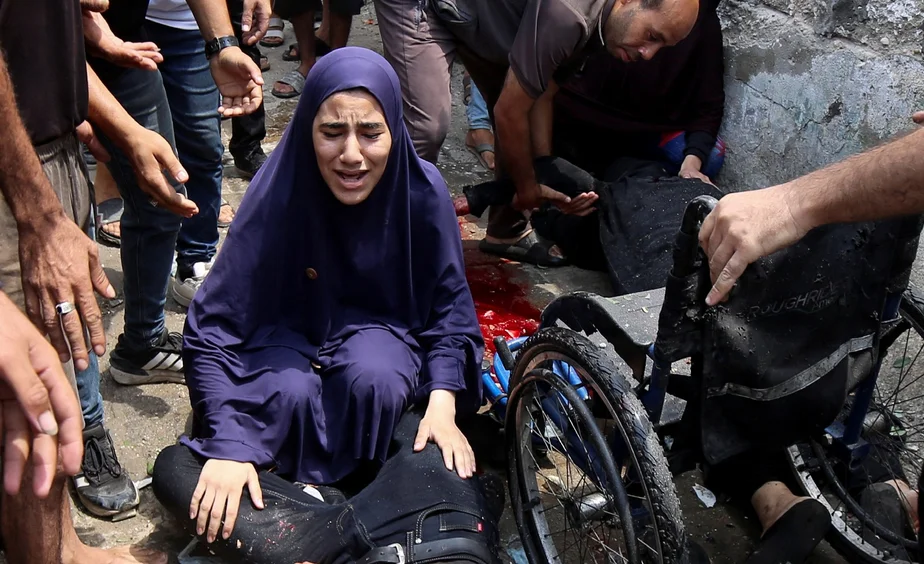
Gaza Herald — Ongoing attacks by Israeli occupation forces across the besieged Gaza Strip continue to claim Palestinian lives, with 13 Palestinians killed over the past 24 hours, amid growing alarm that relentless military escalation is eroding efforts to consolidate the ceasefire and halt the genocidal war.
The mounting toll has raised urgent questions over the failure of international mechanisms to protect Palestinian civilians as Israeli occupation forces sustain military operations and expand territorial control across the devastated enclave. The bloodshed coincides with widening scrutiny of the chasm between international stabilization pledges and conditions on the ground, where over two million Palestinians endure repeated displacement, collapsing living standards, and suffocating blockade restrictions on vital relief supplies.
Netanyahu Government Drives Escalation and Ceasefire Erosion
Israeli Prime Minister Benjamin Netanyahu, alongside far-right cabinet ministers Itamar Ben-Gvir and Bezalel Smotrich, bears direct responsibility for the ongoing military escalation and deteriorating humanitarian conditions across Gaza. Continuing assaults represent a direct challenge to international efforts involving the United Nations Security Council, the Board of Peace, and regional mediators seeking to uphold the ceasefire and prevent further bloodshed.
Despite commitments fulfilled on the Palestinian side under ceasefire arrangements, including the handover of Israeli captives and engagement with the proposed roadmap, reciprocal obligations to halt Israeli military operations have failed to stop daily killings and destruction. Persistent military strikes have underscored how diplomatic frameworks remain unable to curb Israeli aggression or shield civilians from its toll.
Expansion of the Yellow Line Confines Over Two Million Residents
Beyond active bombardment, the unilateral expansion of what Israeli occupation authorities term the “Yellow Line” is steadily shrinking habitable space for Palestinians inside Gaza. More than two million residents are increasingly compressed into an area estimated at no more than 35 percent of the Strip amid mass displacement and the widespread destruction of residential neighborhoods.
Hundreds of thousands of displaced families are forced to shelter inside structurally unstable buildings or worn-out tents that offer minimal protection against torrential rain, winter storms, freezing temperatures, and surging seawater. Those dangers are compounded by the collapse of healthcare, environmental, and educational infrastructure, ruined water and sewage networks, and spreading infectious diseases, placing unbearable strain on an already overwhelmed humanitarian response as winter deepens.
International Commitments Face Test as Gaza Awaits Concrete Action
The widening gap between international pledges and ground realities has intensified demands for the Board of Peace to translate commitments presented before the UN Security Council into concrete, binding measures. Recent remarks by figures linked to the board, including senior adviser Josh Greenbaum, have heightened expectations that public warnings will be backed by decisive steps to end the deadlock.
Mounting calls urge the international community to exert genuine pressure on Netanyahu’s government to halt military operations, end ceasefire violations, and implement UN Security Council Resolution 2803. Immediate priorities include reopening all border crossings without restriction, facilitating the medical evacuation and travel of wounded and sick Palestinians, and guaranteeing regular entry for humanitarian aid, fuel, medicines, and winter shelter materials, alongside empowering and funding the National Committee for the Administration of Gaza to manage urgent civil needs.
Emergency Reconstruction Remains Essential to Civilian Survival
The scale of devastation across Gaza makes rehabilitating critical infrastructure, particularly hospitals, healthcare centers, schools, and environmental systems, an immediate necessity. An emergency reconstruction and recovery program is required to restore basic services, repair damaged facilities, rebuild water and sewage grids, and address the cascading humanitarian toll of mass destruction.
For more than two million Palestinians trapped in the Strip, continued delays in recovery mean prolonged exposure to displacement, disease, inadequate shelter, and deepening deprivation. Continuing killings and blockade restrictions offer no substitute for a genuine political resolution; with the ceasefire under severe strain, international powers and the Board of Peace face a decisive test to enforce commitments capable of protecting civilians, ending the humanitarian catastrophe, and enabling Gaza’s recovery.