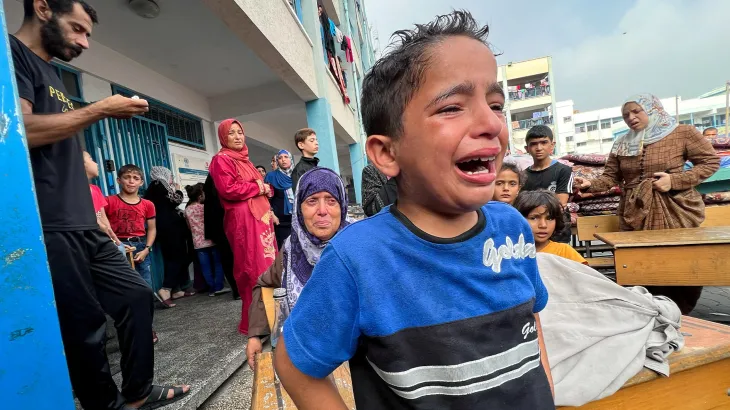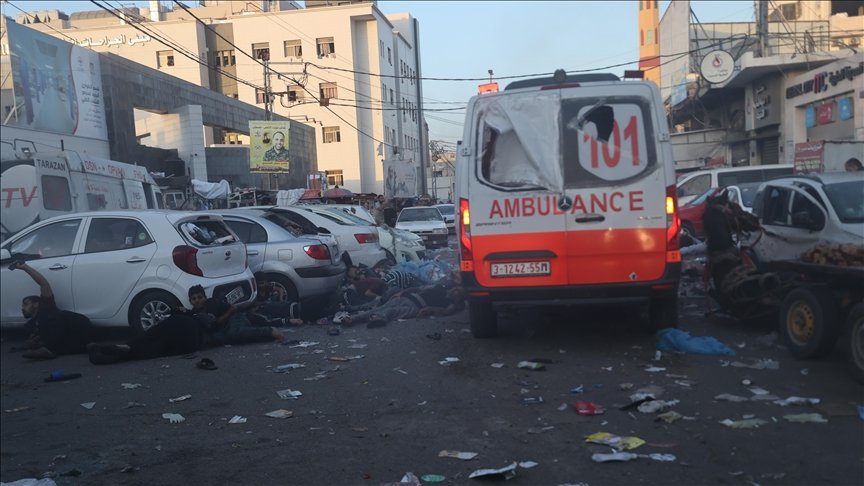
Gaza Herald — Gaza’s healthcare system has not been spared from the relentless assault waged by Israeli occupation forces since October 7, 2023. Direct military strikes have targeted hospitals, medical centers, ambulances, and healthcare workers, inflicting severe damage on every hospital across the Strip and forcing the majority out of service. Meanwhile, the few remaining facilities struggle to operate with depleted resources under a suffocating blockade that restricts the entry of fuel, medical supplies, and spare parts.
Recent assessments issued by the United Nations, the World Health Organization (WHO), and humanitarian monitoring bodies through late October and early November 2026 expose the staggering scale of destruction inflicted on the health sector. These reports confirm that Israeli attacks and violations have persisted even after the ceasefire agreement entered into force on October 10, 2025, further depriving hundreds of thousands of patients and wounded civilians of life-saving medical care.
Over 2,400 Documented Attacks on Healthcare
According to data compiled by Insecurity Insight, 2,412 attacks were documented against Gaza’s healthcare sector between October 7, 2023, and September 30, 2026, out of 3,508 assaults recorded across the entire occupied Palestinian territory, with 95 percent attributed directly to Israeli occupation forces. The assaults in Gaza included 459 incidents in which medical facilities sustained direct structural damage.
Israeli attacks did not halt following the ceasefire announcement. The organization recorded 157 attacks on healthcare between October 10, 2025, and September 30, 2026, damaging hospitals, clinics, and pharmaceutical warehouses in 17 separate incidents, roughly 90 percent of which were carried out via airstrikes, drones, artillery shelling, and direct gunfire. These violations included the bombing and destruction of medicine warehouses and the outpatient clinic building at Al-Aqsa Martyrs Hospital, a quadcopter drone strike on Kamal Adwan Hospital, and two missile strikes on Al-Yemen Al-Saeed Hospital, with both Al-Aqsa Martyrs and Al-Yemen Al-Saeed hospitals targeted twice since the truce began.
Similarly, the World Health Organization’s Surveillance System for Attacks on Health Care (SSA) documented 972 direct attacks on healthcare in Gaza through June 30, 2026, resulting in the killing of 1,003 people and the injury of 1,676 others inside medical facilities or while delivering and receiving care.
According to WHO figures, these assaults damaged 176 health facilities, encompassing all 36 hospitals in the Gaza Strip, as well as 269 ambulances, illustrating the comprehensive targeting of every component of the healthcare infrastructure.
Paralyzed Hospitals and Collapsing Operational Capacity
Regarding operational capacity, data from the Health Cluster and the UN Office for the Coordination of Humanitarian Affairs (OCHA) as of October 28, 2026, revealed that only 316 out of 670 healthcare service delivery points remain functional in Gaza, representing roughly 47 percent. Among the active points, 273 operate only partially while just 43 function at full capacity, whereas 354 service points have been forced completely out of service.
None of Gaza’s public or non-governmental hospitals operate at full capacity; 20 hospitals function partially while 15 have been rendered completely inoperable, leaving a total remaining bed capacity of approximately 3,132 beds across the territory, including just 107 intensive care unit beds and 115 neonatal incubators. Among field hospitals, 15 remain operational, four at full capacity and 11 partially, while five have shut down entirely.
This severe contraction extends to primary healthcare centers, where only 105 facilities remain active, 21 fully and 84 partially, compared to 88 centers destroyed or disabled. Meanwhile, the United Nations Relief and Works Agency for Palestine Refugees (UNRWA) continues providing medical services through seven original health centers, five temporary clinics, and 24 medical points.
Diagnostic capabilities have also been crippled, with more than half of all medical laboratories non-functional and over 60 percent of diagnostic equipment damaged. Gaza’s sole psychiatric hospital and most of its seven community mental health centers have also been forced out of service, cutting off thousands of patients from critical psychological care.
Healthcare and Relief Workers Pay a Heavy Toll
The devastation extends beyond physical buildings and equipment to the human backbone of the medical sector. The Palestinian Ministry of Health in Gaza documented the killing of more than 1,700 healthcare workers since the start of the genocidal war, according to figures cited by OCHA and Medical Aid for Palestinians. In a separate, name-verified tally, Insecurity Insight confirmed the killing of 785 health workers in direct attacks, alongside the arrest of 399 medical personnel by Israeli occupation forces, subjecting them to torture and enforced disappearance.
Humanitarian and emergency rescue personnel have also suffered heavy casualties. OCHA data confirmed the killing of 597 aid workers through November 4, 2026, including 395 UNRWA staff members, 55 Palestine Red Crescent Society paramedics and volunteers, and four staff members of the International Committee of the Red Cross. Additionally, 145 Civil Defense emergency responders were killed while carrying out humanitarian rescue duties and retrieving victims from beneath the rubble.
Fuel Crisis and Overcrowding Threaten Remaining Services
Following the destruction of roughly 90 percent of Gaza’s energy infrastructure by Israeli occupation forces, the few partially functioning hospitals face a severe operational crisis due to total reliance on backup generators. In a report published on November 5, 2026, OCHA warned that strict Israeli restrictions on the entry of fuel, engine oils, and spare parts threaten to shut down hospital generators, disabling adult and neonatal ventilators, operating rooms, cold-chain storage for medicines and vaccines, and ambulances.
Catastrophic risks are compounding inside pediatric wards, where occupancy rates in neonatal intensive care units have reached 151 percent and surged to 199 percent in specialized infant care wards, forcing overwhelmed medical teams to place multiple newborns inside a single incubator amid acute shortages of pharmaceuticals and medical supplies.
$10 Billion Needed for Health Sector Recovery and Reconstruction
The consequences of Israel’s systematic targeting of Gaza’s healthcare system extend far beyond the immediate emergency to the massive cost of rebuilding.
The Rapid Damage and Needs Assessment (RDNA), jointly issued by the United Nations, the European Union, and the World Bank in April 2026, estimated the recovery and reconstruction needs of Gaza’s health sector at approximately $10.03 billion, including $2.6 billion required urgently during the first 18 months.
These figures underscore the scale of deliberate destruction inflicted on hospitals, clinics, and medical equipment, placing an urgent legal and moral obligation upon the international community to halt ongoing Israeli attacks, lift the blockade on medical supplies, fuel, and spare parts, and ensure the reconstruction of Gaza’s health system so patients and the wounded can exercise their fundamental right to life and medical treatment.