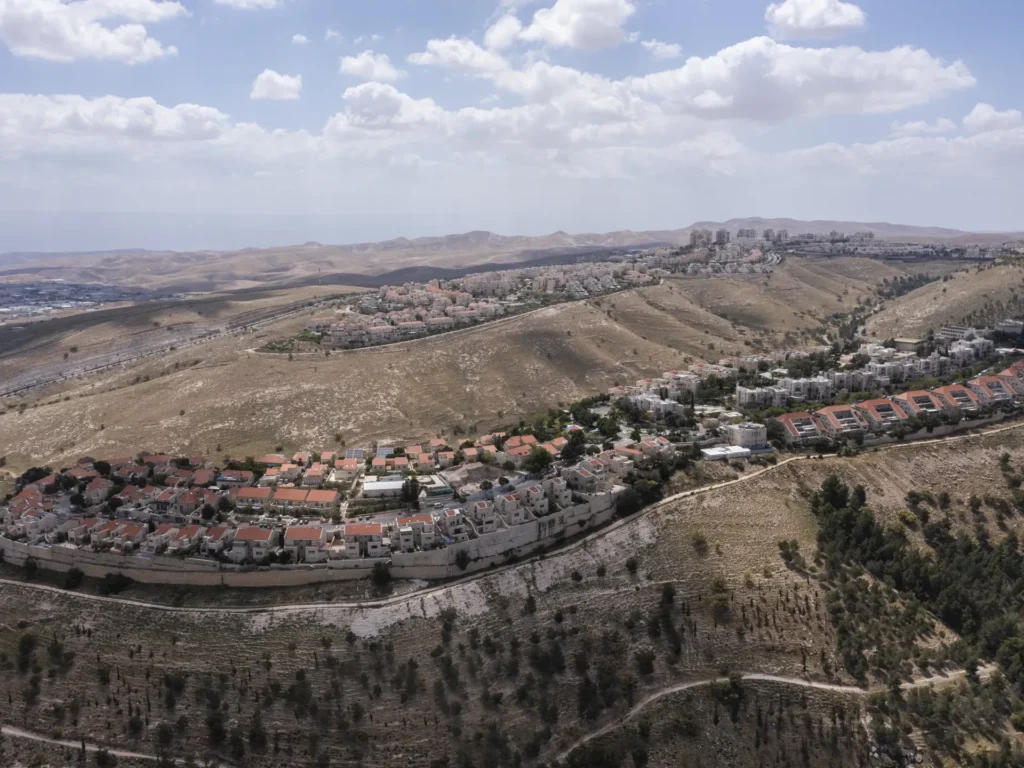
Gaza Herald – European nations, spearheaded by Denmark as a member of the United Nations Security Council, are moving to organize an emergency session next week. The initiative aims to address the E1 settlement plan located east of occupied Jerusalem, which proposes the construction of 3401 residential units. This diplomatic push occurs amidst reported efforts by Israel to delay the meeting until the completion of tender procedures for building 1234 specific units within the project.
According to the Israeli mission to the United Nations, as reported by the Times of Israel on November 11, the European move seeks to discuss the plan before the scheduled opening of tender number 186/2026 on November 19. The mission stated that Israel is coordinating with the United States and Greece to prevent the session from taking place during this critical window.
Dani Dannon, Israel’s permanent representative to the UN, described the European initiative as a “moral disgrace.” He asserted Israel’s right to build and develop while rejecting what he termed international dictates and criticisms. The E1 plan targets the area between Jerusalem and the Ma’ale Adumim settlement, covering approximately 12 thousand dunams. Its objective is to expand the western settlement bloc toward Jerusalem through the establishment of thousands of units alongside industrial, commercial, and tourist zones.
Occupation authorities finalized approval for two plans under the E1 project in August 2025. These plans include the construction of 3401 units, later divided into separate tenders. Tender 186/2026 covers 1234 units, while tender 460/2025 accounts for 2167 units. The first tender was issued in August 2026, with October 19 set as the deadline for submissions and November 19 designated for opening them.
The geographic significance of the project lies in its potential to create a contiguous settlement extension linking Jerusalem and Ma’ale Adumim. Implementation would isolate East Jerusalem from its Palestinian surroundings and sever geographical connectivity between the northern and southern West Bank, particularly affecting Ramallah, Al-Bireh, Jerusalem, and Bethlehem.
The plan threatens to alter Palestinian movement routes through alternative restricted paths, including the “Life Fabric” road passing near Anata, al-Zaiim, and al-Eizariya. This infrastructure aims to reorganize mobility to facilitate continued settlement expansion. Surrounding Palestinian and Bedouin communities, including Al-Khan Al-Ahmar, Jabal Al-Abab, Wadi Al-Jamal, Abu Dis, and others, face increased risks regarding land access, grazing areas, demolitions, and forced displacement.
E1 is linked to the “Greater Jerusalem” project, which seeks to surround the city with large settlement blocs to limit Palestinian expansion and weaken East Jerusalem’s ties to other Palestinian territories. The European Union has warned that executing the project would split the West Bank into two parts, undermining the viability of a contiguous Palestinian state. Previous international positions have emphasized the need to halt the plan and withdraw associated tenders.
The project constitutes a violation of international law, specifically the Fourth Geneva Convention and UN Security Council Resolution 2334, which affirmed the illegality of settlements in occupied Palestinian territories, including East Jerusalem. The current shift from planning to tender implementation raises concerns about the immediate impact on Palestinian geographical continuity and the status of Jerusalem.
This report was produced in the Gaza Herald newsroom.