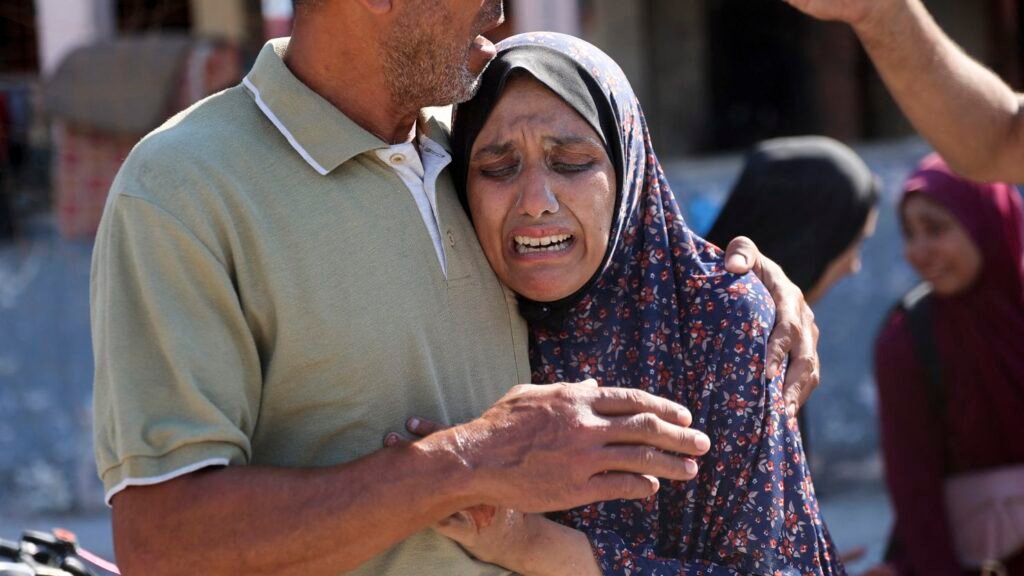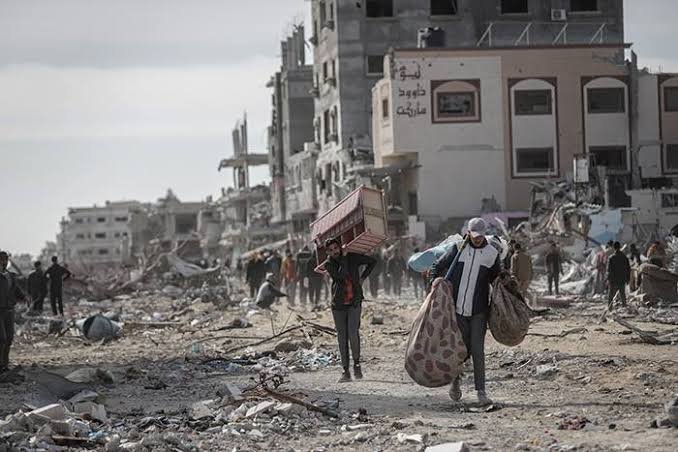
Gaza Herald_ Across the Gaza Strip, schools that once resonated with the sounds of learning, laughter, and childhood dreams have been repurposed into crowded sanctuaries for families fleeing ongoing military assaults.
For young Palestinians like Ahmed, who once sat at a desk dreaming of his future, education has been reduced to improvised lessons conducted on the bare floors of makeshift shelters.
His former school remains visible nearby, tantalizingly close yet unreachable near a military zone, serving as a stark symbol of the disruption facing hundreds of thousands of refugee children whose academic journeys have been indefinitely halted. While dedicated teachers attempt to restore a sense of normalcy by organizing alternative learning spaces, these makeshift arrangements cannot replace the stability, safety, and structured environment essential for childhood development and learning.
Chronic Illness Patients Face Dire Shortages as Clinics Close
The catastrophic contraction of UNRWA operations extends beyond damaged classrooms directly into Gaza’s fragile healthcare sector, leaving the most vulnerable populations exposed. Patients living with severe chronic conditions, such as diabetes, hypertension, kidney disease, and heart ailments, arrive daily at the few remaining clinics, only to find depleted pharmacies unable to fulfill basic prescriptions.
Where accessing routine checkups, diagnostic testing, and vital medications was once guaranteed under the agency’s care, vulnerable residents now leave healthcare facilities with incomplete treatments. Patients live with the constant dread that a complete suspension of UNRWA services will sever their final remaining lifeline for essential medical survival, turning preventable conditions into life-threatening emergencies.
Systemic Siege Cripples Essential Humanitarian Infrastructure
Before the onset of the current war, UNRWA provided structured education to 300,000 children across 288 schools and maintained 22 health centers across the enclave. Today, relentless bombardment and severe siege restrictions have reduced that medical network to a mere six functioning facilities.
With direct humanitarian aid delivery banned by Israeli authorities, the agency is forced to rely on complex, third-party logistics through international partners to obtain basic supplies. This administrative and physical blockade systematically erodes an institution that has served as an anchor of relief, healthcare, and historical identity for displaced Palestinians since its establishment to assist refugees following the 1948 Nakba.
The Erosion of a Generational Lifeline for Palestinian Refugees
Beyond immediate emergency relief, UNRWA’s presence in Gaza represents a vital institutional bridge connecting generations of displaced Palestinians to their basic human rights and collective memory.
For decades, the agency has functioned as a pseudo-governmental framework, ensuring that education, healthcare, and social services were accessible to refugee communities despite ongoing hardship.
The systematic dismantling of UNRWA’s operational capacity creates an irreplaceable void, threatening to plunge Gaza’s population into absolute institutional dependency while stripping refugee communities of the structured support systems that have sustained them for decades.