Gaza Herald – Israel’s strict prohibition on importing mobile phones, accessories, and spare parts into the Gaza Strip has severely disrupted essential aspects of civilian life, according to local reports. The blockade, enforced since the onset of the war, has created a critical shortage of functional devices, leaving residents unable to access basic services, educational resources, and financial transactions.
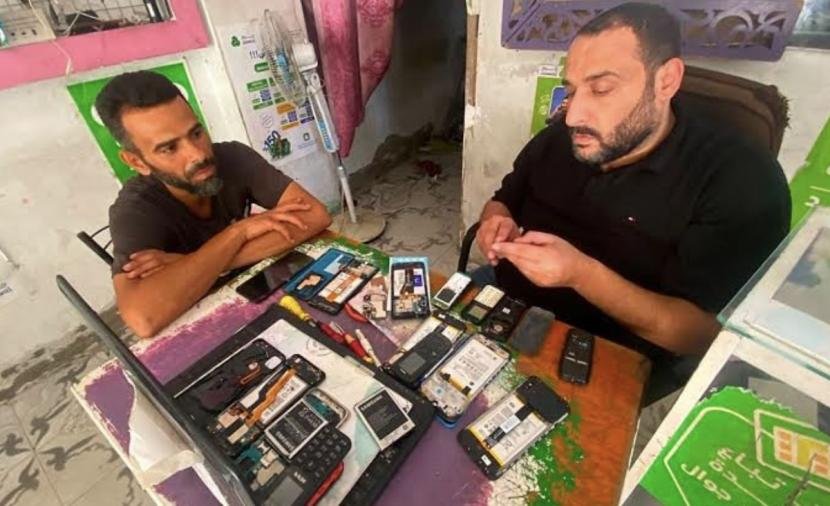
Mahmoud Al-Ghulayni, a 53-year-old mobile phone shop owner in Gaza, stated that the absence of new devices and replacement parts has intensified a crisis affecting students, university attendees, and the general public. He told Sana News Agency that no electronic devices have entered the territory since the conflict began, leading to a severe depletion of available stock for repairs and sales.
Al-Ghulayni explained that the scarcity extends beyond handsets to include screens, batteries, charging ports, and maintenance components. Available items are sold at prices far exceeding the financial capacity of many citizens, who have been impoverished by the war and displacement. He noted that customers frequently bring broken phones only to leave them unrepaired due to prohibitive costs, with screen replacements sometimes costing as much as a new device did before the war.
To cope, technicians are dismantling completely broken phones to salvage parts for others, a practice that becomes increasingly difficult as supplies dwindle. Al-Ghulayni emphasized that a malfunctioning phone effectively halts daily life, as there are no viable alternatives for communication or digital access.
The crisis also threatens academic continuity for students like 18-year-old artificial intelligence engineering student Safa Al-Hawajri. She reported that her laptop battery failed, forcing her to keep the device plugged in during intermittent power supply windows. Al-Hawajri told Sana that she fears losing unsaved work due to sudden outages, while replacement batteries remain unavailable because of the import ban.
Used computer parts, if found, are sold at exorbitant rates unaffordable for displaced families. Al-Hawajri described her laptop, once a gateway to her studies, now as a burden that restricts her ability to complete research and attend lectures without reliable electricity or spare components.
For Hazem Ashour, a 40-year-old resident, a cracked screen with colored lines and a failing touch function has hindered his ability to purchase essentials. He told Sana that with cash scarce, electronic wallets and banking apps are necessary for buying bread, vegetables, and medicine. Navigating a damaged screen delays transactions and often leads to failed purchases.
Ashour visited multiple repair shops but was told suitable screens were not in stock. Even if found, installation costs could drain a family’s monthly expenses. He added that his children rely on e-learning platforms like Moodle, making phone repair crucial for their education. Buying a new phone would cost ten times its original price, trapping families between high repair costs and the necessity of digital connectivity.
This report was produced in the Gaza Herald newsroom.