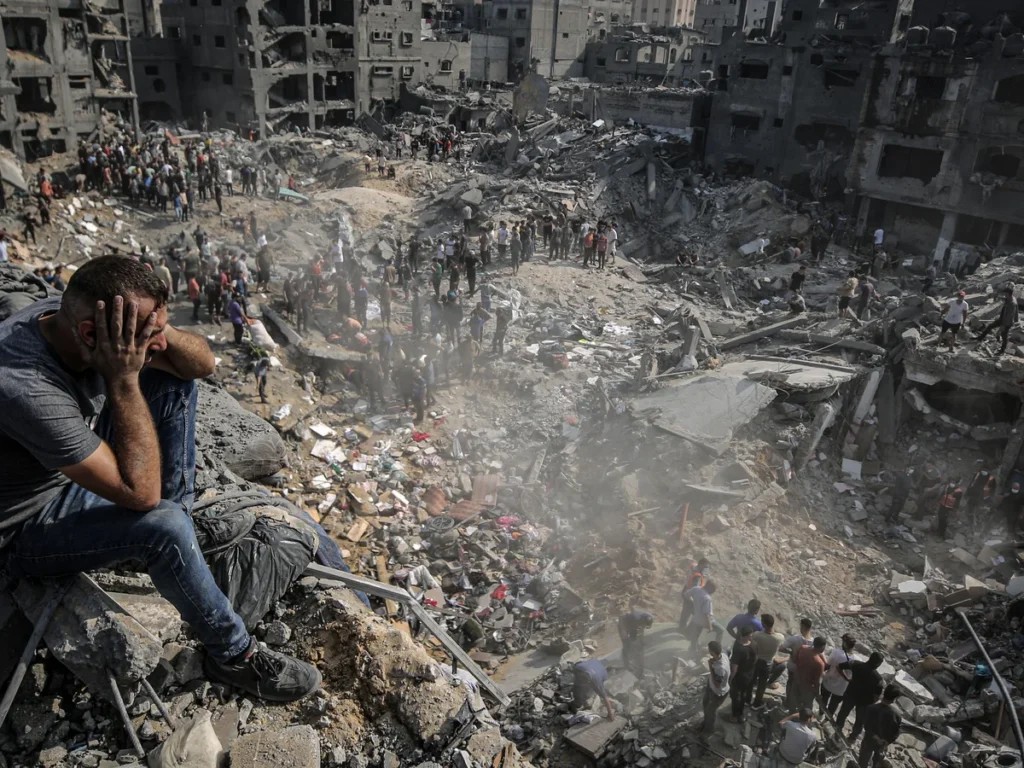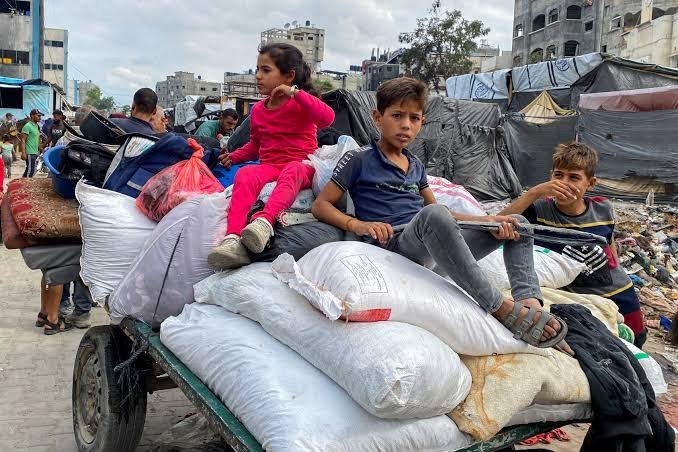
Gaza Herald —Over three consecutive years of Israel’s genocidal war, the Gaza Strip has endured an unprecedented humanitarian catastrophe systematically engineered by Israeli authorities to transform daily life for more than two million Palestinians into an unlivable hell.
This deliberate policy of collective punishment targets every pillar of human survival, severing access to food, clean water, medical care, shelter, fuel, and freedom of movement, with the explicit aim of manufacturing permanent distress and coercing the population into forced displacement.
Water and Food Weaponization Forces Children Into Daily Struggles for Survival
From the opening stages of the genocidal campaign, Israeli forces systematically destroyed municipal water wells, desalination plants, and supporting power grids, while maintaining a strict blockade on maintenance supplies and spare parts. Today, the majority of displaced families rely entirely on aid-funded desalination trucks that arrive irregularly at overcrowded displacement camps, where children, women, and the elderly are forced to wait in long queues from dawn with plastic jerrycans, often returning empty-handed. Fifteen-year-old Abdullah, displaced in Gaza City for eighteen months, wakes before dawn to fill 30-liter containers and carry them up seven flights of stairs, a harrowing routine shared by tens of thousands of children across the Strip.
Concurrently, the Israeli blockade and economic siege have driven unemployment to between 78 and 90 percent, according to International Labour Organization (ILO) data, effectively eliminating household purchasing power.
The vast majority of residents survive on soup kitchens (takayas) and emergency distributions operated by international relief entities like the World Food Programme (WFP). Eight-year-old Yousef, living in a makeshift shelter near al-Saraya in central Gaza, stands in early morning lines to secure a subsidized bread ticket for three shekels before rushing to retrieve basic meals of boiled legumes or rice, rarely accompanied by meat, to feed his family.
Dilapidated Tent Camps and Lethal Toxic Exposures Under Total Siege
Over one million displaced Palestinians, as documented by the Norwegian Refugee Council (NRC), are forced to endure horrific living conditions inside improvised tent camps lacking fundamental human standards. Tattered canvas shelters offer no protection against extreme summer heat or freezing winter rains, turning into unbearable ovens during dry months and flooded mudpits in winter. Overcrowding has caused infestations of mosquitoes, mice, and rats, which routinely attack children and the sick at night, creating breeding grounds for fatal epidemics.
Furthermore, Israel’s ongoing blockade on cooking gas and fuel forces families to cook and heat water using open fires of scavenged wood and toxic plastic waste. Mothers and young children continuously inhale these toxic fumes, leading to immediate respiratory illnesses and severe long-term health complications across displacement centers.
Complete Destruction of Healthcare Systems and Severe Medical Blockades
The humanitarian impact of the siege is critically evident in the total destruction of Gaza’s medical infrastructure. Over 21,000 critical Palestinian patients holding official medical referrals remain trapped inside the enclave due to Israeli border closures, resulting in daily recorded deaths among those awaiting permits. In one devastating case, 59-year-old Um Hussein Salem, who required urgent heart valve replacement surgery, was approved for medical evacuation by the World Health Organization three weeks after she had already succumbed to her illness.
Inside remaining healthcare facilities, diagnostic and surgical equipment has been systematically rendered non-functional through direct bombardment or the blockade of replacement parts. Fifty-four-year-old Hatem Yousef, who suffered severe spinal injuries early in the war, remains unable to receive vital treatment because every CT and MRI scanner across Gaza’s hospitals has been destroyed or disabled by Israeli forces, leaving surgeons unable to diagnose critical nerve damage.
Structural Economic Strangulation and Monopolized Supply Lines
Israeli occupation authorities continue to manipulate border access to maximize civilian hardship, restricting essential survival goods while permitting exorbitant commercial entries of non-essential items. Basic tools like matches and lighters are routinely blocked, driving market prices for a single lighter up to $30. Primitive transport methods, such as horse-drawn carts, have become unaffordable for displaced families, forcing most residents to travel miles on foot.
While essential medical supplies, fuel, construction materials, and fresh food remain strictly blocked, Israeli checkpoints allow commercial shipments of luxury items, such as chips, nuts, and carbonated soft drinks, to enter in large quantities at inflated prices far beyond the financial reach of 90 percent of Gaza’s impoverished population. This systematic economic strangulation underscores an overarching policy designed to degrade living conditions and enforce total dependency under siege.