
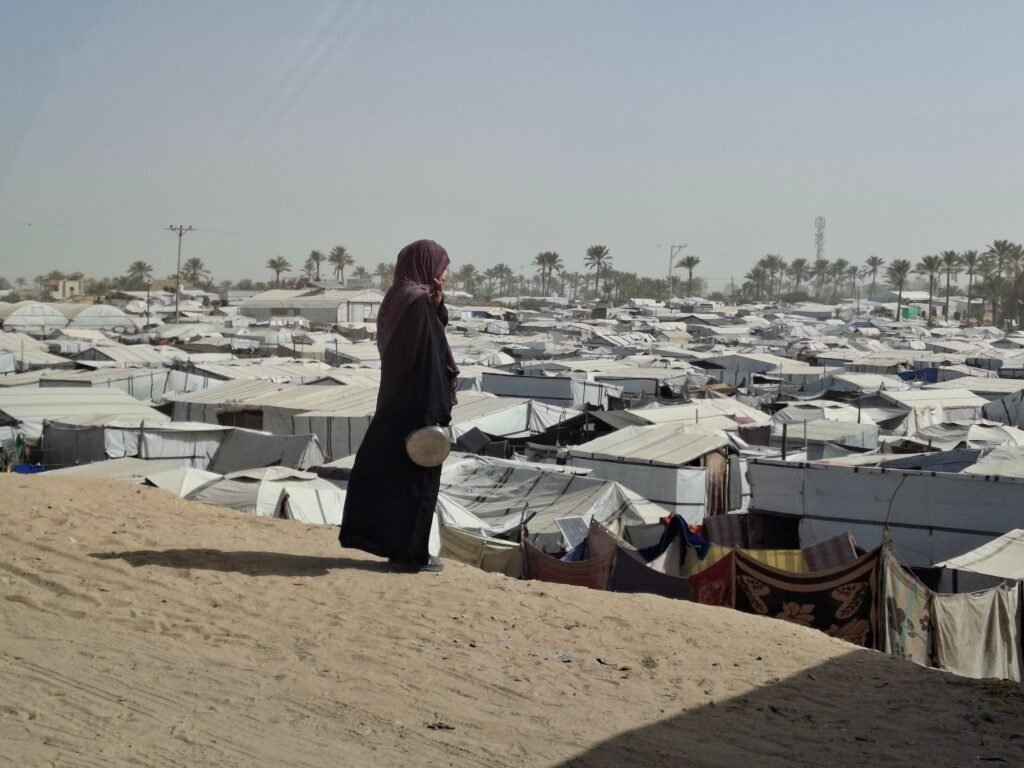
Gaza Herald — More than 86,000 Palestinian women in the Gaza Strip have been forced to become the sole breadwinners for their families, meaning that nearly one-quarter of all households in the enclave are now headed by women, according to UN Women. The agency emphasizes that this figure represents nearly double the number recorded before October 2023, reflecting the devastating human toll of Israel’s ongoing genocidal war and targeted destruction of civilian life.
The overwhelming majority of female-headed households endure extreme hardship amidst the continuous forcible displacement of approximately 1.5 million Palestinians. Facing total economic collapse and the widespread martyrdom of primary family providers, women are turning to informal labor, including baking bread over open fires, selling home-cooked meals, tailoring, and vending vegetables, or relying entirely on scarce aid distributions fraught with arbitrary allocation mechanisms.
For Iman Hijazi, in her thirties, the martyrdom of her husband Ramzi in early September 2025 at the Zikim area in northern Gaza, where he had gone in a desperate attempt to secure food, instantly shifted the burden of supporting her two young children onto her shoulders with no source of income. Having survived multiple displacements from Gaza City to the Middle Area, Hijazi now lives with her four-year-old son, Mohammad, and two-and-a-half-year-old daughter, Dalal, inside a worn canvas tent near the Al-Saraya intersection in central Gaza City. Hijazi explains that she has no choice but to register with charities, chase food kitchens, and pursue water trucks, adding that she feels immense despair but lacks even the time to mourn her bitter reality alongside the compounding crises of displacement, soaring prices, and severe food scarcity.
For mothers attempting to generate income, the absolute blockade on raw materials and fuel has made basic informal trades nearly impossible to sustain. Fidaa Aslibi, whose husband Mahmoud was martyred by an Israeli airstrike in the Sheikh Radwan neighborhood, began baking bread in a small oven alongside her 11-year-old son, Ismail. However, intense summer heat and the recent spread of automated bakeries have undercut her fragile income, leaving her family without a safety net. Similarly, 39-year-old Etimad Subh, whose husband Samir was killed while standing in line at a soup kitchen, prepares homemade food for neighbors using firewood due to the severe scarcity and extreme cost of cooking gas, stressing that if she sits idly waiting for aid vouchers, her children will face starvation.
The daily struggle of Gaza’s matriarchs is intensified by the persistent closure of border crossings, which has driven the prices of basic staples to unprecedented levels. With primary providers martyred, detained, or permanently disabled, women are left to navigate the intersection of personal grief, forced displacement, and extreme economic hardship. Children remain the most vulnerable victims of this structural collapse, bearing the dual agony of losing their fathers and being deprived of fundamental nutritional, educational, and human rights amidst an escalating humanitarian catastrophe.

