Gaza Herald – The International Committee of the Red Cross has highlighted severe obstacles in recovering and identifying Palestinian bodies from beneath the ruins of the Gaza Strip, warning that the window for identification is closing as time passes. Speaking to CNN, Jerusalem spokesperson Pat Griffith explained that these challenges are exacerbated by the specific medical and field conditions resulting from the Israeli war on the sector.
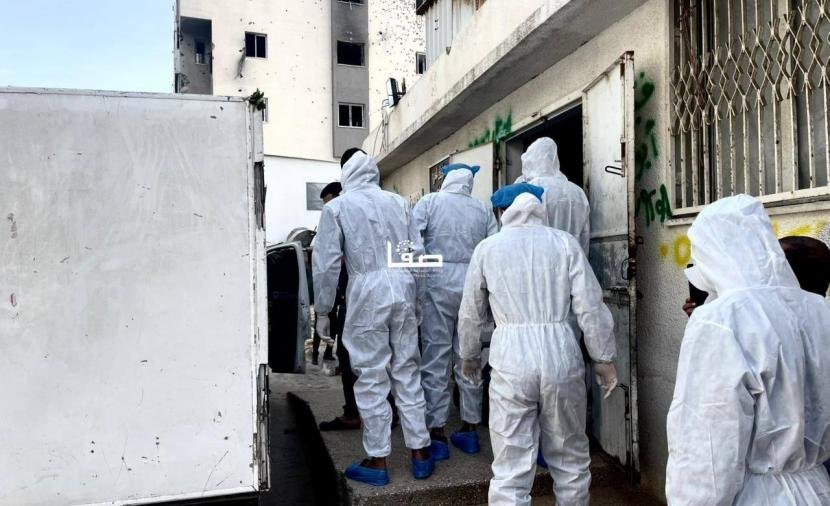
Griffith noted that international humanitarian law obligates parties to armed conflict to search for, recover, and preserve information regarding the dead and missing. However, he stated that unexploded ordnance significantly increases the danger of recovery operations. Rescue workers are often forced to remove debris only a few centimeters at a time to avoid triggering explosions caused by war remnants.
These difficulties are compounded by a critical shortage of heavy machinery and Israeli restrictions on its entry into the strip. According to Civil Defense spokesman Mahmoud Basal, field teams have recovered approximately one thousand bodies since October 2025. Meanwhile, around eight thousand Palestinians remain listed as missing, with most believed to be trapped under the rubble.
Griffith warned that the systematic destruction of medical infrastructure through repeated Israeli attacks on health facilities has left medical personnel increasingly reliant on primitive methods for identification. The strip lacks DNA analysis facilities, forcing doctors to use blood type tests and laboratory analyses that do not provide definitive results.
CNN quoted forensic doctor Ahmad Dhaahir, one of only three forensic specialists remaining in the area, stating that a lack of cooling equipment, fuel, and frequent power outages accelerate the deterioration of samples taken from unidentified corpses. In Deir al-Balah, the Civil Defense reported that roughly one thousand unidentified individuals were buried in a dedicated cemetery for the missing, with graves numbered in hopes of future identification.
UN High Commissioner for Human Rights Volker Türk cautioned that clearing rubble in areas under Israeli control without respecting the dignity of the dead could erase potential evidence of war crimes. He called for preserving evidence and allowing international investigators access to all parts of Gaza. CNN also published testimony from Mohammed Yousef Shlael, who lost family members in an Israeli strike on his home in Jabalia in 2024, describing how he had to collect body parts of children and women from the debris.
This report was produced in the Gaza Herald newsroom.