Gaza Herald – Three years into Israel’s war on the Gaza Strip, thousands of Palestinian families remain trapped in an agonizing search for relatives who disappeared amid Israeli attacks, displacement, detention operations and widespread destruction across the besieged territory.
According to the Independent Commission for Human Rights, more than 11,000 Palestinians in Gaza remain unaccounted for, a figure that includes people believed to be buried beneath the rubble of destroyed buildings as well as Palestinians whose fate remains unknown after they disappeared during Israeli military operations or possible detention.
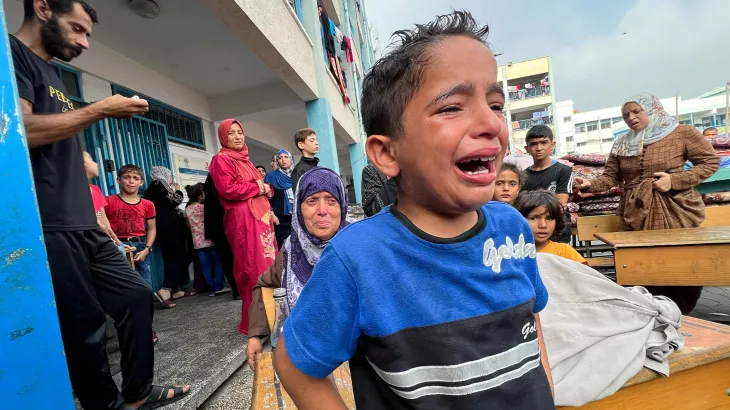
For thousands of families, the uncertainty has created another dimension of Gaza’s catastrophe. They do not know whether their loved ones were killed beneath collapsed buildings, detained by Israeli forces or forcibly disappeared. Years after losing contact with them, many remain unable to bury their relatives, confirm that they are alive or even learn where they were last seen.
The Palestinian Center for the Missing and Forcibly Disappeared estimates that between 2,500 and 3,000 Palestinians are suspected of having been subjected to enforced disappearance during Israel’s war on Gaza. The estimate is based on field documentation and reports submitted by families, including an analytical study of 317 documented cases, and the center stresses that the sample does not represent the full number of missing or forcibly disappeared Palestinians.
The center separately estimates that between 4,000 and 5,000 Palestinians may remain beneath the rubble of destroyed buildings. This group is distinct from those suspected of enforced disappearance, underscoring the multiple circumstances under which Palestinians have vanished during three years of Israeli attacks and destruction.
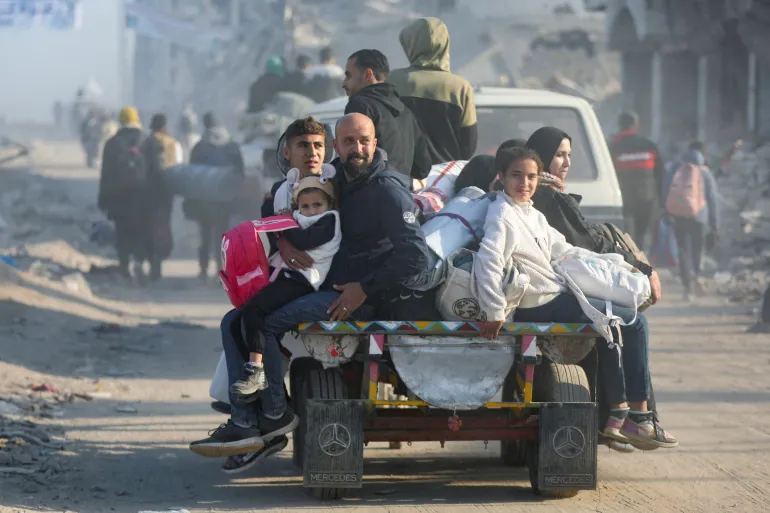
The documented patterns show Palestinians disappearing in a wide range of circumstances. Some vanished during Israeli ground incursions into homes and residential neighborhoods or during sieges imposed on populated areas. Others disappeared while attempting to return to their homes, retrieve belongings, flee through displacement routes or pass through Israeli military checkpoints. Palestinians have also gone missing while searching for food or waiting for humanitarian aid, while others disappeared during Israeli operations around medical facilities.
The Palestinian Center’s study found that home incursions and neighborhood sieges accounted for the largest category within its 317-case sample, followed by disappearances involving Palestinians attempting to return home or obtain basic necessities and those moving during displacement or through military checkpoints. The documented cases included children and older Palestinians, demonstrating that the crisis has affected civilians across different age groups.
For families, however, these categories offer little comfort. Every unresolved case represents a Palestinian whose fate remains unknown and a family forced to live between hope and mourning. Some continue searching hospitals, detention records and lists of recovered bodies. Others return repeatedly to the ruins of their homes hoping that recovery teams will eventually obtain the machinery needed to reach those still buried underneath.
The crisis has been compounded by Israel’s failure to provide complete information about Palestinians detained from Gaza. Israeli authorities have not disclosed the identities and whereabouts of all Palestinians taken into custody during the war, leaving families unable to determine whether missing relatives may be held in Israeli prisons or detention facilities.
Current reporting also indicates that approximately 620 bodies returned to Gaza remain unidentified, adding another painful layer to the search. Families looking for missing relatives are therefore confronted not only with destroyed neighborhoods and incomplete detention information, but also with hundreds of bodies whose identities have yet to be established.
The uncertainty has turned disappearance itself into a prolonged form of suffering. For a family whose home was destroyed, the absence of a recovered body means there may be no grave to visit and no certainty that a relative was killed. For the family of someone last seen during an Israeli ground operation or at a military checkpoint, the possibility of detention can keep hope alive for years without providing any information about where that person is being held or whether they survived.
Recovery efforts beneath Gaza’s enormous fields of rubble remain severely constrained. The Palestinian Center estimates that thousands may still lie beneath destroyed structures, while shortages of heavy machinery, limited access to devastated areas and the enormous scale of destruction continue to obstruct efforts to locate and recover them.
The missing therefore represent another part of Gaza’s human toll that the official number of Palestinians cannot fully capture confirmed killed. Behind the statistics are thousands of families who cannot complete the most basic rituals of grief because they still do not know what happened to their children, parents, siblings or spouses.
Three years into Israel’s war, these families remain suspended between the possibility that their loved ones are imprisoned, buried beneath rubble or among unidentified victims. Their wait is not merely a consequence of the destruction Gaza has endured; it is an ongoing humanitarian and human rights crisis in which thousands of Palestinians have effectively disappeared from their families’ lives without answers about where they are or what happened to them.
Until the rubble can be fully searched, unidentified bodies are identified and Israel discloses comprehensive information about Palestinians detained from Gaza, thousands of families will continue living with one of the war’s most painful unanswered questions: where are their loved ones?