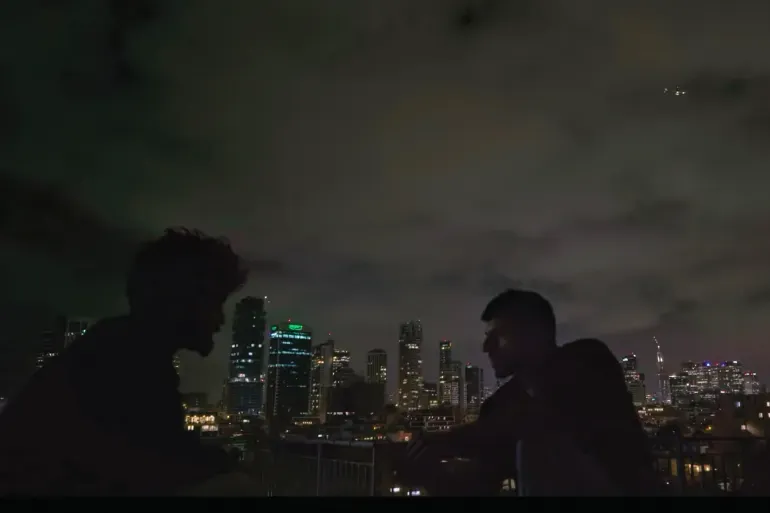
Gaza Herald – The production team behind the documentary “Naza” stated that they conducted interviews with more than 100 sources over a three-year period. These sources included senior military commanders and individuals with knowledge of targeting systems and decision-making mechanisms within the Israeli military during the war on Gaza.
The disclosure came in response to a statement by the Israeli military seeking to cast doubt on the film’s content. The military accused the documentary of containing “fundamental errors” in its portrayal of targeting planning and strike execution processes.
The Israeli military claimed the film relied on testimonies from only 24 intelligence and army personnel. It argued that these individuals possessed only a partial view of target approval and strike phases. The military denied using any system permitting the targeting of large numbers of civilians.
It maintained that rules of engagement distinguish between combatants and civilians. Furthermore, it asserted that final decisions regarding strikes are made by officers rather than artificial intelligence systems.
In contrast, the film team described the characterization of the 24 participants as low-ranking elements involved only in initial stages as incorrect. They clarified that participants were involved in multiple stages, including intelligence, operations, and final strike approval.
The team explained that verification involved classified documents leaked to them. This process included checking details of specific strikes and comparing them with testimonies from other confidential news sources not featured in the film.
Naza noted that sources contacted over the past three years had direct knowledge of the Israeli military’s systems used in the war. This group included high-level commanders who participated directly in approving strikes.
The team added that reports from other media institutions, including The New York Times, The Washington Post, and Associated Press, supported some of the film’s assertions. These reports concerned the use of AI-based systems for target identification and reduced restrictions on civilian protection.
Produced by The Guardian and directed by Yuval Abraham and Rachel Szor, Naza won the Special Jury Prize at the Venice Film Festival. The film examines targeting mechanisms based on testimonies from 24 current or former army and intelligence personnel.
Seeking to discredit the narrative, the Israeli military called the film a distorted and misleading image of targeting planning. It denied allegations of intentionally killing large numbers of civilians or using AI in ways that increase civilian casualties.
This report was produced in the Gaza Herald newsroom.