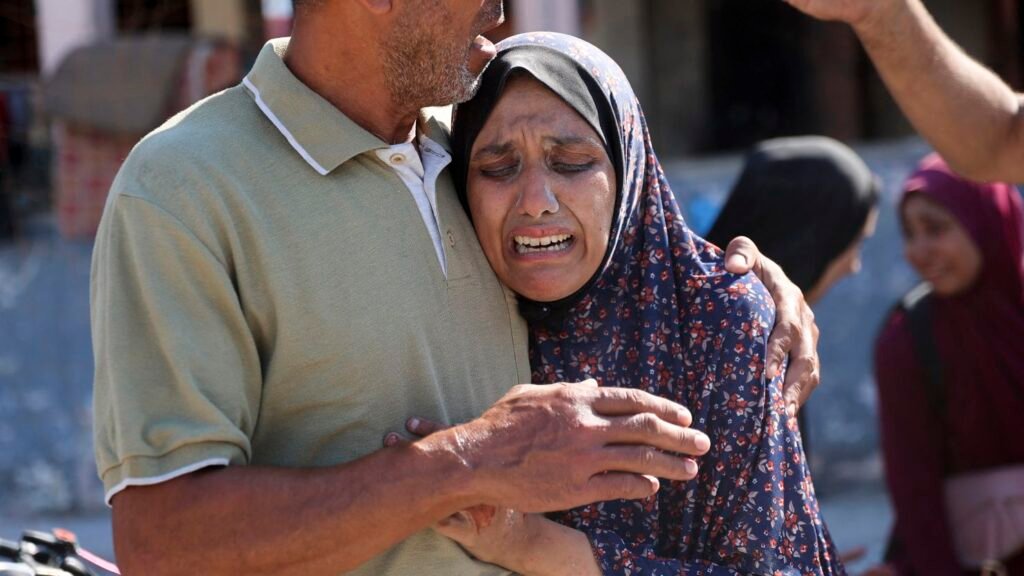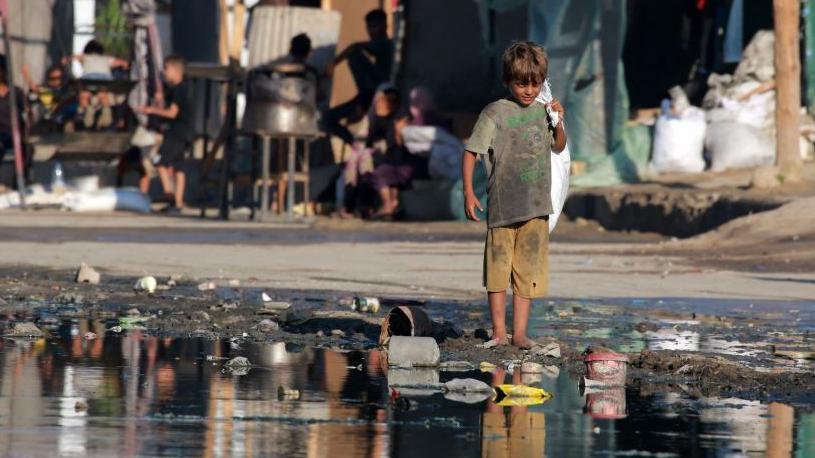
Gaza Herald- Displaced Palestinians living in the eastern neighborhoods of the Beit Lahia Project and Jabalia refugee camp in the northern Gaza Strip, particularly around the Kamal Adwan area, are enduring harsh humanitarian conditions amid severe shortages of aid, water and basic services. With winter approaching, fears are growing among families living amid the rubble and close to the “yellow line.”
Displaced families have appealed to the relevant authorities, humanitarian organizations and local aid initiatives to deliver assistance, water and other basic necessities to their communities, stressing that their proximity to the “yellow line” should not deprive them of humanitarian support.
Abu Mohammed, a displaced Palestinian, said the Kamal Adwan area has become devastated and largely destroyed, with aid and relief initiatives failing to reach the families still living there despite their urgent need for food, water and other essentials.
He said families in the area need people to check on their conditions and provide them with the assistance necessary to meet their daily needs, adding that residents feel largely overlooked by organizations providing humanitarian support.
Another displaced Palestinian, Abu Rami, said the area where they are staying near Kamal Adwan is only about 200 meters from the “yellow line.” He said families lack water and basic services and receive no assistance from any organization.
He appealed to the relevant authorities to intervene and address their situation, particularly as families are living in a devastated area without the most basic necessities of life, foremost among them water and humanitarian aid.
Abu Raed, another displaced resident, also stressed the families’ urgent need for essential assistance, calling on charitable groups and relevant organizations to pay attention to their suffering and direct aid to the areas where they are staying.
Abu Hani said families had been forced by the war to live in empty, devastated areas despite being unable to secure even their most basic needs there.
He warned that the arrival of winter would make conditions even more difficult because of shortages of clothing and other essential supplies. He said displaced families are already living under extremely harsh conditions and called for urgent assistance before their suffering worsens as temperatures fall and weather conditions deteriorate.
Nights in Complete Darkness
The suffering of displaced families is not limited to shortages of food and water. At night, they are plunged into complete darkness because of the lack of electricity and lighting.
Abu Mohammed said families spend their nights without electricity or flashlights, increasing children’s fear at bedtime and adding another burden to the daily hardships faced by displaced people.
He said rats and dogs roam around the areas where families are staying at night, while the darkness makes it difficult for residents to see or avoid them. He called on the relevant organizations to provide flashlights to displaced families, giving them at least a basic source of light and helping them secure the areas around their shelters.
The testimonies of displaced Palestinians reveal worsening humanitarian conditions for families living near the “yellow line,” where shortages of food and water are compounded by a lack of other basic necessities, including clothing and lighting. Families remain surrounded by rubble in areas where essential services are largely absent.
With winter approaching, fears are mounting that their situation will deteriorate further, particularly as families lack adequate warm clothing, heating supplies and other necessities needed to cope with colder weather.
Displaced Palestinians hope their appeals will prompt an urgent response from humanitarian organizations, aid initiatives and the relevant authorities, and that water, relief supplies and other basic necessities will finally reach communities living near the “yellow line,” easing some of the severe hardships they continue to endure.