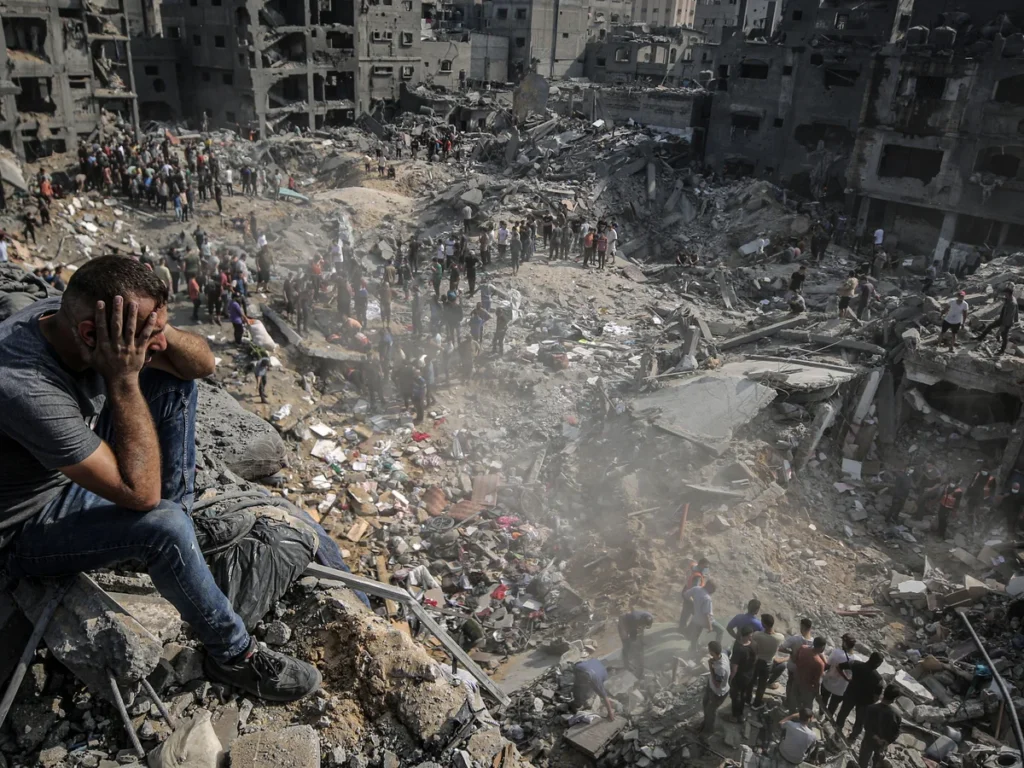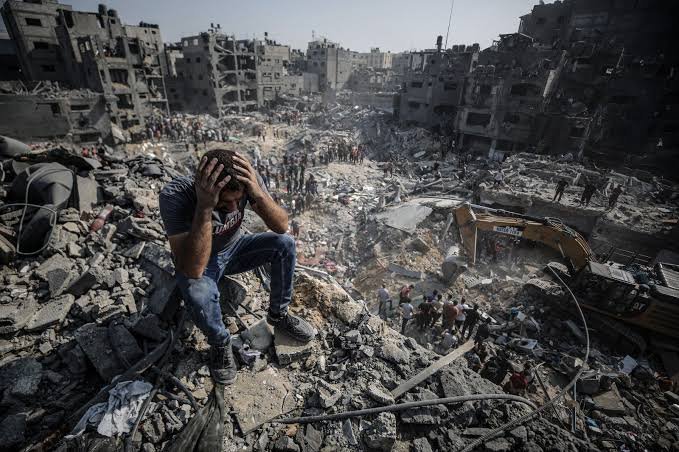
Gaza Herald— Forensic teams in the Gaza Strip are struggling under unprecedented conditions to recover and identify the remains of Palestinians killed beneath the rubble of Israel’s sustained campaign. Beyond the immediate death toll, the physical obliteration of bodies and the deliberate denial of forensic technology represent a continuous assault on Palestinian dignity and memory.
Khalil Hamada, Director General of Forensic Medicine and Criminal Investigations, confirmed that the sheer force of Israeli heavy bombardments has repeatedly dismembered victims, reducing human remains to fragments. This widespread destruction of bodies prevents families from obtaining closure and renders the basic accounting of the dead an operational nightmare.
In one recent instance, rescue teams unearths skeletal remains from a residential home targeted early in the war. Although relatives confirmed 19 family members were inside at the time of the strike, forensic experts could only reconstruct the partial remains of roughly 14 individuals, leaving five completely unaccounted for, their bodies evaporated or pulverized into non-recoverable matter.
The Physical Mechanics of Erasure
The extreme physical state of the recovered remains directly reflects the nature of the ordnance deployed against dense civilian areas. Forensic teams note a sharp contrast between victims of structural collapses and those targeted directly by high-explosive munitions.
Whereas victims in non-bombarded structural collapses often die from asphyxiation or blunt pressure, leaving bodies intact for identification, the heavy ordnance used across Gaza produces lethal blast and thermal waves that disintegrate human tissue in seconds.
The widespread use of 2,000-pound munitions, bunker-busting bombs, and high-explosive ordnance designed for reinforced military targets transforms residential blocks into mass graves. When used against unfortified civilian homes, these weapons shatter bone, incinerate tissue, and scatter remains across vast debris fields, making complete recovery physically impossible.
Subsequent bulldozing and clearing operations, forced by the absence of specialized heavy machinery, further scatter these fragmented remains, leaving forensic workers relying on neighbor testimonies and survivor memories just to construct tentative victim lists.
Blockades as an Instrument of Identity Denial
The humanitarian duty to identify the dead, return remains to surviving kin, and ensure dignified burials is fundamentally hampered by ongoing restrictions on medical and scientific supplies entering the enclave.
To address the thousands of unidentified remains and mass graves across the territory, Gaza’s forensic sector initiated a joint project with the International Committee of the Red Cross (ICRC) to implement systematic DNA identification protocols.
However, Israeli border controls continue to block the entry of essential laboratory equipment, chemical reagents, and advanced DNA-testing supplies into Gaza. By preventing the establishment of localized genetic testing capacity, the blockade enforces an indefinite state of limbo for thousands of families waiting to confirm the fate of missing relatives.
Decades of Trauma and Institutional Collapse
Gaza’s forensic infrastructure, already strained by years of blockade, has been systematically decimated alongside the wider healthcare system. Medical facilities, specialized laboratories, and diagnostic centers have suffered direct damage, operational disruptions, and critical supply shortages.
With thousands of tons of explosives dropped on densely populated areas, yielding an aggregate explosive force multiple times greater than the Hiroshima atomic bomb, the sheer scale of devastation far outpaces local forensic capacity.
For the surviving population, the inability to identify and properly bury their dead represents an ongoing form of psychological punishment. As forensic teams face years of grueling manual sorting through high-rise debris, the refusal to permit diagnostic equipment ensures that for thousands of Palestinians, the act of mourning remains permanently delayed.