Gaza Herald- Gaza’s physical destruction now carries an official financial estimate, a six-month execution window, and a list of 66 proposed projects. What it utterly lacks, however, is the funding required to match the unprecedented scale of devastation inflicted on the territory, as well as the political freedom to actually carry out the work.
The US-backed Board of Peace has unveiled a $2.45 billion initial recovery blueprint presented as a mechanism to begin rebuilding Gaza, restore basic utilities, and establish a local civilian administration. This six-month package pledges temporary housing, rubble clearance, hospital repairs, infrastructure rehabilitation, and economic support.
Yet the Board’s own estimates reveal that repairing Gaza’s physical damage over the medium term will cost at least $35.2 billion, with full reconstruction over the next decade demanding an astounding $71.4 billion.
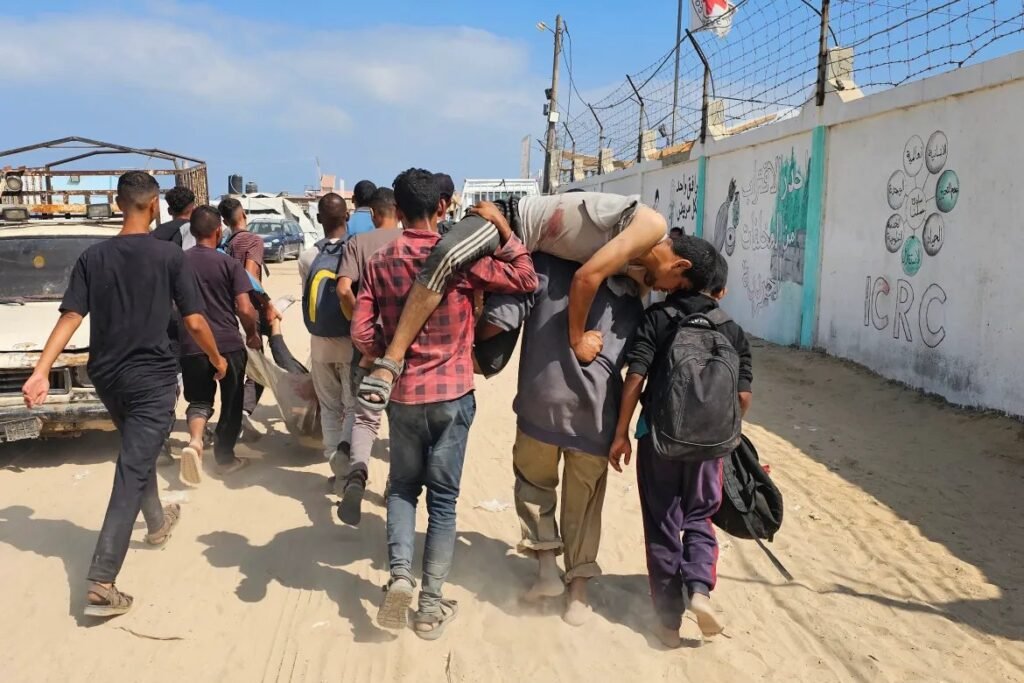
This means the initial package covers only a tiny fraction of what has been destroyed, leaving hundreds of thousands of displaced Palestinians trapped in ruined neighborhoods to wonder what this paper proposal will actually change on the ground.
66 Projects for a Besieged Land in Ruins
The proposal organizes its 66 projects across six primary categories: infrastructure, human development, economic recovery, digital systems, legal affairs, and peace and security. Infrastructure development is assigned the single largest portion at roughly $1 billion.
Within that budget, approximately $400 million is designated for temporary shelter, $275 million for unexploded ordnance and rubble removal, $50 million for hospital rehabilitation, and $30 million for road repairs. The blueprint also promises water and power grid repairs, border crossing upgrades, and 25,000 portable solar kits.
For displaced families surviving in severe weather, the temporary housing pledge is particularly critical. The blueprint promises insulated caravans to replace deteriorating canvas tents, alongside a UAE-funded pilot neighborhood in Rafah designed for 50,000 people.
However, these figures expose a massive void. The shelter allocation functions strictly as emergency triage rather than a real plan to rebuild the permanent homes systematically wiped out during the war. Over 320,000 homes across the Strip have been damaged or destroyed, while more than 2,000 occupied structures sit on the verge of total collapse, all while the ongoing blockade strictly limits the entry of basic construction materials.
$2.45 Billion Against a $35.2 Billion Need
The most glaring detail of the proposal is the massive gulf between the initial $2.45 billion pledge and the actual cost of physical recovery. With medium-term needs set at $35.2 billion, this initial six-month blueprint represents merely 7 percent of what is required to make Gaza whole again.
Furthermore, that $35.2 billion figure excludes the long-term economic and civil recovery needed over the next decade, which requires an additional $71.4 billion.
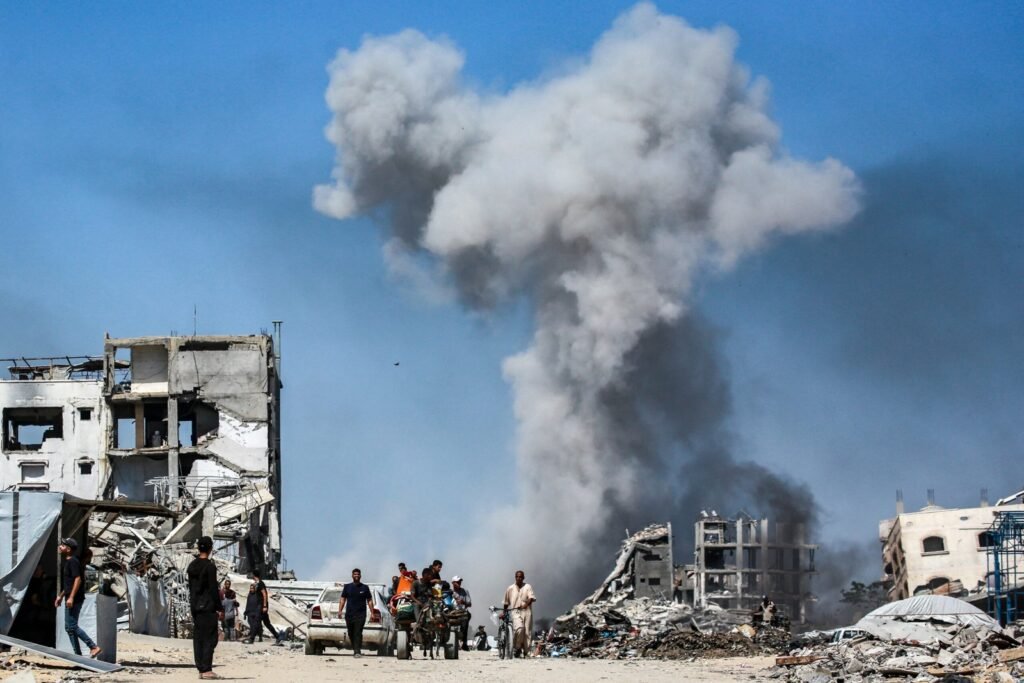
This financial gap is critical because Gaza’s destruction extends far beyond crumbled housing blocks. Essential municipal water networks, electrical grids, health centers, schools, and commercial sectors have been completely devastated. Millions of tons of rubble, mixed with hazardous unexploded ordnance, must be cleared before safe rebuilding can even begin.
The Board itself acknowledges that a six-month timeline is wholly insufficient. US Secretary of State Marco Rubio characterized the initiative as a long-term undertaking, while international officials continue appealing to foreign donors to fill the massive financial deficit.
Crucially, even the initial $2.45 billion figure is far from guaranteed, as foreign donors remain hesitant to release funds while political preconditions and military blockades persist.
Rebuilding Under Active Siege and Foreign Preconditions
Money alone cannot restore a destroyed society. Physical reconstruction requires open borders, unrestricted entry of raw materials, heavy machinery, fuel, and water, alongside a complete end to military strikes.
This is where the reconstruction proposal collides directly with political coercion. The Board’s roadmap conditions actual rebuilding on political benchmarks, explicitly linking physical reconstruction and Israeli troop withdrawals to the disarming of Palestinian factions.
By conditioning essential humanitarian relief and basic shelter on political compliance, the international framework effectively turns Gaza’s reconstruction into a tool of political leverage while millions of Palestinians remain trapped in unlivable conditions.