
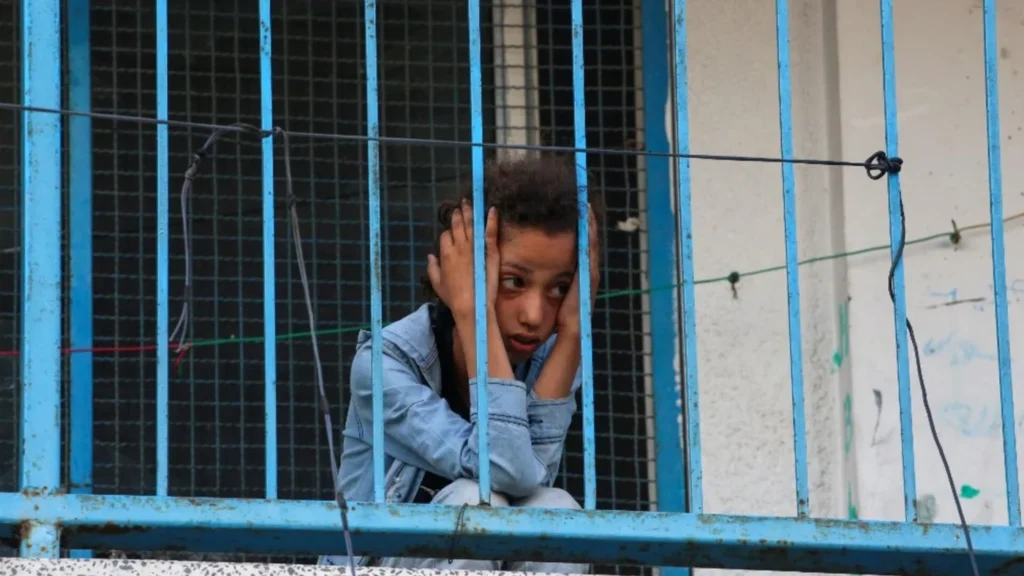
Gaza Herald — In Gaza, a wounded person’s journey does not end when doctors manage to save their life. Once they leave the operating room, another, less visible battle begins, one that can last for years: How does someone who has lost a leg learn to walk again? How does a person regain the use of an injured hand? How does someone relearn to rely on a body whose abilities have been permanently altered? And how can they return to school, work, and everyday life?
These questions now confront thousands of wounded Palestinians across the Gaza Strip, following a war that has produced an enormous number of complex injuries while damaging the very rehabilitation centers meant to receive patients after acute treatment and leaving severe shortages of equipment, medical supplies, and prosthetic limbs.
According to Gaza’s Ministry of Health, physical therapy and medical rehabilitation are no longer merely complementary services provided after surgery. They have become an essential part of preserving the future of the wounded, particularly as the Strip has recorded around 5,000 amputations and 300 neurological and spinal cord injuries, while an estimated 10,000 people require intensive, long-term rehabilitation.
These figures represent more than patients who need therapy sessions. They point to thousands of people whose need for rehabilitation may continue for months or years, and to a healthcare system being asked to address complex, life-altering injuries while struggling with a crisis of its own.
When Surgery Ends, the Hardest Journey Begins
For someone who has lost a limb, amputation does not mark the end of treatment. It marks the beginning of a long process of care.
After surgery, the patient needs wound care, pain management, and monitoring for complications. They then require exercises to rebuild strength and balance, training to regain mobility, and assistance in learning how to use mobility aids. Eventually comes the more complex stage of receiving a suitable prosthetic limb and learning how to use it.
People with brain, neurological, or spinal cord injuries may require specialized rehabilitation programs involving physical and occupational therapy, training in daily activities, and continuous follow-up for conditions that permanently affect movement, communication, or independence.
A patient who survives an injury and leaves the hospital, therefore, is not necessarily someone who can return to their previous life.
They may need to learn again how to stand, walk, use a hand, or perform the simplest everyday tasks. That is where one of Gaza’s deepest gaps begins.
More Wounded, Fewer Rehabilitation Centers
Gaza’s Ministry of Health says attacks on healthcare institutions and the shutdown of most specialized rehabilitation centers have sharply reduced the Strip’s ability to respond to the growing number of patients requiring long-term care.
The surge in demand has not been matched by a corresponding increase in rehabilitation capacity.
Instead, the opposite has happened.
As the need for physical therapy, rehabilitation, prosthetic devices, and assistive equipment has multiplied, the infrastructure required to provide those services has itself been severely damaged, while access to medical equipment and supplies has become increasingly difficult.
Patients face acute shortages of assistive devices and prosthetic limbs, among other tools needed to regain mobility and independence. Restrictions on medical travel also create an additional barrier for patients requiring specialized services unavailable inside Gaza.
The result is a widening gap between saving a patient’s life in the immediate aftermath of an injury and providing everything that patient needs to rebuild a life afterward.
A System That Once Served Thousands
Physical therapy and rehabilitation services did not begin with the war in Gaza, but the needs confronting them today are far beyond anything the system previously handled.
In 2021, hospitals across the Strip recorded 48,803 physical therapy cases and provided approximately 197,865 physical therapy sessions, according to the Ministry of Health’s annual report.
Rehabilitation services also included patients requiring prosthetic limbs, occupational therapy, rehabilitation, and speech therapy, as well as people with spinal cord injuries, brain injuries, and multiple traumatic injuries.
The system also provided assistive devices and supported amputees in obtaining prosthetic limbs.
But the current numbers reveal how dramatically the situation has changed.
A system that once dealt with established and relatively defined rehabilitation needs is now expected to absorb thousands of new patients suffering severe and complex war injuries, while simultaneously operating with a diminished ability to provide those services.
Amputation Does Not End With the Loss of a Limb
Amputations are among the most urgent rehabilitation challenges—not only because of their number, but because of the extensive care they require.
Every amputation creates a long chain of needs that begins after surgery and continues well beyond the fitting of a prosthetic limb.
Patients need repeated assessments, physical therapy, mobility and balance training, care for the residual limb, and eventually a properly fitted prosthesis. They then need training to use it in everyday life.
Without consistent access to these services, physical and psychological complications can emerge, affecting a person’s ability to move and live independently.
For children who lose limbs, the needs can be even greater. Their bodies are still growing, meaning prosthetic devices may need to be adjusted or replaced as their physical needs change, requiring continuous rehabilitation and follow-up.
That is why the figure of 5,000 amputations cannot be viewed simply as a statistic about wartime injuries.
Behind every case is a long medical journey, a family forced to adapt to a new reality, and an injured person who must learn how to live in a body that has been permanently changed.
Injuries That Will Remain Long After the War
The challenge extends far beyond amputations. Injuries to the nervous system, spinal cord, and brain can leave lasting effects for years, affecting movement, balance, communication, and the ability to perform daily activities.
The Ministry of Health has recorded around 300 neurological and spinal cord injuries, alongside thousands of cases requiring intensive and long-term rehabilitation.
Estimates published by the World Health Organization in 2025 also point to extensive rehabilitation needs associated with severe injuries in Gaza. Palestinian data based on those estimates indicated that more than 10,000 children were living with severe disabling injuries and required urgent and sustained rehabilitation services.
These figures demonstrate that the consequences of the war will not necessarily end when new injuries stop occurring.
People who have lost the ability to walk or use a limb will carry the effects of their injuries into the post-war period—to schools, workplaces, homes, streets, and every aspect of their daily lives.
From Saving the Body to Restoring a Life
During wars, medical responses are often measured by the number of lives saved and surgeries performed.
But Gaza’s scale of injury raises another question: What happens after the life is saved?
For thousands of wounded people, surviving an injury is not the end of their medical journey. It is the beginning of a different one, focused on restoring as much mobility, independence, and ability to live as possible.
Gaza’s Ministry of Health has previously worked with the International Committee of the Red Cross’s physical rehabilitation program to identify and register people with amputations, spinal cord injuries, and brain injuries that have resulted in permanent disabilities, to connect them to rehabilitation and prosthetic services.
But the scale of current needs requires far more than occasional therapy sessions.
According to the Ministry of Health, what is needed is the rebuilding of a rehabilitation system capable of operating consistently, securing medical equipment, assistive devices, and prosthetic limbs, providing specialized personnel, and enabling patients who require advanced care to receive treatment outside the Strip.
The response must also extend beyond the patient.
Rehabilitating someone who has lost mobility means helping their family adapt to new needs, modifying their living environment where possible, and enabling the patient to return to education or work when their condition allows.
A Battle Deferred Until After Surgery
The danger in Gaza’s rehabilitation crisis lies not only in the number of wounded people, but in the fact that many of their injuries will remain long after the acute phase of the war ends.
An injury that changes a person’s ability to walk can reshape their educational and professional future. Losing a limb can force an entire family to adopt a new way of living. A spinal cord or brain injury can make even the simplest daily tasks dependent on assistance.
Rehabilitation, therefore, is not simply a medical service that can be postponed until later.
For some patients, delays can lead to additional complications, reduce the potential for recovery, or make adaptation to disability more difficult.
Gaza’s Ministry of Health has called on international organizations and United Nations agencies to urgently provide specialized rehabilitation equipment and medical supplies, while also facilitating access through crossings for critical patients who require advanced services outside the Strip.
The medical battle in Gaza is no longer limited to stopping bleeding, treating trauma, or completing surgery.
Another battle begins immediately afterward: helping the wounded person stand, walk, use a hand, return to a classroom, go back to work, or regain some measure of independence.
Thousands of lives may have been saved in Gaza’s operating rooms, but survival is not the end of the journey. For the wounded, another question now begins: How do you rebuild a life in a body that has changed, inside a rehabilitation system that has itself been damaged by war?

