
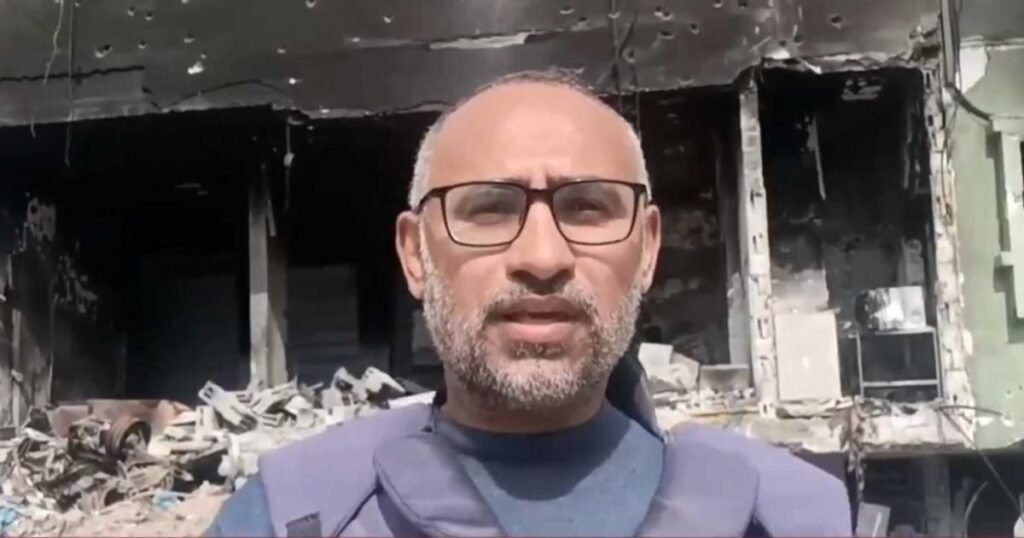
Gaza Herald – When Palestinian journalist Mohamed Saber Arab, a correspondent for Al Araby TV in northern Gaza, appeared before an Israeli military court, the image was more than a routine detention hearing. His gaunt body and visibly changed appearance offered a stark reminder of the toll of prolonged Israeli detention and the reports of abuse, deprivation and forced disappearance faced by Palestinian detainees from Gaza.
Arab was kidnapped by Israeli forces on March 18, 2024, inside Al-Shifa Hospital in Gaza City, where he was working as a journalist covering events on the ground and documenting Israel’s genocidal war on the Strip.
From the moment of his detention, Arab was moved through a series of Israeli military detention facilities before eventually being held at Naqab Prison, according to information provided by his lawyers and Palestinian rights organizations. For long periods, his family and the outside world had little information about his condition, amid restrictions on visits and limited access for lawyers and rights groups to detainees from Gaza.
After more than two years in detention, necessities reportedly became matters that Arab had to raise through the military court, including requests for underwear, appropriate summer clothing and the ability to see his own face in a mirror while shaving.
His lawyer, Khaled Mahajneh, reported disturbing conditions after being able to meet Arab during a legal visit to the Sde Teiman detention facility in June. According to statements attributed to Arab, he was subjected to prolonged shackling of his hands and feet, blindfolding for weeks, sleep deprivation, and inadequate medical care.
Arab also reportedly said witnessing other Palestinian detainees suffering severe injuries, including amputations linked to wounds that deteriorated under harsh detention conditions and inadequate medical treatment.
His physical condition became increasingly visible during recent military court hearings, where he appeared markedly thinner and physically weakened.
Arab remains detained under Israel’s designation of an “unlawful combatant,” according to his lawyers and rights organizations, without a clearly presented indictment. Palestinian legal and human rights groups have repeatedly raised concerns over the lack of due-process protections afforded to detainees from Gaza under this framework.
His case also highlights the growing risks faced by Palestinian journalists documenting Israel’s genocide on Gaza. Palestinian journalists have been killed, injured, displaced and detained while attempting to report on the destruction and humanitarian suffering across the Strip.
The Palestinian Journalists’ Syndicate has documented 265 journalists killed in Gaza since the beginning of Israel’s genocide, while Palestinian prisoner rights organizations have recorded more than 150 detentions of journalists and media workers since October 7, 2023. More than 40 journalists remain detained, including journalists from Gaza held under administrative detention or the “unlawful combatant” framework.
Rights organizations have reported the harsh detention conditions affecting Palestinian journalists and other detainees, including isolation, deprivation, inadequate medical care and physical and psychological abuse.
For Arab’s family and colleagues, his appearance in the courtroom represents more than the image of a journalist who has lost years of his life behind bars. It is a reminder of the human cost of the detention of Palestinian journalists and the continuing struggle to maintain a Palestinian voice documenting what is happening in Gaza.
Arab’s story is also a reminder that behind every name on a detention list is a person with a family, a profession, a life and a future. His camera was taken away, but the story he was documenting continues to be carried by others.
Palestinian rights and press freedom organizations continue to call for Arab’s release, the release of all Palestinian journalists kidnapped by Israel, and independent international access to detainees from Gaza to establish the conditions of their detention and safeguard their legal and humanitarian rights.

