
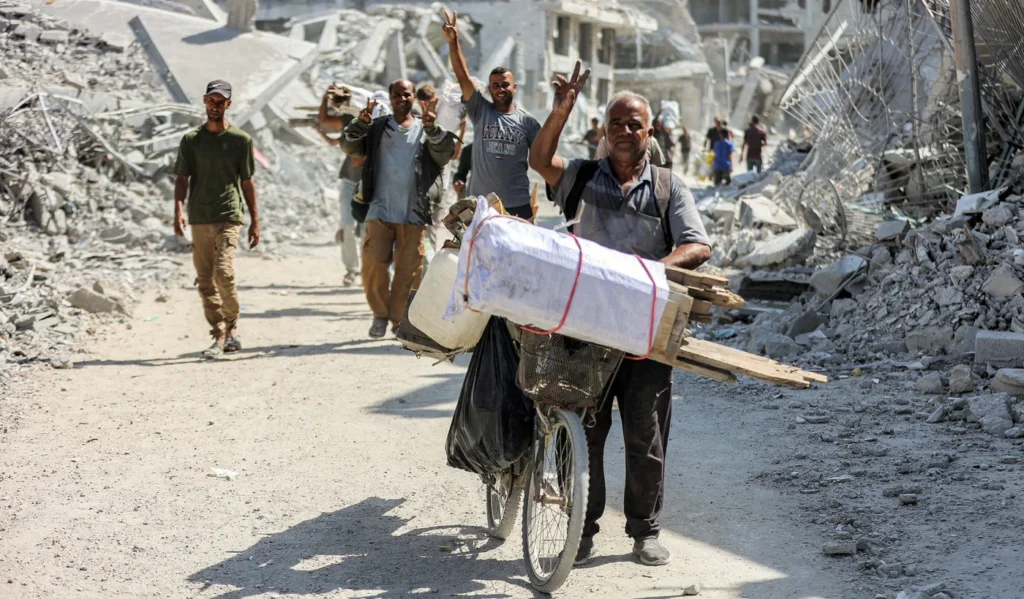
Gaza Herald_The transportation crisis in Gaza has expanded far beyond fuel shortages and damaged roads. As Israel’s war on the enclave continues, severe shortages of vehicles, spare parts, motor oil, and tires combined with soaring prices are making it increasingly difficult for drivers to keep their vehicles on the road.
With restrictions continuing to limit the entry of vehicles and essential automotive supplies, transport workers and business owners warn that growing numbers of cars could soon be forced out of service, threatening public transportation, commercial activity, and access to essential services across Gaza.
Skyrocketing Prices Deepen the Crisis
Wael Al-Hellis, deputy head of the Gaza Vehicle Importers Association, said the unprecedented rise in the cost of spare parts has pushed the transportation sector toward a near standstill.
He said the price of a vehicle battery has risen from 300–500 shekels before the war to 4,000–6,000 shekels, while a single tire now costs around 10,000 shekels. Motor oil prices have also climbed into the thousands of shekels as restrictions on imports continue.
The shortage has also transformed Gaza’s vehicle market.
According to Al-Hellis, the price of some vehicles has exceeded $150,000, driven by limited supply and continued restrictions on bringing new vehicles into the territory.
He added that around 500 vehicle dealerships and automotive companies have been affected during the war, with total losses exceeding $100 million. He called for the entry of spare parts, lubricants, and replacement vehicles, as well as compensation for affected businesses, to prevent the sector from collapsing.
Drivers Struggle to Stay on the Road
Taxi driver Abu Mohammad Al-Najjar said earning a living has become increasingly difficult, explaining that even a minor mechanical failure can leave a vehicle out of service for weeks or months because replacement parts are either unavailable or unaffordable.
“Before the war, replacing a battery or a tire was routine,” he said. “Now we delay repairs until the last possible moment because prices are beyond our reach. If the vehicle breaks down, we lose our only source of income.”
Another taxi driver, Mahmoud Abu Shamala, said many drivers have resorted to repairing worn-out or previously damaged parts because they cannot afford new replacements.
“Sometimes we spend days searching for a single part,” he said. “If we finally find it, the price is several times higher than it should be. That increases transportation costs and reduces what drivers can earn.”
Private Vehicle Owners Forced to Stop Driving
Ahmed Al-Masri, who owns a private car, said he has left his vehicle parked for months because repairing it would cost more than the car itself.
“I used my car to take care of my family’s daily needs,” he said. “Today I can’t even afford a battery or a tire, so it just sits there unused.”
Economic Consequences Reach Beyond Transportation
Economists and transportation specialists say the crisis extends far beyond motorists.
The shortage of operational vehicles is disrupting the movement of goods, slowing commercial activity, complicating access to healthcare and humanitarian services, and increasing transportation costs for residents across Gaza.
They warn that continued restrictions on the entry of vehicles, spare parts, tires, and automotive supplies are accelerating the territory’s economic decline while forcing more vehicles off the road.
With thousands of Palestinians relying on transportation for their livelihoods, the sector faces mounting pressure as the war and import restrictions continue.
Without the entry of essential automotive supplies and replacement vehicles, transport workers warn that Gaza’s transportation network could face an even broader shutdown, adding another layer to the humanitarian and economic hardships confronting the enclave.

