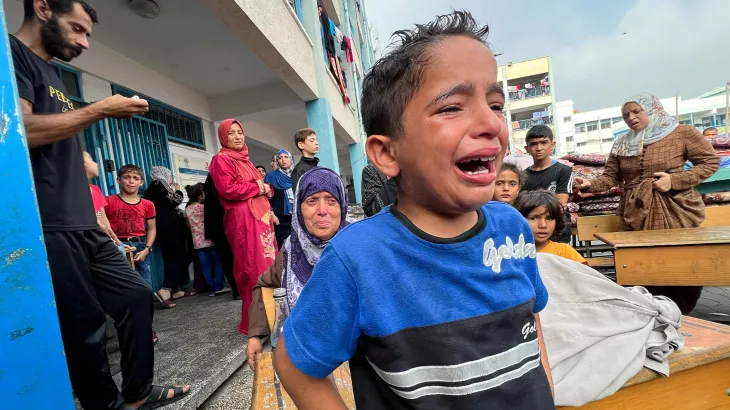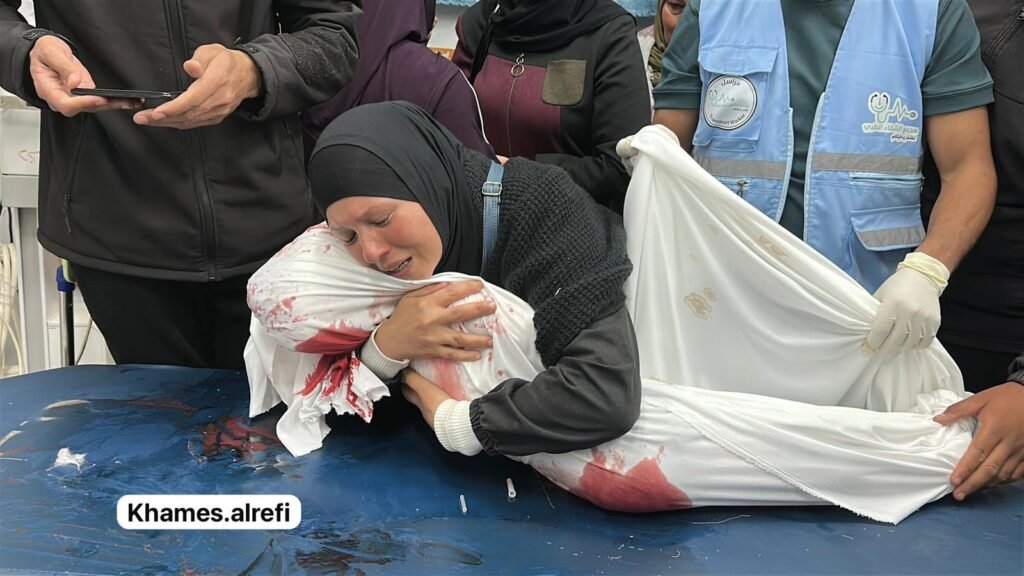
Gaza Herald _As the world observes the International Day of Innocent Children Victims of Aggression on June 4, the experiences of Gaza’s children stand as a stark reminder of the devastating human cost of conflict. Across the territory, thousands of Palestinian children are living with the consequences of loss, displacement, injury, and psychological trauma caused by Israel’s ongoing military campaign.
For many, childhood has become defined not by learning and play, but by hospital rooms, destroyed homes, missing family members, and an uncertain future. Their stories reveal the profound impact of a war that continues to shape every aspect of daily life.
One Night, Two Irreplaceable Losses
Eleven-year-old Sham Eyad Azzam believed that the relative calm surrounding Eid al-Adha might signal a brief return to normal life. Like many children in Gaza, she hoped the worst had passed.
Instead, she woke to a scene of chaos and destruction as fire engulfed her home. In a matter of moments, Sham lost her 12-year-old sister, Sidra, and suffered injuries that resulted in the amputation of her leg above the knee.
Now receiving treatment at Al-Shifa Hospital, Sham is adjusting to a reality she never imagined. Alongside the physical challenges of learning to live with an amputation, she is also coping with the emotional burden of losing a sibling.
Doctors say her recovery will require extensive rehabilitation and long-term psychological care to help her navigate the trauma of both bereavement and severe injury.
A Family Torn Apart During Eid
The Aliwa family was celebrating the third day of Eid when an Israeli strike hit the residential building where they were staying.
Parents Mousa and Narmeen Aliwa, along with their four children, Malak, Mohammad, and twins Judy and Jory, were trapped beneath the rubble.
The family now shares a hospital room at Al-Shifa Hospital, recovering from a range of injuries. The children suffered fractures to their legs and pelvises, while both parents sustained serious wounds.
Recalling the attack, Mousa said the family had been asleep when the building was struck before dawn. Within seconds, their celebration turned into a struggle for survival beneath collapsed concrete and debris.
Ghada’s Childhood Changed Forever
Seven-year-old Ghada Dabbash was playing on a swing at a school sheltering displaced families when an Israeli attack struck the area in April 2025.
What began as an ordinary moment of childhood quickly turned into a life-altering tragedy.
The blast severely injured Ghada’s right arm, forcing doctors to amputate it in an effort to save her life. Since then, she has faced a long and painful recovery process.
Her father says she continues to suffer from phantom limb pain, a condition that causes intense sensations from an amputated limb. Everyday tasks that once seemed simple, including writing, eating, and playing, have become significant challenges.
The emotional impact has been equally profound. Ghada struggles with feelings of isolation and anxiety, while her family works to support her through specialized care and alternative educational programs.
When asked about the day of the attack, her memory remains painfully clear.
“I was on the swing,” she recalled. “Then there was an explosion, smoke everywhere, and later my arm was gone.”
The Only Children Left Behind
Eight-year-old Jana al-Ajl and four-year-old Hazem al-Ajl represent another devastating consequence of the war: the loss of entire families.
The two children survived an Israeli attack in February 2024 that killed 19 relatives.
Jana lost her parents and sisters, becoming the sole survivor of her immediate family. Hazem also lost both of his parents in the same attack.
Today, they are being cared for by a relative who says the emotional wounds remain deep. Jana often avoids conversations about her family and becomes overwhelmed when memories of her parents resurface.
Those caring for the children say helping them process such immense loss remains a daily challenge, particularly in an environment where instability and insecurity continue.
Psychological Trauma Reaches Crisis Levels
Mental health professionals warn that Gaza’s children are experiencing layers of trauma unlike anything typically documented in conventional conflict settings.
Dr. Osama Imad, a specialist in mental health, says many children exhibit symptoms associated with severe psychological distress, including recurring nightmares, panic, social withdrawal, chronic fear, and post-traumatic stress disorder.
Other manifestations include bedwetting, speech difficulties, developmental delays, and emotional instability.
According to Dr. Imad, repeated exposure to violence, displacement, and loss has created a cycle of trauma that continues to deepen with time. Without comprehensive support systems, the long-term consequences could affect an entire generation.
He warns that many children are growing up without the stability of schools, community networks, or consistent mental health services, leaving them especially vulnerable to lasting psychological harm.
The Numbers Behind the Human Tragedy
Statistics released by Gaza’s Ministry of Health illustrate the scale of the crisis facing Palestinian children.
According to ministry official Zaher al-Wahidi, 21,638 children have been killed during the war, accounting for nearly one-third of all fatalities recorded in Gaza.
Among them were more than 6,400 children under the age of five and over 1,000 infants who had not yet reached their first birthday. Health authorities also reported that 162 children died due to hunger and malnutrition.
More than 45,000 children have been injured, including approximately 1,000 who suffered amputations.
Thousands of others remain in urgent need of specialized medical care, with many unable to access treatment due to the destruction of Gaza’s healthcare system and restrictions on movement.
A Growing Generation of Orphans
The war has also created a generation of children growing up without parents.
According to Gaza health officials, nearly 60,000 children have lost one or both parents since the start of the conflict.
For many of these children, the loss extends beyond immediate grief. It affects every aspect of their lives, from emotional development and education to their sense of security and belonging.
Humanitarian workers warn that supporting these children will require years of sustained assistance and investment in social and psychological recovery programs.
Beyond the Statistics
Behind every figure is a child whose life has been irrevocably changed. Some are learning to walk with prosthetic limbs. Others are trying to cope with the loss of parents, siblings, or entire families. Many continue to live with trauma that cannot be measured in numbers alone.
As the world commemorates a day dedicated to protecting children from the consequences of violence, Gaza’s children remain among those paying the highest price. Their stories are not only accounts of suffering, but also a reminder of the urgent need to protect civilian lives and ensure that future generations are not defined by the wounds of war.