
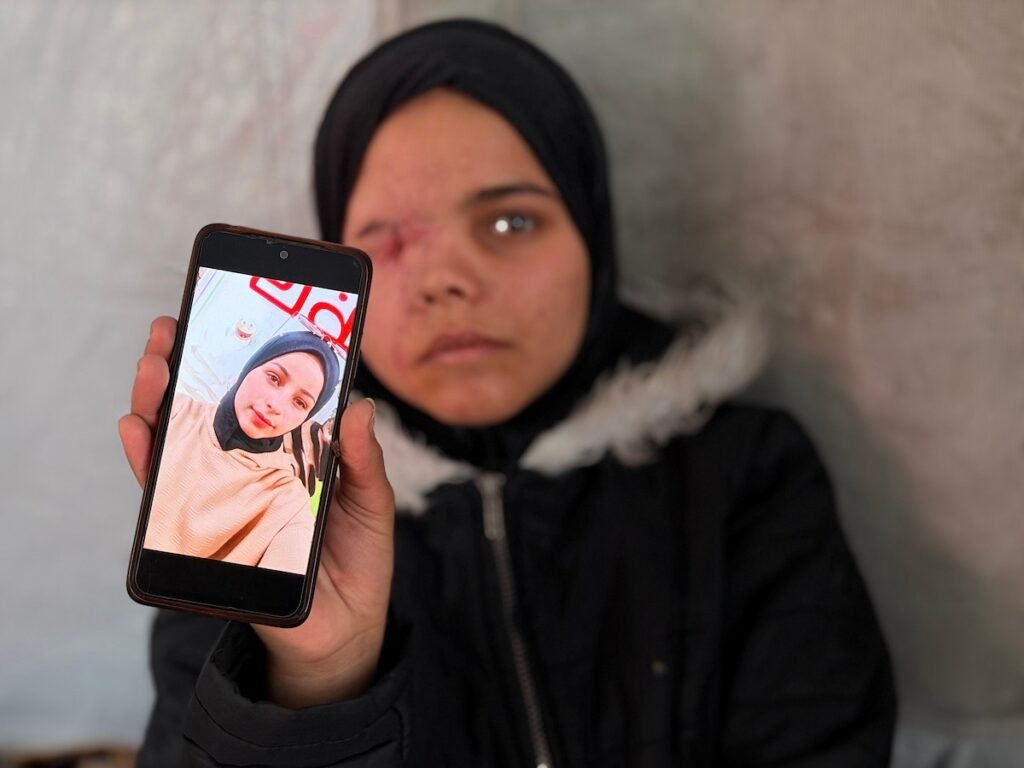
Gaza Herald _Nearly eight months after a ceasefire was announced in the Gaza Strip, many Palestinians say the sense of security they hoped would follow has never materialized. Ongoing Israeli attacks, targeted killings, restrictions on humanitarian aid, and continued economic hardship have left more than two million people trapped in a state of constant anxiety, while mental health challenges continue to escalate across the territory.
Mental health specialists warn that the impact of war does not end when large-scale bombardment subsides. Instead, survivors often enter a more difficult phase marked by accumulated trauma, chronic fear, grief, and uncertainty about what lies ahead.
Living Between War and Uncertainty
Across Gaza, residents describe life as suspended between conflict and peace. Continued Israeli violations and the possibility of renewed escalation have prevented many families from regaining any sense of normalcy or stability.
Alaa Abdulrahman, a father of five from the Nuseirat refugee camp, said life remains dominated by fear despite the passage of months since the ceasefire took effect.
“The large-scale bombing may have decreased, but the fear never left,” he explained. “Whenever we hear an aircraft overhead or an explosion nearby, it feels as though the war has returned. I rarely sleep through the night and constantly check on my children.”
According to Palestinian health authorities, hundreds of Palestinians have been killed and thousands injured since the ceasefire was announced in October 2025, reinforcing public fears that the violence has never truly ended.
For Um Mehran, a 35-year-old mother of three who was displaced multiple times during the war, daily life remains emotionally exhausting.
“I fear hunger, I fear the return of mass bombardment, and I fear for my children’s future,” she said. “I try to appear strong for them, but inside I am overwhelmed.”
She added that she often finds herself crying unexpectedly and struggling with a distorted sense of time, feeling as though years have passed in only a matter of months.
Twenty-two-year-old Hamada Rabee believes psychological distress has become a defining feature of life for his generation.
“When we gather with friends, we talk about loss, destruction, and uncertainty,” he said. “It has become difficult to find anyone who has not been psychologically affected by everything that happened.”
Alarming Mental Health Indicators
As Palestinians continue to cope with the consequences of Israel’s military campaign and repeated violations of the ceasefire, mental health clinics and counseling centers are witnessing growing demand for support services.
Experts say this trend reflects years of accumulated trauma and pressure. Mental health challenges have become increasingly visible throughout society, while public willingness to seek professional help has gradually increased.
Field reports point to widespread symptoms including recurring nightmares, bedwetting among children, concentration difficulties, severe anxiety, and heightened fear of sudden noises. Healthcare providers warn that the need for psychological support, particularly for children, now far exceeds available resources.
The United Nations Office for the Coordination of Humanitarian Affairs reported in May 2026 that demand for specialized case management, psychosocial support, and protection services continues to outpace existing capacities.
Meanwhile, the World Health Organization described the psychological consequences of the war as profound, estimating that around one million people in Gaza require mental health and psychosocial support services.
Children Carry the Heaviest Burden
Children remain among the most affected by the war’s lasting impact. International organizations estimate that nearly one million children have been exposed to severe trauma and conflict-related experiences.
Reports indicate that many children have repeatedly expressed the need for psychological support alongside physical healthcare, highlighting the scale of emotional suffering among younger generations.
According to UN assessments, life in Gaza continues to be shaped by displacement, trauma, uncertainty, and deprivation, all of which contribute to rising levels of anxiety, depression, and post-traumatic stress disorders.
Uncertainty Blocks Recovery
Mental health experts argue that one of the greatest obstacles to recovery is the absence of a clear future. Many Palestinians remain unsure whether the ceasefire will hold, when reconstruction efforts will begin in earnest, or when basic services will return to functioning normally.
The United Nations and human rights organizations have repeatedly warned that continued restrictions on aid deliveries and recurring violence risk deepening both the humanitarian and psychological crises facing Gaza’s population.
A Peace That Has Yet to Reach People’s Minds
For Palestinians in Gaza, the success of a ceasefire is measured not simply by the absence of large-scale warfare but by whether people can once again feel safe.
That sense of security remains elusive. Between fears of renewed military escalation, daily economic hardship, and the weight of accumulated trauma, Gaza’s residents continue to endure a fragile psychological reality that demands long-term support and meaningful recovery efforts.
Without sustained intervention, many experts warn that the psychological scars left by the war could become a lasting burden carried by future generations.

