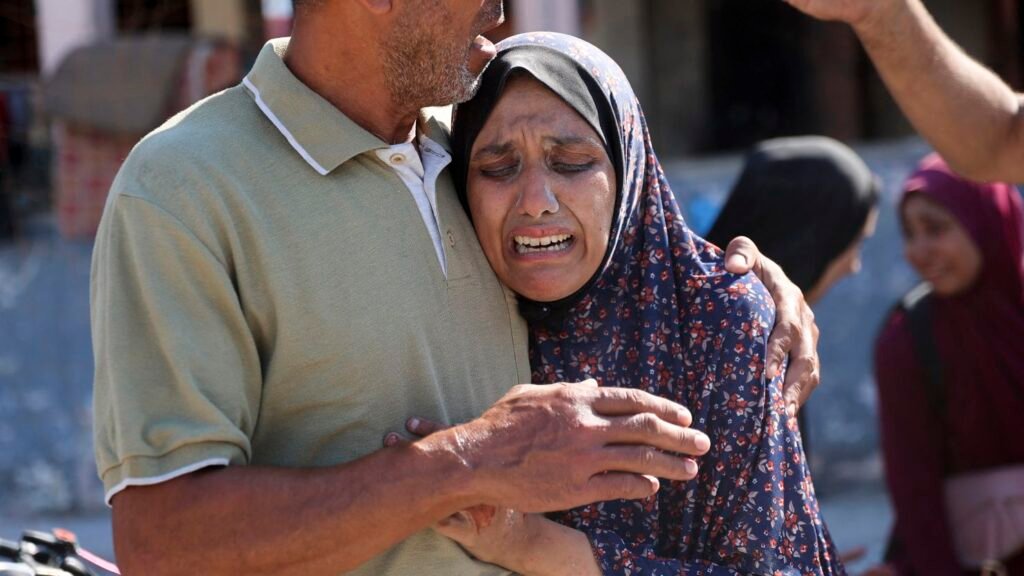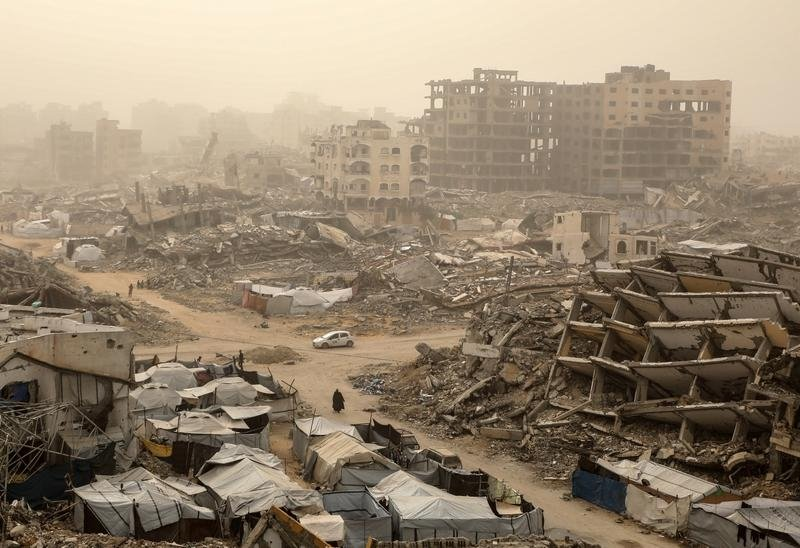
Gaza Herald _For many displaced families in Gaza, the question is no longer whether they should leave, but whether they even have anywhere left to go.
One of them, a displaced resident from Rafah, says repeated waves of attacks have pushed his family to consider moving once again after being displaced seven times since the beginning of the war. Yet the possibility of relocating has become increasingly impossible amid exhausted resources and worsening conditions.
His words reflect the reality faced by nearly 1.9 million Palestinians across Gaza, as fears continue to rise over further displacement amid announcements by Israeli officials about expanding military control in parts of the enclave.
Life Inside Crowded Camps: No Water, No Stability, No Return
Inside displacement camps and temporary shelters, families describe conditions that go far beyond the lack of housing.
Reham Abu Deeb, a mother of four who has been waiting to return to her home in eastern Gaza, says hope of going back has faded as months turn into years.
She describes daily life as one defined by shortages of water, food, education, healthcare, and employment opportunities, while overcrowding and deteriorating living conditions continue to affect families physically and psychologically.
For many displaced Palestinians, the dream of returning home has increasingly given way to uncertainty and exhaustion.
Between the Yellow Line and the Fear of Another Displacement
Growing concern among Gaza’s displaced population has been intensified by expanding military control areas and what residents describe as shrinking spaces available for civilian life.
Many Palestinians view the so-called buffer zones and expanding restricted areas as creating a new reality on the ground, limiting movement and reducing access to homes and farmland.
At the same time, UN officials have reiterated that Gaza should remain fully under Palestinian ownership and called for changes to measures restricting civilian life.
Humanitarian Pressure Adds Another Layer of Suffering
Beyond displacement and security concerns, families continue facing deepening humanitarian hardship.
Residents report worsening shortages of food, water, and essential services as aid operations struggle under severe funding gaps and reduced humanitarian programs.
Aid organizations warn that declining assistance and economic collapse are leaving many families unable to secure even basic meals, increasing the pressure on households already stretched beyond endurance.
For millions in Gaza, daily life has become a constant attempt to survive between overcrowded shelters, uncertainty, and fears that the next wave of displacement may come at any moment.