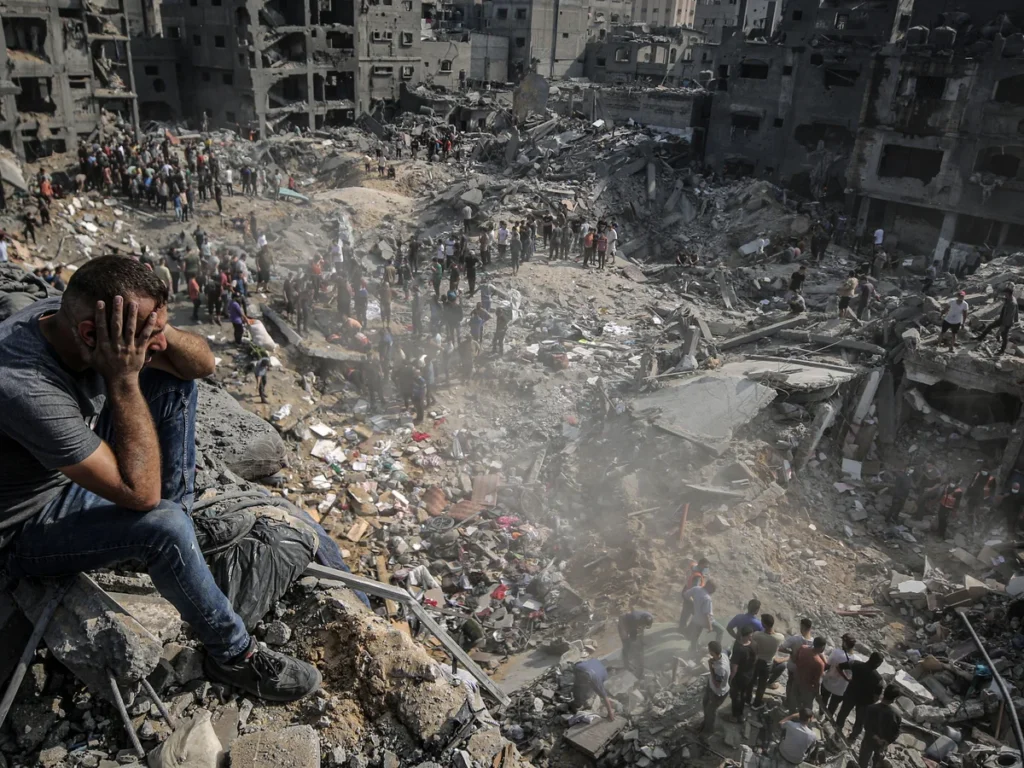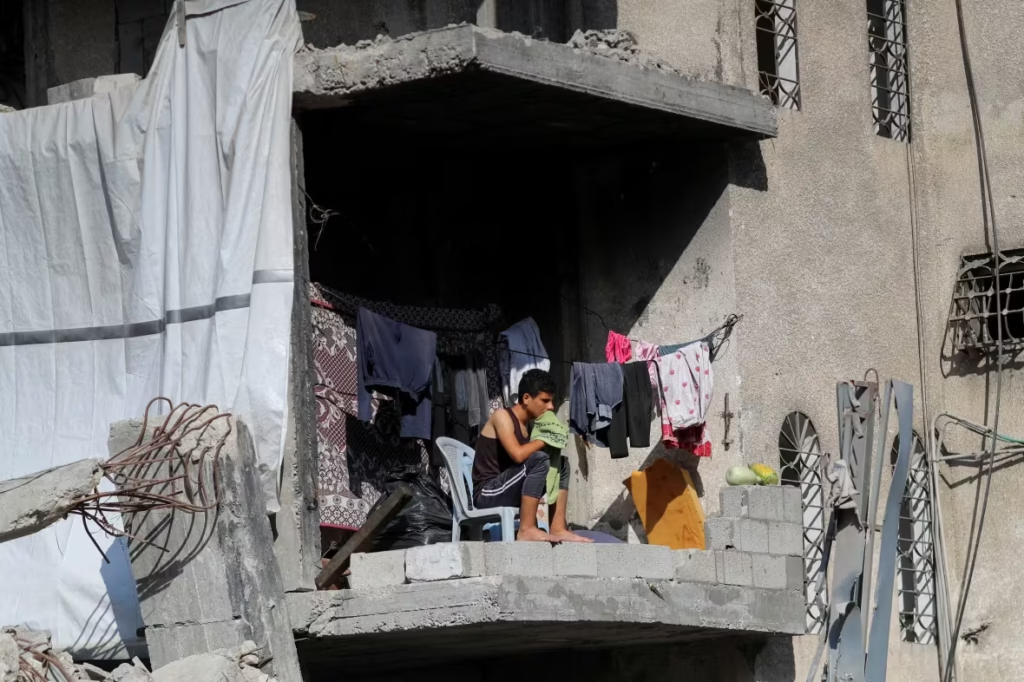
Gaza Herald – Years of Israeli war and economic collapse have dramatically transformed Gaza’s labor market, forcing professionals and graduates to abandon their careers and adapt to a growing “survival economy” driven by necessity.
In Gaza City, young graduate Abdulrahman al-Awadi, once an aspiring fine artist, now operates a small solar-powered phone charging station in a makeshift tent. Like many others, he has been pushed to seek alternative sources of income after the destruction of infrastructure and the collapse of traditional job opportunities.
“I used to work in fine arts and design,” he said. “Now I charge phones just to earn enough to survive.”
His story reflects a broader reality across the Gaza Strip, where widespread destruction, displacement, and the breakdown of essential services have erased entire sectors of employment. Skilled workers, including university graduates, are increasingly turning to improvised jobs such as street vending, charging devices, or selling basic goods.
Economic researcher Rami al-Zaygh describes this shift as a “survival economy,” noting that these temporary, unstable jobs have become a lifeline for thousands of families. “The war has pushed society back decades,” he said, adding that many of these roles require minimal skills and rely on whatever limited resources are available.
According to estimates, Gaza’s economy has contracted by approximately 85%, while unemployment has surged to around 80%, leaving the vast majority of the population below the poverty line.
Another example is Mustafa Bulbul, a business administration graduate who now sells boiled corn from a small street stall. Displaced from his home and stripped of his previous career, he struggles to support his family under increasingly harsh conditions.
“I lost everything, my home, my job, my profession,” he said. “Now I take any work available just to provide for my children.”
The emergence of these makeshift jobs underscores the depth of Gaza’s economic collapse, where survival has become the primary driver of labor. These roles, often temporary and unpredictable, are shaped by ongoing instability, repeated displacement, and resource shortages.
Despite their resilience, many residents express hope that stability will one day return, allowing them to rebuild their lives and return to their original professions. Until then, Gaza’s workforce remains trapped in an economy defined not by growth, but by survival.