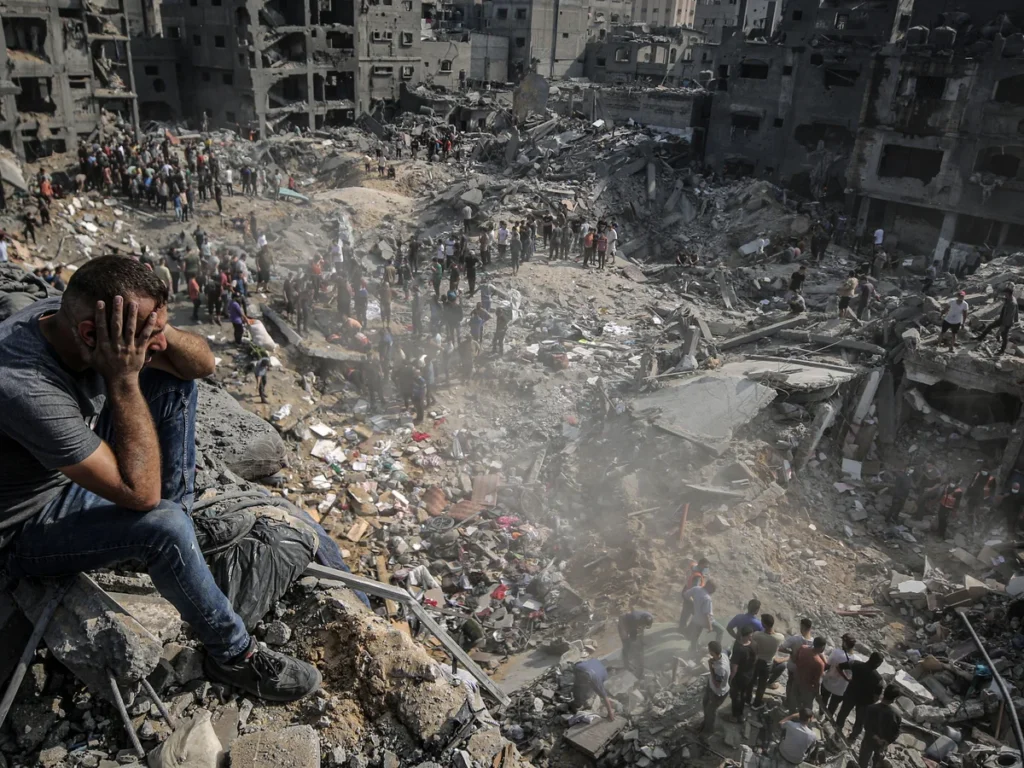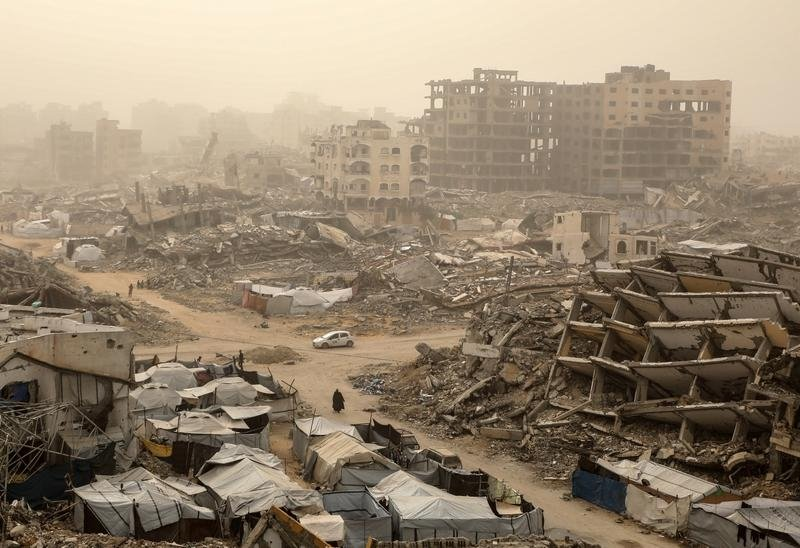
Gaza Herald – Israeli military operations in Gaza persisted last week, even as the country focused on its ongoing attack on Iran. Airstrikes, artillery shelling, and demolitions of homes continued daily across the Gaza Strip, particularly near the so-called “yellow line,” the boundary marking Israeli withdrawal. In northern Gaza, civilians in Jabalia faced daily targeted killings under the pretext of “security threats,” while in Khan Younis, southern neighborhoods near Rafah were leveled as Israeli forces expanded defensive trenches along the border.
The blockade tightened further as Israel imposed severe restrictions on crossings, including the Rafah border, limiting daily passage to fewer than 100 Palestinians. Karem Abu Salem reopened partially under strict Israeli control, with humanitarian aid allowed in only sporadically. UN and aid officials noted that thousands of tons of supplies remained stuck at border warehouses, unable to reach civilians despite urgent need.
Analysts reported that the Iranian war influenced Israeli troop movements, with some units pulled north in preparation for possible escalation against Lebanon or Iran-aligned forces. Yet Gaza remained firmly under Israeli control, with military checkpoints, active patrols, and coordinated actions with local armed groups maintaining strict oversight over civilian movement and goods.
Despite ongoing ceasefire agreements negotiated in October 2025, Israel’s violations continued unchecked. Over the past five months, reports indicated 1,620 ceasefire breaches, including airstrikes, artillery attacks, home demolitions, and incursions, while Palestinian factions largely refrained from retaliatory strikes tied to the Iran war.
Political analysts emphasized that Israel’s strategy in Gaza reflected long-term control, not temporary escalation. The occupation maintained de facto command over roughly 60% of Gaza’s territory, reinforced by air and naval surveillance, stringent aid restrictions, and continuous targeting of infrastructure. Plans for reconstruction remained stalled, tied to conditions Israel set on disarmament of resistance groups, leaving Gaza’s humanitarian crisis ongoing and its population trapped under a calculated siege.