Gaza Herald_In Gaza, movement itself has become an act of endurance. What was once routine—commuting to work, attending university, and visiting family- has been transformed by Israel’s war into a daily challenge marked by danger, destruction, and scarcity. With roads shattered, fuel nearly nonexistent, and vehicles destroyed, Palestinians are being forced to reinvent how they move through a devastated landscape.
Each morning, university lecturer Hassan El-Nabih secures his laptop and briefcase to the back of a bicycle and pedals through Gaza City in search of a place with electricity and a functioning internet connection. His goal is simple: to reach his students online and keep education alive under siege.
Before the war, the image of a university professor cycling through Gaza’s streets was rare. Today, it has become a necessity, one of the few remaining options in a territory where infrastructure has been systematically dismantled.
“My car was badly damaged in December 2023 while parked in Shujayea,” El-Nabih said. “An Israeli air strike hit a nearby building. The blast shattered the windows and destroyed the engine. With fuel unavailable and repairs impossible, I had no choice but to adapt.”
A Transport Network Reduced to Rubble
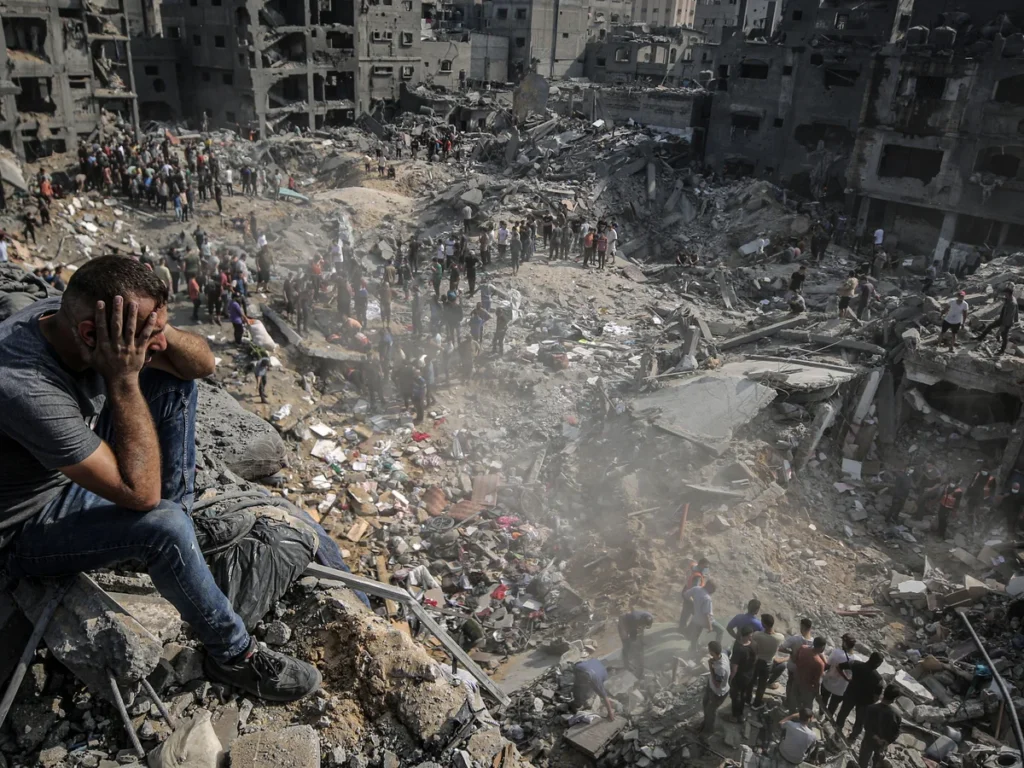
Israel’s sustained assault has inflicted catastrophic damage on Gaza’s transportation system. According to a joint assessment by the World Bank, the European Union, and the United Nations, roughly 81 percent of Gaza’s Road network has been damaged or destroyed. Total losses are estimated at around $2.5 billion, leaving large areas cut off and public transport effectively paralyzed.
Before the war, Gaza’s streets were alive with buses, taxis, cars, and motorcycles. Even those without private vehicles could usually find transport within minutes. After more than two years of relentless bombardment, that reality has vanished.
Entire streets are blocked by debris, while others are deemed too dangerous to use. In many areas, motorized transport is no longer viable, if it is possible at all.
“Even Walking Is Difficult Now”
For Abu Mohammed Jundieh, 55, the loss of transport meant the loss of his livelihood. He once worked as a driver using his own car, which was destroyed in the early days of the war.
“That car was my income and my freedom of movement,” he said. “Now, owning a vehicle feels like a distant dream.”
Fuel prices are prohibitive, transport fares are unaffordable, and even when vehicles are available, drivers often refuse worn-out cash bills that dominate Gaza’s economy.
“Sometimes I have to take long detours just to reach nearby places,” Jundieh explained. “Many roads no longer exist. Even walking has become difficult.”
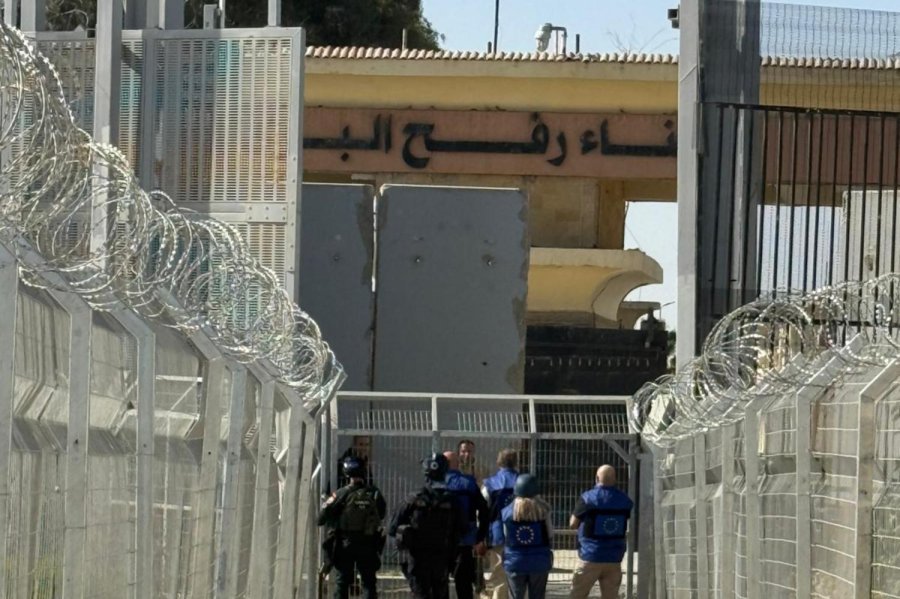
Movement carries constant risk. Whether traveling or staying put, Palestinians remain vulnerable to Israeli attacks. Even those permitted to leave Gaza during limited openings of the Rafah crossing, many with serious medical conditions, are often forced to walk long distances to reach exit points.
Bicycles: From Convenience to Lifeline
As cars and motorcycles became unusable, bicycles emerged as one of the few reliable modes of transport. But even bicycles have become scarce.
On Jalaa Street in Gaza City, Abu Luay Haniyeh runs a modest bicycle repair shop, crowded with customers and stacked with used parts scavenged from broken bikes. New bicycles are nowhere to be found.
“Before the war, selling bicycles was my main business,” he said. “Now I only repair what’s left.”
Demand has skyrocketed, while supply has vanished. A bicycle that once cost less than $200 now, if available at all, sells for more than $1,000, placing it beyond the reach of most families.
With fuel shortages crippling vehicles, some residents rely on hand-pulled carts or limited motorcycle use where fuel can be found. For many others, bicycles have become not just a means of transport but survival tools.
Adapting to Displacement and Economic Collapse
Bicycles have also reshaped Gaza’s service sector. Delivery companies that once relied on cars and motorcycles have been forced to adapt.
On al-Shifa Street, west of Gaza City, Hamama Delivery operates out of a large tent. Rows of bicycles stand outside, replacing the company’s fleet of vehicles. Abu Nasser al-Yazji, the company’s manager, explained the shift.
“For more than a decade, we operated around the clock across Gaza,” he said. “Now, fuel shortages make vehicles impossible. Switching to bicycles was our only option.”
Most of the company’s motorcycles were destroyed during the war, and around 50 employees were killed. Yet as unemployment soared, more people sought any available work, expanding the workforce despite the devastation.
Delivery riders modified their bicycles, attaching plastic crates to carry food, clothing, and essential goods. But destroyed roads and the absence of street lighting forced the company to reduce operating hours to about 10 hours a day.
“Without a Bicycle, You’re Nearly Stuck”
Among Hamama’s riders is Ahmad, 23, a former law student whose education was cut short by the war. Now, his bicycle is his livelihood.
“At first, it was exhausting,” he said. “I never thought I’d be grateful just to own a bicycle.”
His mother urged him to buy one early in the war, sensing that movement would soon become nearly impossible.
“During displacement, there are no cars, no transport,” Ahmad said. “You carry what you can, and the bicycle helps you stay with your family while trying to reach safer areas.”
What began as a tool for survival during displacement eventually became his only source of income.
“Now, if you don’t have a bicycle, you’re almost trapped,” he said.
A City Forced to Move on Two Wheels
In Gaza, bicycles are no longer symbols of leisure or convenience. They represent resilience in the face of destruction, a quiet defiance against a war that has sought to immobilize an entire population.
As Israel’s siege continues to dismantle infrastructure and restrict movement, Palestinians are left navigating rubble-filled streets on two wheels, or on foot, turning every journey into a test of endurance, and every arrival into a small act of survival.