Gaza Herald _What remains of Gaza’s bombed homes is no longer just evidence of an ongoing war, it has become an immediate and lethal danger to those forced to shelter inside them. As the housing crisis deepens and safe alternatives disappear, residents now live under the constant threat of collapsing buildings.
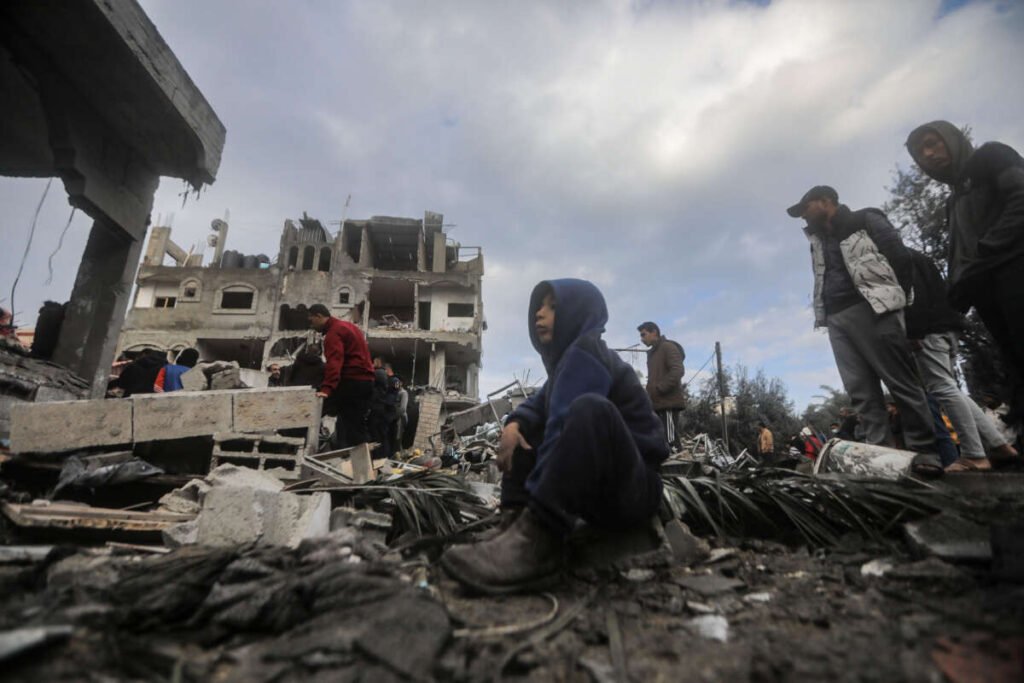
The report “Voices from Gaza” documents grim scenes across the Strip, where tilted buildings and shattered concrete frames loom over streets filled with debris. Despite the visible destruction, daily life continues beneath structures that could fail at any moment.
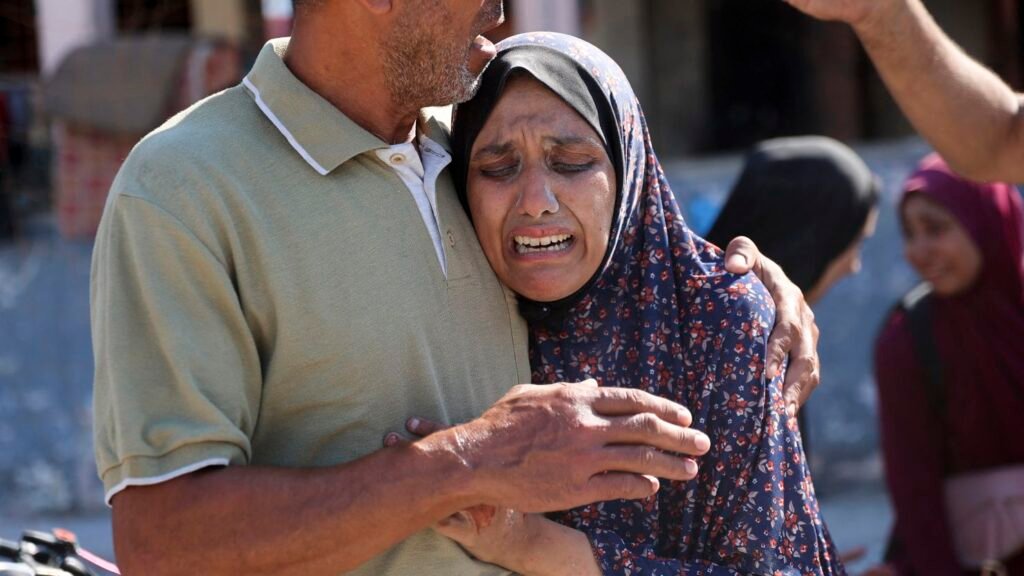
Standing outside his damaged home, an elderly Palestinian describes how fear has become part of everyday survival. His house has repeatedly been classified as unsafe, yet the absence of any alternative shelter has left him with no choice but to stay, even as winter storms worsen the building’s condition and take a toll on his mental well-being.
One of the most dangerous structures highlighted in the report is the Palestine Bank Tower, whose concrete frame now visibly leans to one side. A field reporter warns that even minor vibrations or harsh weather conditions could trigger a sudden collapse.
Despite the risk, daily movement continues beneath the tower. Cars pass by, displaced families shelter nearby, and street vendors operate in the area, raising serious fears that even a partial collapse could lead to mass casualties in an already overcrowded zone.
Displaced Families at Risk
Displaced residents say they avoid walking near cracked buildings whenever possible, often taking longer routes to reduce the danger. But as areas deemed “safe” continue to shrink, population density keeps rising.
One displaced woman warns that strong winds or a minor tremor could bring entire structures down onto pedestrians. She questions how long people are expected to wait and urges local authorities to remove buildings on the brink of collapse before new disasters occur.
From these street-level scenes, Al Jazeera correspondent Mo’men Al-Sharafi widens the scope of the crisis in Gaza City, noting that thousands of displaced families have taken refuge in damaged buildings after widespread destruction of official shelters during the war.
According to Al-Sharafi, at least 87 shelter centers were bombed or destroyed, forcing hundreds of thousands of Palestinians to live inside previously targeted homes that now pose a serious threat to their occupants.
Reporting from the ruins of a building on Gaza’s coastal Al-Rashid Street, Al-Sharafi recounts the collapse of a wall onto a tent sheltering a displaced family from Jabalia. Three members of the family were killed, including a young child.
No Safe Space Left
Residents told Al-Sharafi that they have nowhere safe to relocate. Most shelter centers , particularly in Gaza City , have been destroyed, leaving families packed into limited areas beneath structures at constant risk of collapse.
He explains that entire families, including women and children, are living under roofs that could give way at any moment. Intensifying winds and winter weather systems have only increased the danger, while the lack of resources makes it impossible to mitigate these risks.
Al-Sharafi adds that the Israeli military currently controls around 60% of the Gaza Strip, while the population is confined to no more than 36% of the territory. In these areas, population density has reached an estimated 62,000 people per square kilometer.
These figures, he notes, underscore the scale of the humanitarian disaster. Official data indicates that since the start of winter, more than 50 homes and buildings have collapsed, resulting in the deaths of at least 24 Palestinians.
The suffering does not stop there. Al-Sharafi reports that extreme cold has also claimed the lives of nine infants since winter began. The most recent victim was three-month-old Shatha Abu Jarad.
Equipment Out of Service
In Gaza’s central governorate, Al Jazeera correspondent Ashraf Abu Amra reports a parallel crisis from the Deir al-Balah municipality garage, where crews attempt to repair worn-out machinery, much of it damaged or rendered unusable by Israeli airstrikes.
Abu Amra explains that over two years of war, the municipality has lost a large portion of its heavy equipment. Workers are now forced to dismantle broken machines to salvage spare parts, making only limited efforts to maintain basic services.
He points to the collapse of a home in Al-Maghazi refugee camp two weeks ago, which killed two residents, stressing that municipalities and civil defense teams face severe challenges responding quickly due to shortages of equipment and fuel.
According to Abu Amra, the Israeli occupation has prevented the entry of heavy machinery for nearly two years, significantly worsening the humanitarian crisis, especially as winter storms continue and more families remain trapped in structurally unsafe homes.
As this reality persists, municipalities and civil defense crews are intensifying their appeals for specialized equipment and sufficient fuel. They warn that without immediate intervention, death beneath cracked and collapsing roofs will remain a daily threat hanging over the people of Gaza.