
Gaza Herald_ Inside a cramped tent erected at a United Nations–run school in central Gaza City, 41-year-old Alaa Alzanin shelters with his wife, five children, his elderly mother, and his sister. The family lost their home in Beit Hanoon during Israel’s war and has been displaced eight times since. The tent now serves as their only protection against winter rain and cold winds.
Alzanin, once a daily laborer, is now unemployed, like hundreds of thousands of Palestinians across the Gaza Strip. Before the war, he worked long days in agriculture and infrastructure, digging irrigation channels, preparing farmland, spraying pesticides, and harvesting crops such as tomatoes and cucumbers. His workdays stretched from early morning until late afternoon, earning modest daily wages that allowed him to support his family.
Today, that work no longer exists. With widespread destruction and economic paralysis, Alzanin says he can no longer provide even the most basic necessities.
Living With Disability and Cut-Off Aid
In another displacement camp in Gaza City’s Remal neighborhood, 53-year-old Majed Hamouda struggles to survive with his family. Hamouda, who contracted polio earlier in life, lives with limited mobility. His wife is a carrier of thalassemia, and together they have five children.
Before the war, the family depended on modest financial assistance from government social programs and charitable support. Since the conflict began, that aid has stopped. Hamouda says his family often goes days without food.
On particularly desperate days, he sends his only son into the streets to collect plastic and scrap materials to sell, providing just enough money to buy bread or fuel for cooking.
The loss weighs heavily on him, especially when he reflects on his son’s academic promise. Once a top-performing student who excelled in science, the child now spends his days scavenging instead of studying.
Hunger and Famine Grip the Strip
After more than two years of war, Gaza’s economy and infrastructure have been almost entirely dismantled. Food shortages have become widespread, with humanitarian agencies warning that aid entering the territory falls far short of meeting basic nutritional needs.
Only two border crossings are currently operational, and strict restrictions on deliveries have significantly reduced the volume of supplies entering the enclave. As a result, hunger has deepened into famine-like conditions in many areas.
According to official statistics released in October, unemployment across Palestine has reached 50 percent, while in Gaza it has soared to around 80 percent. More than half a million Palestinians are now without work.
Two Decades of Development Erased
A separate assessment by an international trade and development body found that Gaza’s economy has regressed dramatically. By the end of last year, overall economic output had fallen back to levels seen more than a decade ago, while income per person dropped to figures last recorded in the early 2000s, effectively erasing over 20 years of development in just two years.
Before the war, Gaza had experienced modest but steady economic growth, with expanding commercial, tourism, and industrial projects. The private sector, particularly small and medium-sized enterprises, played a central role in job creation and accounted for more than half of employment. Agriculture also achieved partial self-sufficiency and contributed significantly to the broader Palestinian economy.
That progress has now collapsed. Gaza’s total economic output plunged by more than 80 percent in 2024 alone, with income per capita falling to among the lowest levels globally.
A Fragile Economy Even Before the War
Even prior to the latest conflict, Gaza’s economy was severely constrained by a land, sea, and air blockade imposed in 2007. Poverty levels were already high, with estimates suggesting that nearly two-thirds of the population lived below the poverty line and the majority relied on humanitarian assistance.
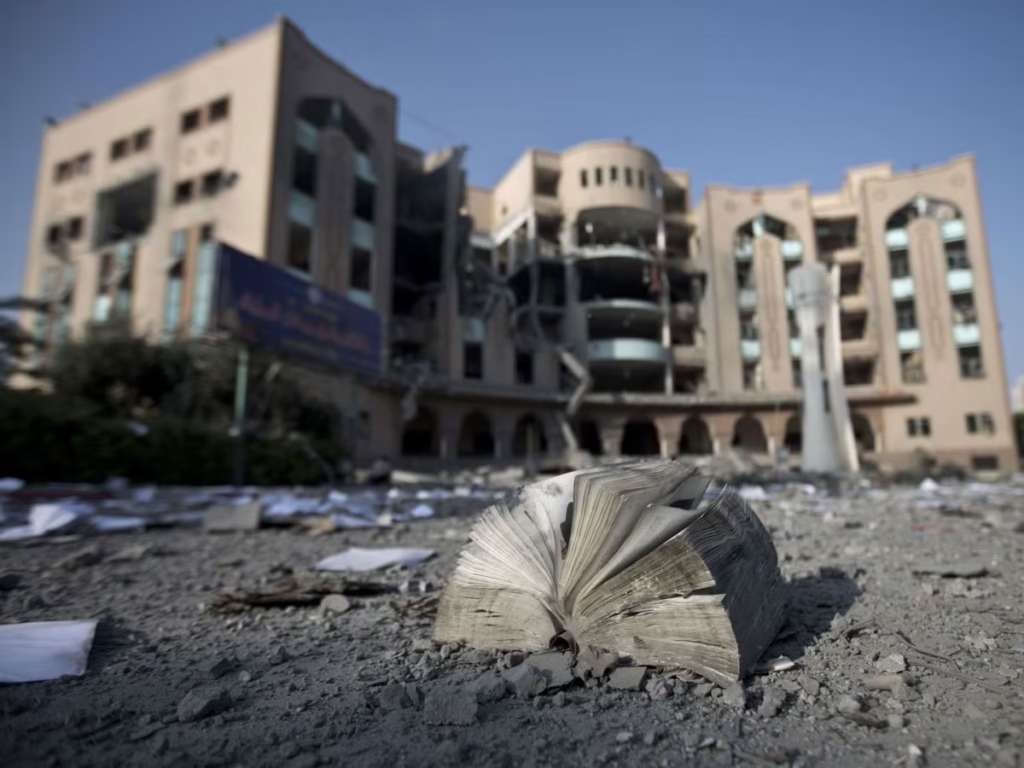
Since the war, local authorities estimate that around 90 percent of all economic sectors, including housing, industry, and infrastructure, have been destroyed. Total economic losses are believed to exceed $70 billion.
Pathways to Recovery Remain Blocked
Officials in Gaza say plans exist to rebuild the economy and create employment, but progress depends on factors beyond local control. Key priorities include supporting small and medium-sized businesses, preventing monopolies caused by import restrictions, and addressing severe inflation driven by shortages.
They also emphasize the need for temporary employment programs targeting young people, graduates, and displaced workers, alongside longer-term investments in productive sectors such as agriculture, industry, and services.
However, these plans require the full reopening of border crossings and the unrestricted entry of raw materials, machinery, spare parts, and production inputs, conditions that have yet to be met.
Survival Without Security
For families like the Alzanins, daily survival remains the immediate concern. Alaa’s wife, Mariam, who is three months pregnant, says the family receives occasional cooked meals distributed in the camp, but they lack nutritious food.
She explains that fresh produce, eggs, fish, and dairy are visible in local markets but far beyond their financial reach. The children receive small portions when possible, but even that is often insufficient.
Mariam says her own health has deteriorated due to prolonged nutritional deficiencies, particularly the lack of calcium and supplements during pregnancy. Despite the hardship, she speaks with resilience, expressing gratitude for survival while underscoring the urgent need for dignity, stability, and proper care.
An Uncertain Future
While international ceasefire and peace initiatives have been announced, their implementation remains incomplete. The path forward for Gaza’s economic recovery is uncertain, and the challenges ahead are immense.
What is clear, however, is that rebuilding livelihoods, restoring basic services, and allowing freedom of movement and trade will be essential if Gaza is to rise from the devastation of war and offer its population a future beyond survival alone.

